
DIY Diagnositcs – Keeping a Check on Soil Health
What do a spade, piece of drainpipe and a large pair of cotton underpants all have in common? They are all cheap and easy tools you can use to assess farm soil health.
We routinely test soil chemical parameters, but how often do we stop to check soil structure and biological activity? Here we look at some of the DIY tests that could give additional insights into soil health, complementing routine soil testing.
Water Infiltration Test
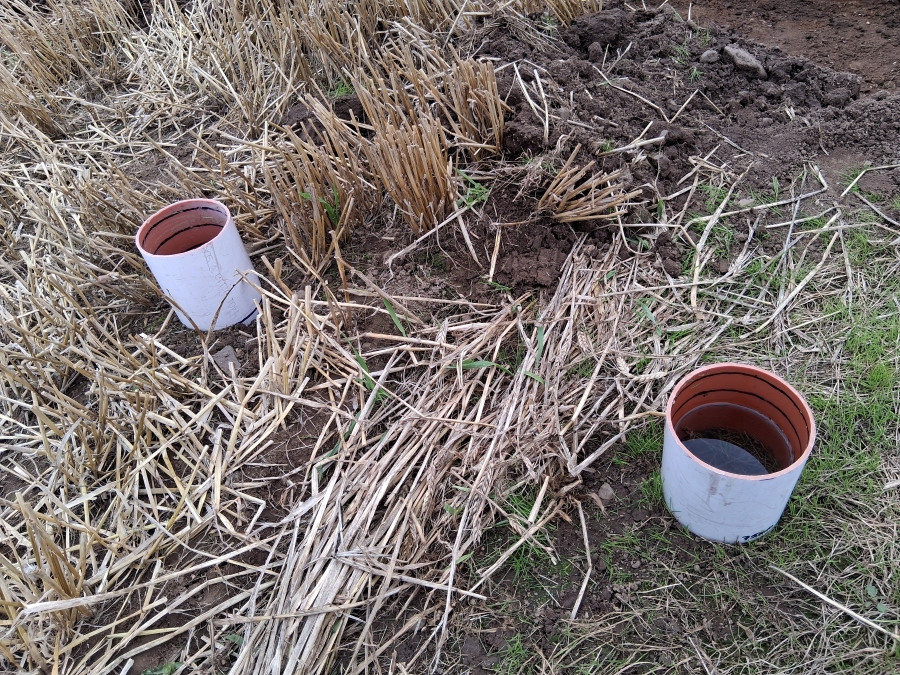
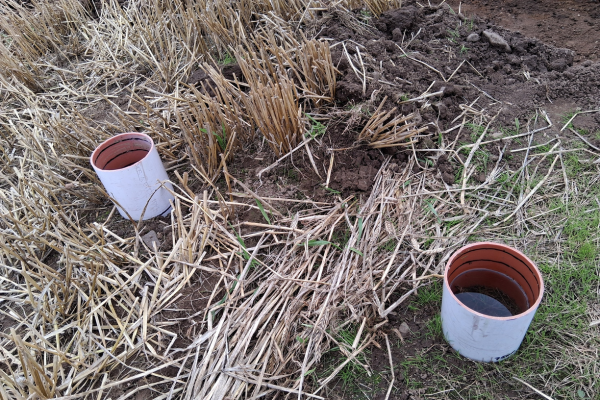
A water infiltration test will help you assess how quickly water drains into your soils. Using a piece of plastic drainpipe, driven into damp soil and filled with a known volume of water, noting how long it takes the water to seep into the soil will indicate the soil water infiltration rate at that point. This test provides an illustration about how quickly your soil manages rain (or flood) water. For soils that are taking longer to drain (or not draining at all), a Visual Evaluation of Soil Structure (or VESS) could help to show why.
VESS – Visual Evaluation of Soil Structure
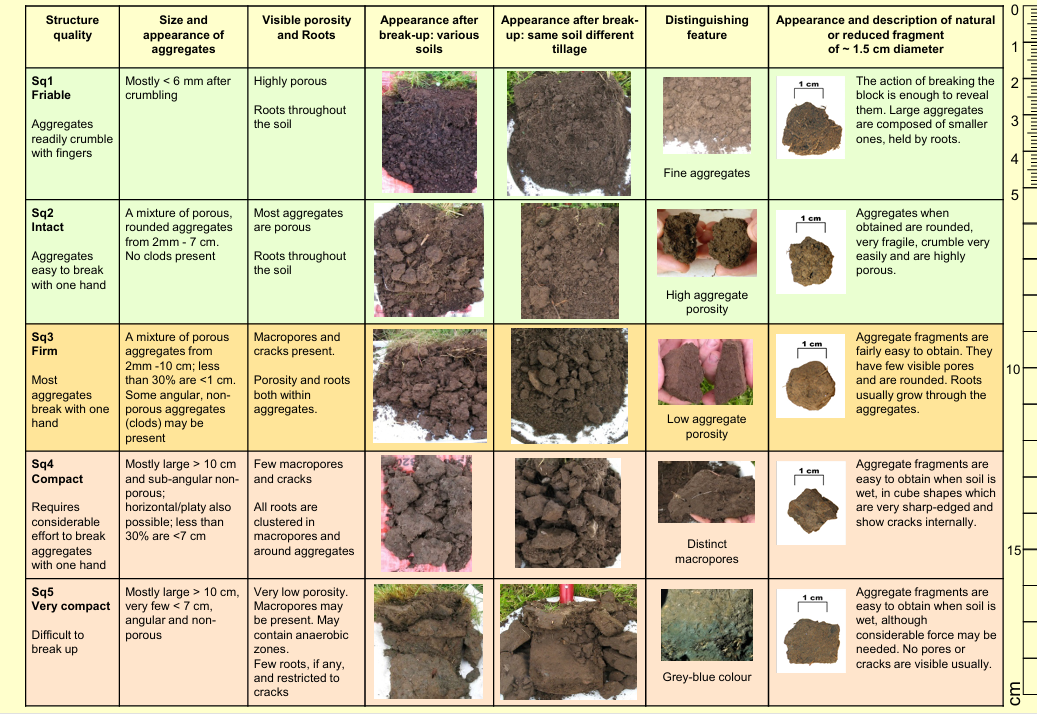
Developed by soil scientists, this is a practical and easy way to assess structural issues in farm topsoils. By comparing a spit of soil to some example photos in a scoring chart, the VESS guide helps you assess and grade soil health, structure and compaction, and suggests a range of potential actions to consider depending on the issues found across a field. The Valuing Your Soils Brochure contains a VESS guide at the back of the document.
Good soil structure creates an ideal habitat for soil microbes and other invertebrates, crucial to creation and maintenance of soil organic matter. Aside from smell and general appearance, another way to do you assess how biologically active your soils are is with a simple earthworm count.
Earthworm Counts
Easy to spot, worm activity can provide a snapshot of soil biological health; you could easily combine a worm count with your VESS assessment. There are three distinct types of worms, all with different roles in maintaining healthy farm soils. As worm depths and activity fluctuate between seasons, repeating the worm count around the same time each year and under similar weather conditions will help to give you a year-on-year picture of worm activity.
But what about the microscopic activity in your soils? The speed and extend of decomposition of organic materials can give a good indication of soil biological activity. Here’s where the pants come in.
Decomposition Tests
The underwear decomposition test, alternatively referred to as ‘Soil Your Undies’, relies on burying a pair of 100% cotton underpants (or other cotton garment) in a warm and damp soil, returning 8 weeks later to see what’s left. If you’ve just got an elastic waistband and some trim, with most of the cotton eaten away, it confirms a high level of microbial soil activity.
The Tea Bag test, or Tea Bag Index, takes a similar principle, relying on the speed of decomposition for two different tea types. By noting the loss in weight of tea, results can be used to estimate both soil health and its capacity to store carbon. Tea bag results from farm soils around the world are being collected - you can view their results, and add in your own, on the Global Tea Bag Index map.
Any one of these or other DIY tests provides another way to look at farm soil health. Not only could a healthier soil support target yields, but may offer a buffer against the more extreme weather conditions we are experiencing. Just remember where you have buried those pants.
Rebecca Audsley, SAC Consulting
Sign up to the FAS newsletter
Receive updates on news, events and publications from Scotland’s Farm Advisory Service