
Artificial Intelligence On The Farm
This article explores the use of Artificial Intelligence (AI) on farms, its benefits and points to consider.
AI is increasingly becoming part of everyday life, from tools that can summarise information to systems that recognise patterns, make predictions and support decisions. It is already integrated into many apps, computer programmes and search engines.
The Scottish Government's AI Strategy 2026–2031 sets out an ambition to "harness the potential of AI to drive responsible and inclusive growth across our economy and make a positive difference at every level of society". For farming there are many areas where AI can provide genuine value.
At the same time, concerns about AI range from data privacy and job losses to its environmental footprint and its threat to humanity. While a dose of healthy scepticism is valid, for Scottish farmers AI could bring practical benefits across everything from crop and livestock management to administration, machinery and environmental monitoring. The potential benefits include better information, earlier intervention and more targeted decisions. An awareness of the technology and its uses is therefore essential to maximise the benefits and mitigate any risks.
Uses of AI In Different Parts of Agriculture
Agriculture has always adapted to new technology. The move from horses to tractors, mechanisation, GPS guidance, automated milking and precision farming, to name a few, have all changed the way farms operate, with some becoming essential tools for the modern farm. AI is likely to follow a similar path, with a recent report suggesting that generative AI is becoming one of agriculture's faster-growing technologies, with around 17% of farmers globally reporting using it for farm-related tasks. At the more advanced side of things, farms are increasingly using technology with embedded AI to improve efficiency and sustainability, including robotics and precision irrigation.
Basic Uses
At its simplest, AI can process large amounts of information, identify patterns and provide predictions or alerts. This opens up opportunities to make better use of information already being collected through satellites, sensors, machinery, weather services and farm records.
Generative AI tools (such as ChatGPT, Claude, Copilot etc.) can help with less technical tasks, such as summarising information, drafting documents, organising notes, preparing communications and assisting with business admin. Bear in mind, however, that Generative AI does not always output accurate information and should always be reviewed by a knowledgeable human to confirm what has been produced.
Advanced Uses
One of the biggest potential benefits is more targeted decision-making. In crops, AI can combine information from satellite imagery, sensors, machinery and weather data to identify areas affected by weeds, disease, nutrient deficiencies or drought stress. Rather than treating an entire field in the same way, technology could help identify where intervention is actually required, targeting specific plants or threats. For livestock systems, cameras and sensors can monitor movement, feeding, weight, body condition and behaviour, and AI can then identify changes from an animal's normal pattern and flag them for investigation.
Welfare Monitoring
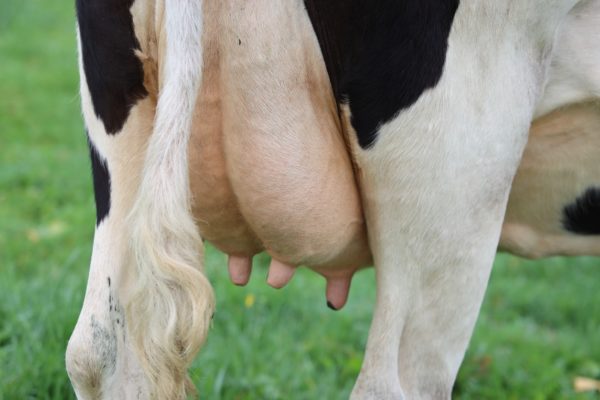
There are already examples of this in action. M&S, for example, has rolled out an AI-powered welfare monitoring system across its dairy supply chain. Cameras and AI assess factors including mobility, body condition, feeding, lying time and social behaviour, helping farmers identify potential welfare issues earlier. Moredun and SRUC are also exploring how AI could support farmers with tailored advice on livestock disease prevention and biosecurity.
Targeted Pesticides
The James Hutton Institute is using AI to help arable farmers target pesticide use more precisely. In potatoes, AI has been applied to national blight monitoring data to predict which strains of late blight are present in an outbreak, helping farmers make better decisions on fungicide use and cut unnecessary applications. Similar disease forecasting is being developed for barley. This is particularly useful in Scotland, where potatoes and barley are major crops.
Pollination Monitoring
The James Hutton Institute is also working with a company called AgriSound to monitor pollination in soft fruit. Sensors and AI track pollinator activity within crops, starting with bumblebees in strawberries and expanding to honeybees, solitary bees and hoverflies across crops including blueberries, raspberries and cherries. This gives growers better information about how well their crops are being pollinated, helping them make more informed decisions.
What these examples have in common is that they are about providing better information, earlier warnings and more targeted interventions, allowing a farmer to make better decisions. There are potentially environmental wins from using it too. For example, a system that helps avoid unnecessary applications of fertiliser or monitors and enhances biodiversity can have a positive impact.
Avoid Overreliance
Where it helps to solve a genuine problem, AI is an increasingly helpful tool, but it should not be over-relied on or replace human oversight. Technology can identify patterns, but it does not automatically understand the context behind them. A farmer may know the characteristics of a particular field, the behaviour of their cattle and the nuances of their farm better than any technology. The information given by AI can then be adapted to produce the best management recommendations.
The quality of the output also depends on the quality of the data going in. Poor, incomplete or poorly calibrated data can result in poor recommendations. Farmers considering AI-based systems should therefore ask what data the technology relies on how accurate it is and how well it has been tested in real farming conditions.
Security and Environmental Concerns
There are also questions around data ownership and privacy. Who owns the information, where is it stored, who can access it and how is it used? Confidential or private information should be protected, and normal data protection procedures should be followed.
AI itself has an environmental footprint. AI systems require computing power and therefore significant resources to operate, such as energy and water, while data centres require infrastructure and increasingly face backlash from local communities where they are proposed.
Future Uses on the Farm
The direction of travel is likely to be towards greater integration, rather than simply adding another standalone app to the farm — the growth of systems that bring together information from weather forecasts, satellites, machinery, soils, livestock sensors and farm records and translate this into joined-up decision-making.
There could also be applications beyond productivity. AI, cameras, acoustic sensors and remote sensing increasingly help monitor biodiversity, habitats and environmental change, giving farmers better information about what is happening across their land and how management is affecting it.
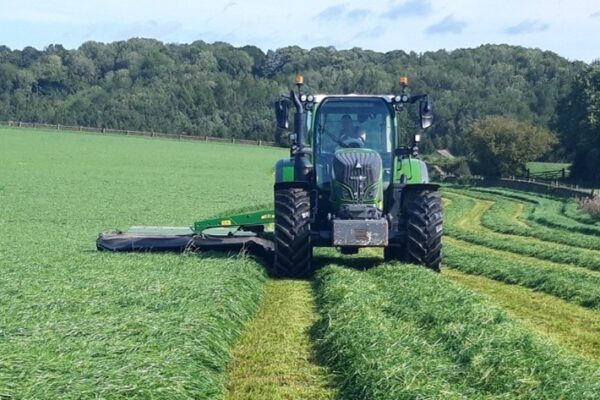
Robotics and automation could take this further, particularly for repetitive or labour-intensive work. Autonomous machinery, robotic weeders and automated harvesting are already developing.
AI is another tool in the farmer's toolkit. Its value will ultimately depend on whether it solves a genuine problem, understanding where it works best on a particular farm, and whether it helps the farmer make a better decision.
Further Information
Scottish Government – Scotland's AI Strategy 2026–2031
UK Agri-Tech Centre – Artificial Intelligence: finding its place on UK farms
James Hutton Institute / SEFARI – AI in Integrated Pest Management (potato blight and barley disease forecasting)
James Hutton Institute / AgriSound – AI pollination monitoring in soft fruit
SRUC – AI biosecurity tool could help save farmers time
M&S / CattleEye – AI-powered animal welfare monitoring


Related articles
Improving Productivity and Efficiency

Sign up to the FAS newsletter
Receive updates on news, events and publications from Scotland’s Farm Advisory Service