
How To Manage Rhododendron On Your Land
Rhododendron ponticum has become a common sight across many parts of Scotland. Although its bright purple flowers can look attractive in spring and early summer, don't be fooled – it is one of the most damaging invasive plants affecting our landscape. What may begin as a few isolated bushes can soon develop into a costly, large-scale infestation if it's ignored.
If left unmanaged, rhododendron spreads quickly, forming dense, impenetrable stands that crowd out and suppress native plants and wildlife. Left unmanaged, it will continue to spread, making it harder and more expensive to control over time.
- Uncontrolled, Rhododendron can:
- Reduce grazing potential
- Restrict livestock movement
- Create long-term management problems for farmers and crofters.
The good news is that rhododendron can be controlled and, with the right approach, eliminated. Tackling it not only protects native habitats but also helps to reclaim productive agricultural land and makes future land management much easier.
In this article, alongside the accompanying video, we'll explain three of the main control methods, how each one works, and where they're best used. Whether you're dealing with a handful of scattered plants, a well-established infestation, or a mixture of both, understanding your options is the first step towards getting rhododendron under control, saving you time, money and effort in the long run.
The key message here is simple: start now. Choose the control method that's right for your situation, tackle the problem before it gets worse, and stay on top of any regrowth.
Cut and Stump Treatment (Dense Rhododendron)
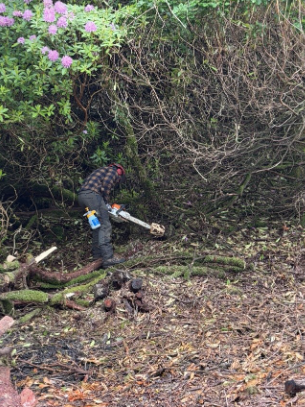
Cut and stump treatment is often the quickest and most effective way to tackle established rhododendron, especially in dense stands where access is difficult. It's best suited to plants with thick, woody stems.
How To:
Start by cutting back the main stem. If the rhododendron has been cut back previously and multiple regrowth stems have developed from the original stump, expose each stem and cut it to approximately 30 cm (1 ft) above ground level. Stack the cut logs in a pile, placing any rooting propagations on top so they remain out of contact with the soil.
The aim is to apply herbicide to the living tissue just beneath the bark, allowing it to be carried deep into the root system killing the rhododendron. Use the tip of a chainsaw or a machete to score each stump and expose the white flesh layer just beneath the bark. Scoring increases the surface area available for herbicide absorption, improving treatment success and reducing the likelihood of regrowth.
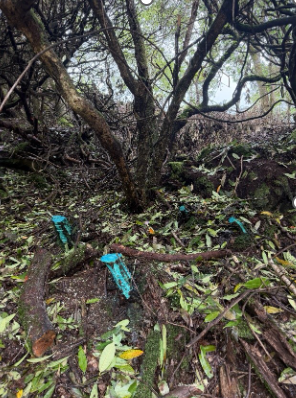
Add a dye to the herbicide mix to clearly identify treated stumps and ensure none are missed.
Stem Injection (Established Rhododendron)
Stem injection is a good option for established rhododendrons where the main stem is easily accessible.
Just like cut and stump treatment the key to success is making sure the herbicide reaches the living tissue just beneath the bark. A common mistake is cutting or drilling too deep into the stem. The centre is dead heartwood and won't carry the herbicide, making the treatment less effective.
How To:
Make two to four downward-angled holes or cuts in the stem, creating small reservoirs to hold the herbicide. This helps keep the herbicide in contact with the living tissue just beneath the bark. There is no need to plug the holes or cover the cuts unless heavy rain is expected shortly after treatment.
Once the stem has been injected, leave the plant standing. Cutting it down too soon can interrupt the movement of the herbicide through the plant and reduce the effectiveness of the treatment. Wait until the leaves have dropped and you are confident the plant is dead before felling it. If in any doubt, treat the stump in accordance with the cut-and-stump method after felling.
As with other treatment methods, mark all injected stems to clearly identify which have been treated and ensure none are missed.
Mulching (Developing Rhododendron)
Mulching is a useful option for rhododendron that is past a seedling and too large to pull out by hand but hasn't yet developed into a large, mature bush. It's best suited to younger plants with relatively thin stems and can be a quick way to deal with scattered immature infestations before they become a bigger problem.
How To:
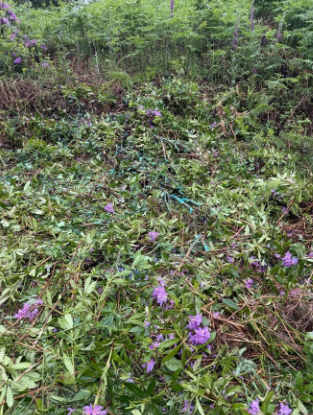
This method involves chopping the plant into small pieces using a mulching blade fitted to a strimmer. The blade is worked through the bush using a combination of horizontal and vertical cutting actions, shredding the stems and foliage while exposing the living tissue just beneath the bark across a large number of cut surfaces.
Once the bush has been mulched, apply herbicide to all the cut surfaces. Treating these fresh cuts allows the herbicide to move into the remaining plant tissue and root system, in time killing it.
Follow up!
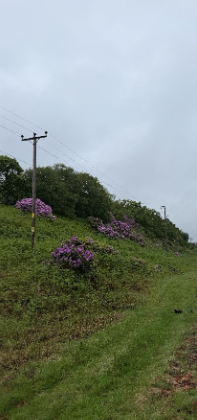
There's little point investing the time and money to tackle rhododendron only to walk away and let it recover. In fact, failing to carry out follow-up control can leave the problem even worse than before, as surviving plants often regenerate vigorously and seedlings quickly fill the gaps left by the initial treatment. Consistent follow-up is what turns short-term control into long-term successful elimination.
Once the initial treatment is complete, inspect the area regularly for any signs of regrowth. New shoots are much easier to deal with than established trees, so tackle them early using a chainsaw or machete, followed by herbicide where appropriate. Small seedlings can usually be pulled out by hand, but don't leave them lying on the ground. Remove them from the site, as they can re-establish if left in contact with the soil. Simply burying or burning rhododendron without herbicide treatment isn't enough, as rhododendron is remarkably resilient. A little effort now, combined with ongoing management, can save a great deal of time, money and work in the future.
Rehabilitating Your Soil
After dense rhododendron has been removed, you'll often be left with bare ground where very little else is growing. Years of infestation leave the soil depleted and suppress native vegetation. Adding organic matter can help improve soil health and condition and encourage native grasses, wildflowers and other vegetation to return to the area, helping restore grazing for livestock and bringing the land back into productive agricultural use.
Rhododendron Control in Action
To see these control methods in practice, watch the accompanying video and meet Fergus and Tom from Argyll Invasive Species Management. Fergus is also available to provide advice and talk through individual situations over the phone, helping decide on the best approach.
Taking on rhododendron can seem like a daunting task, but it is achievable. With the right advice, a planned approach, and commitment to follow-up, you can regain control of your land, improve its value and productivity, and give native vegetation and wildlife the chance to recover.
Orla Sedgewick, SAC Consulting
Sign up to the FAS newsletter
Receive updates on news, events and publications from Scotland’s Farm Advisory Service