
Hedgerow Management
Hedges offer farmers, crofters and landowners the opportunity to enhance farm natural capital reserves without compromising productive farmland or creating new farm habitats. Creation and management of these important linear features can have a series of important benefits, including:
-
Increased farmland biodiversity
-
Improved livestock productivity
-
Farmland biosecurity
-
Increasing resilience to climate change
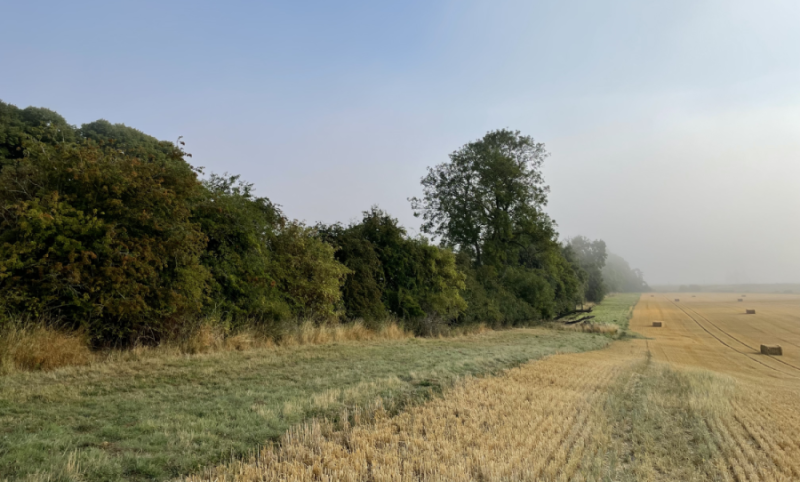
Promote Biodiversity
Farmland birds have seen a significant decline since the 1950s. The addition of hedgerows on your farm can help birds like the skylark and lapwing bounce back. Hedgerows provide birds with what is collectively known as ‘the big three’:
- Access to invertebrate-rich habitats to feed their chicks during the breeding season.
- Seeds and berries to sustain populations throughout the winter.
- Safe places to nest and rear chicks.
Improve Livestock Productivity
Hedgerows provide shade and shelter from the weather improving not only the health and welfare of livestock but overall productivity. For example, hedges offer shelter from poor weather which reduces exposure in young lambs. Similarly, the shelter in the summer ensures that fertility and growth rates of livestock are not compromised.
Ensure Biosecurity
Hedges between fields particularly on the boundary between you and your neighbour can prevent nose-to-nose contact of animals reducing the spread of diseases such as Bovine Viral Diarrhoea. A thick stockproof hedge can also be of value as the boundary in an isolation field to keep purchased stock separate from your current flock/herd when they initially move onto the farm.
Increase Your Farm’s Resilience
Hedges have an important role to play in water absorption. The deep roots of hedges help soils absorb a greater quantity of water reducing the quantity of water that will run off the surface. This has additional benefits in terms of reducing soil erosion and preventing sediment reaching burns and rivers. As the climate changes and we experience increased rainfall, hedges offer a real advantage to protecting farmland and crops from flooding and soil erosion.
Resources
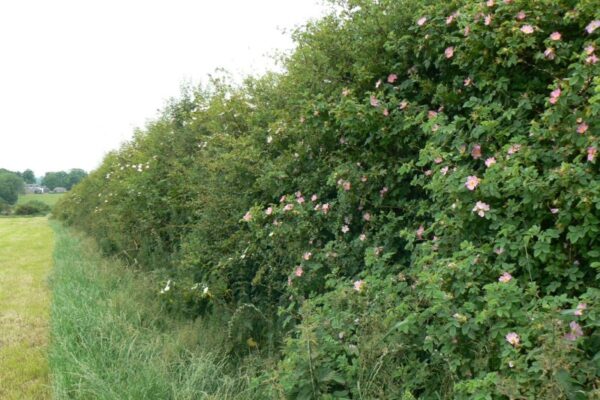
Hedgerows Practical Guide
Healthy hedgerows are truly multifunctional. They capture and store carbon, stockproof fields and enhance biosecurity, provide shade and shelter for livestock and they slow and regulate water flows and trap sediments reducing erosion. Perhaps most importantly they provide a haven for wildlife, providing habitat and resources and creating a Nature Network through our countryside. Hedgerows suffer from both over cutting, and neglect and require careful maintenance to optimise the benefits gained. Read more >>
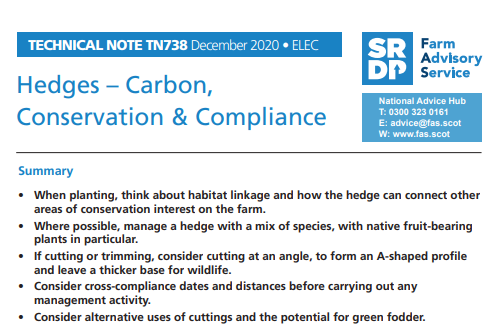
Technical Note (TN738): Hedges: Carbon, Conservation and Compliance
Read our Technical Note for guidance on establishing and maintaining hedgerows. It highlights key things to consider, advice for cutting and trimming, cross-compliance and quick tips for greening requirements. Read more >>
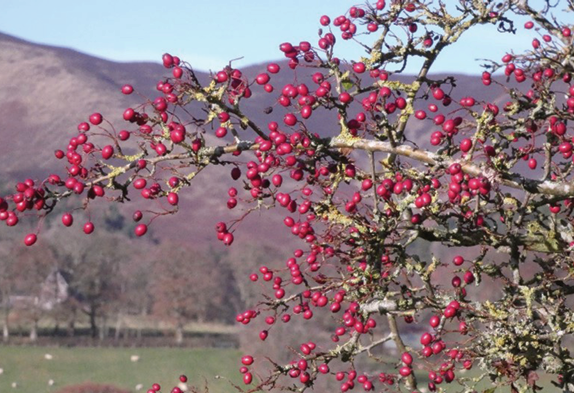
Hedgerow Management Calendar
With so much record keeping and form filling to do already, a quick look at our hedgerow calendar will hopefully remind you of jobs which need to be carried out in order to maintain and enhance the hedgerows on your farm. Read more >>
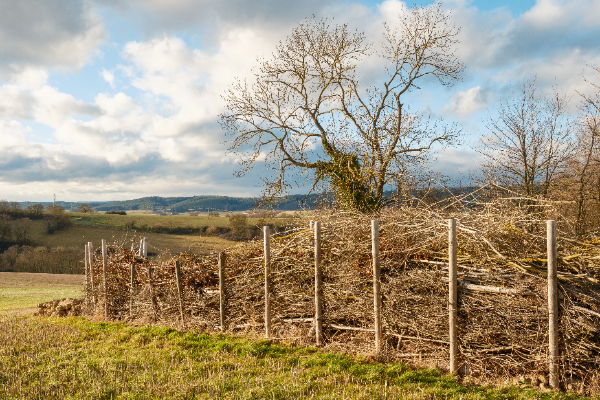
The Benefits of Dead Hedges and How to Build Them
As hedges can help with biodiversity enhancement, carbon capture and cliamte change mitigation, living hedges can present some challenges in establishment, protection and maintenance. A “dead hedge” avoids many of the pitfalls associated with a living hedge, with benefits and opportunities for the businesses willing to explore the alternative. Read more >>
Hedgerow Restoration and Management
Healthy hedgerows are truly multifunctional. They capture and store carbon, stockproof fields and enhance biosecurity, provide shade and shelter for livestock and they slow and regulate water flows and trap sediments reducing erosion. Perhaps most importantly they provide a haven for wildlife, providing habitat and resources and creating a Nature Network through our countryside. Hedgerows suffer from both over cutting, and neglect and require careful maintenance to optimise the benefits gained. Watch our video >>
Coppicing to Rejuvenate Old Hedges
Hedges don’t last forever; they have a finite lifespan and deteriorate over time. They can, however, be rejuvenated by the process of coppicing and given a new lease of life. This will provide an excellent wildlife habitat for years to come and be a boost to the biodiversity of your farm or croft. Watch our video >>
The Benefits of Hedgerow Habitats for Beneficial Insects
In this video agricultural Ecologist, Dr Lorna Cole explains how and why hedgerows are so important for our beneficial insects e.g. pollinators and predatory insects that arable farmers often rely on.. Watch our video >>
Hedges - Cultivating, Cutting and Carbon Capture
When it comes to hedges there are the three 'C's - carbon, conservation and compliance. In this video Alex Pirie from SAC Consulting breaks down the three terms when it comes to hedgerow management. Watch our video >>
Maximising the Nature Value of Hedges at Old Leckie
In this video, Fergus Younger of Old Leckie Farm and Sandra Stewart of Farming and Conservation discuss the multitude of benefits hedge planting has brought to Old Leckie. They also talk about how the establishment and management have been altered to optimise its nature value as a habitat and food source for wildlife and to create wildlife corridors to link up habitats on-farm. Watch our video >>
Sign up to the FAS newsletter
Receive updates on news, events and publications from Scotland’s Farm Advisory Service