
Positive Early Results In Sustainable Control Of Clubroot Using Chitinous Food Waste
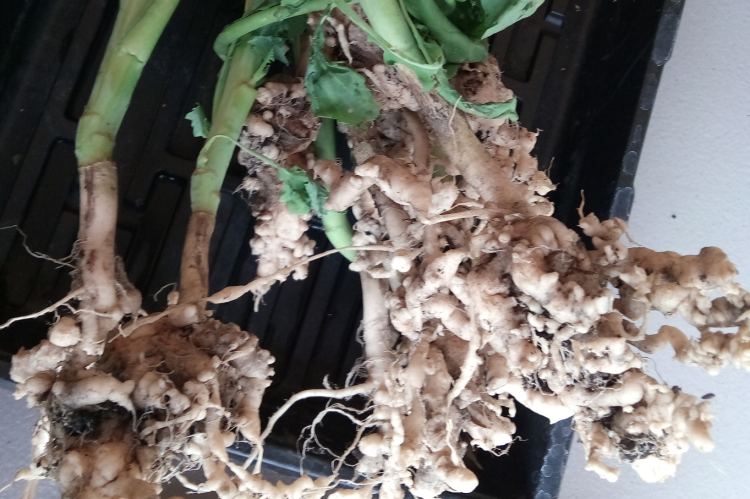
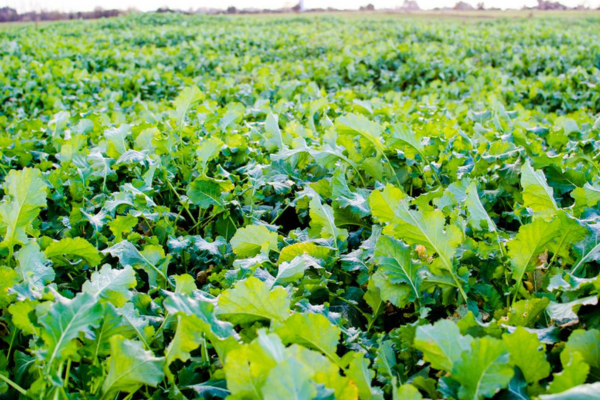
13 April 2026In the UK, clubroot is a major problem for oilseed rape cultivation. It is one of the key factors contributing to the decline in oilseed rape cropping, as farmers struggle to manage its long-term effects. Around 52% of oilseed rape fields are estimated to be infected, highlighting how widespread the issue has become. The impact can be severe, with yield losses ranging anywhere from 10 to 100 % depending on infection levels and conditions.
This article explores the findings of a recent attempt to suppress clubroot using a novel and sustainable resource, food wastes from crustaceans and the edible insect industry (Black Soldier Fly). These food wastes are rich in a biopolymer called chitin.
Caused by the soil-borne fungus-like protist Plasmodiophora brassicae, clubroot affects all brassica crops and has been a persistent challenge for growers for generations. It is not confined to one region but is reported in more than 88 countries, making it a global agricultural concern rather than just a UK issue.
What Makes Clubroot So Hard To Deal With?
One of the biggest challenges with clubroot is its persistence. The pathogen survives in soil as durable spores that can remain viable for up to 20 years. These spores are protected by a robust outer layer composed of complex polymers, including chitin and carbohydrates, which makes them highly resistant to environmental stresses. The presence of any brassica crop can trigger spore germination and infection, allowing the disease to build up over time in the field. This combination of longevity, resilience, and host-driven proliferation makes clubroot particularly difficult to control and underscores the need for new and sustainable management strategies.
A New Approach To Combating Clubroot
Most biocontrol strategies focus on the weakest stage in a pathogen’s life cycle. In contrast, this study targets the most resilient stage of clubroot, the resting spore. To test this approach, the growing media was bioaugmented with chitinous food waste materials, including crab shell waste, frass, and exoskeletons derived from the black soldier fly industry. These materials are rich in chitin and were incorporated into the media at 5 and 10 % concentrations. Polymer chitin is known for inducing resistance in some plants against pathogens. In this study, we aimed to enhance chitin degrading microbers in the growing media, which in turn could attach the chitin units in the spores of the clubroot pathogen and destroy it.
Findings From The Experiment
A susceptible oilseed rape variety, Aspire, was selected for the bioassay. Seedlings were grown in the amended media for one week before being inoculated with spores of Plasmodiophora brassicae at a concentration of 10⁵. The plants were then maintained under glasshouse conditions for a further six weeks. At the end of the study, plants were uprooted and assessed for disease severity.
Figure 1 - shows the percentage reduction in disease. The suppressive effect of the amendments increased with concentration. The highest level of disease reduction was observed at 10 % exoskeleton amendment, followed by crab shell and then frass.
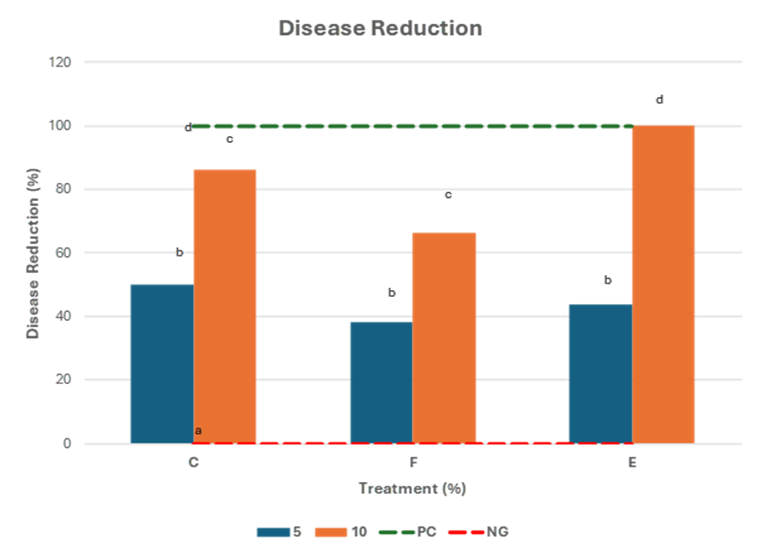
C-crab shell waste, F-frass, E-exoskeleton
Figure 2 - presents the shoot weight of oilseed rape plants. While higher concentrations improved disease suppression, they also reduced plant growth. At 10% concentration, crab shell treatment resulted in the highest shoot weight, followed by frass and then exoskeleton.
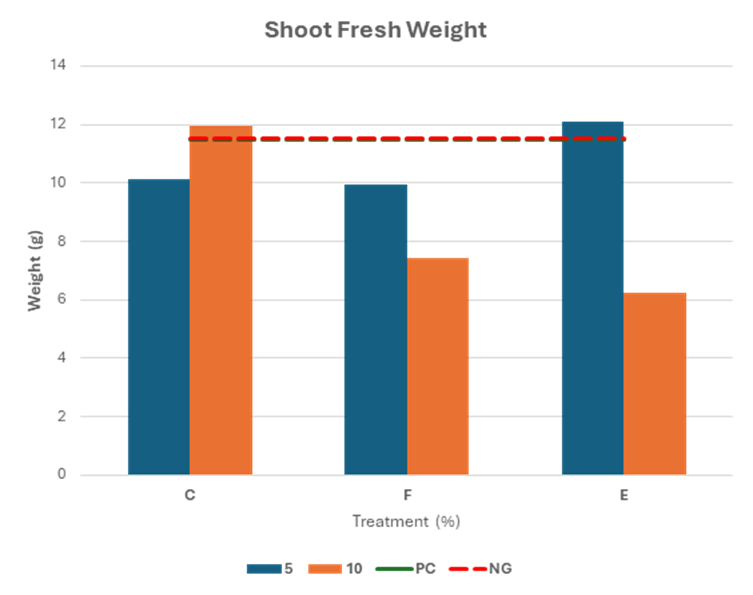
C-crab shell waste, F-frass, E-exoskeleton
These findings suggest that while chitinous food wastes have strong potential as bioprotectants, their effectiveness depends on application rate. Higher concentrations enhance disease suppression but may also introduce phytotoxic effects. Further studies are needed to optimise these materials and better understand how to balance disease control with plant growth for practical field application.
Arthy Surendran, SRUC
If you’re interested in knowing more, get in touch using the free FAS Advice Line Phone: 0300 323 016 or Email: advice@fas.scot and we will be happy to help!






Sign up to the FAS newsletter
Receive updates on news, events and publications from Scotland’s Farm Advisory Service