
Parasites in Sheep
A range of internal and external parasites affect sheep including roundworms, fluke, mites, lice, flies, and ticks which can lower flock productivity. Climate change and emerging resistance to treatment pose increasing challenges to parasite management in Scottish farms.
Along with our resources, you can also visit the Sustainable Control of Parasites (SCOPS) page for more information and forecasts on parasite risks.

Test Before You Treat Event Summary
Catch up with what happened at our Test Before You Treat' event at St Boswells, where we covered sessions on roundworms, liver fluke, sheep scab and PSF Animal Health and Welfare interventions.
In this podcast episode we speak to Fiona Crowden (SRUC Veterinary Investigation Officer) and Ann McLaren (SRUC Research Associate). They discuss worm trends and how they are changing, the effect to the sheep industry, how targeted selective treatment works and how data recording can help.
Sustainable Sheep Systems - Worm Control in Sheep Factsheet
Anthelmintic Resistance (AR) is increasing. Sustainable control strategies must be adopted to control worm infections, while maintaining a population of susceptible worms. Worm control is a
year-round issue and requires proactive planning. Our factsheet will help you develop a sustainable worm control system for your flock.
Liver Fluke
Top Tips for Liver Fluke Control
Identify habitats
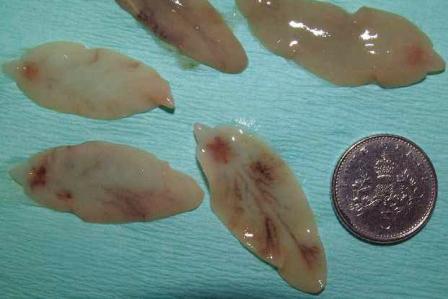
The first step in liver fluke control is identifying any possible habitats of the intermediate host, the mud snail. Any pasture with snail habitats should be avoided by grazing stock at high-risk periods.
Incorporate into health plan
There is no standard treatment plan for liver fluke as risk levels are weather and farm dependent, fluctuating season by season and year by year. Annually you should formulate a risk assessment, testing, treatment, and quarantine plan for liver fluke with your vet as part of your health plan.
Treat carefully
If your risk assessment indicates that treatment is needed you should dose animals correctly by weight, and ensure dosing equipment is accurate and working properly. It is important to understand which product is being used, as flukicides vary in their efficacy for different life stages of liver fluke. Post-treatment efficacy testing is recommended to check for flukicide resistance.
More information on liver fluke can be found below:
Technical Note (TN677): Treatment and Control of Liver Fluke (fasciola hepatica) in Sheep and Cattle
FAS TV - Fluke on Islay
In this episode of FAS TV, we head out to Islay to hear about a project that is in partnership with RSPB, farmers, Moredun Institute and Elanco Animal Health. The project has been monitoring the fluke status of their livestock to make informed decisions about when and if indeed, treatment is necessary and what flukicide product to use.
Roundworm
Top Tips for Roundworm Control
Test before you treat
It has become increasingly clear in recent years that we are not using anthelmintics (wormers) sustainably. Before reaching for the wormer, we should test to determine whether groups or individuals need worming or not. Fresh, warm dung from individual animals in a zip lock bag with all the air expelled can be taken to your vet practice or laboratory for faecal egg counting.
Alternatively, you can buy your own microscope for a few hundred pounds and with some training undertake faecal egg counts yourself to get a result within 15 – 20 minutes. For more details on faecal egg counts see https://www.scops.org.uk/internal-parasites/worms/using-worm-egg-counts/.
Test after you treat
Anthelmintic resistance is becoming increasingly prevalent in certain groups of wormers, so we can no longer assume that treatment has been effective. Instead repeat faecal egg counts are required after each treatment. Ideally you should see a 95% reduction in worm egg counts between pre- and post- treatment.
For farms where anthelmintic resistance is present, this should be factored into the annual veterinary health plan to either avoid the use of certain classes of anthelmintic or plan their use at different times of the year to target other susceptible worm species.
Quarantine incoming stock after treatment
Anthelmintic resistance can be brought into a farm by incoming stock. Speak to your vet about quarantine procedures including tailored treatment protocols in your flock. To reduce the impact of introduced animals potentially carrying anthelmintic resistant worms they need to be yarded for a few days off pasture following treatment, before being turned onto contaminated pasture (fields grazed recently by current stock on farm) to dilute any remaining resistant worms. For more information on quarantine see https://www.scops.org.uk/internal-parasites/quarantine-advice-for-internal-and-external-parasites/
Sheep Scab

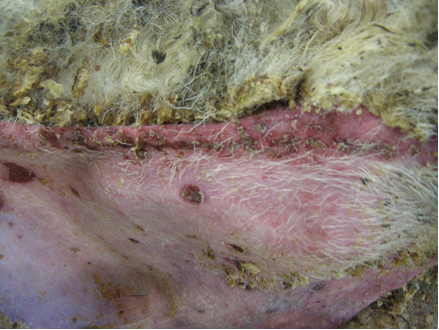
Top Tips for Sheep Scab Control
Sheep scab is becoming an increasing problem, but due to under-reporting the full scale of the problem is unknown.
Quarantine or test
Movement of sheep can spread sheep scab, therefore quarantine treatment or testing to check for exposure is essential.
Identify the problem
It is important to identify the cause of itchiness in your sheep as not all treatment options cover all problems. If you suspect sheep scab in your flock, you should notify APHA and then contact your vet to take a skin scrape to look for mites under a microscope or obtain blood samples to test for antibodies to mite faeces. Your vet will also be able to rule out other causes of itchiness e.g. lice or dermatophilosis (wool/fleece rot).
Treatment options
There are only two treatment options for sheep scab – plunge dipping with OP or injectable macrocyclic lactones. All sheep on farm need to be treated at the same time as sheep scab mites can survive up to 12 days after treatment, so avoid mixing treated and untreated sheep. If using OP dips, sheep should be plunged a few times and remain in the dip for at least 60 seconds. Use of OP dips in showers is ineffective for the treatment of sheep scab.
Resistance to injectable macrocyclic lactones is becoming more common. If you suspect ineffective sheep scab treatment, speak to your vet and consider retreating with an OP dip.
For more information on sheep scab see our Technical Note on Control of Sheep Scab.
Disease Surveillance - Sheep Scab
In this video, we hear from Kirriemuir-based vet Ed Hill who discusses the diagnosis, treatment, and control of sheep scab. Ed also gives an insight into the collaborative efforts of Perthshire and Angus farmers to control sheep scab in their local areas following outbreaks in 2023 that led to the cancellation of some local agricultural shows.
Faecal Egg Counts
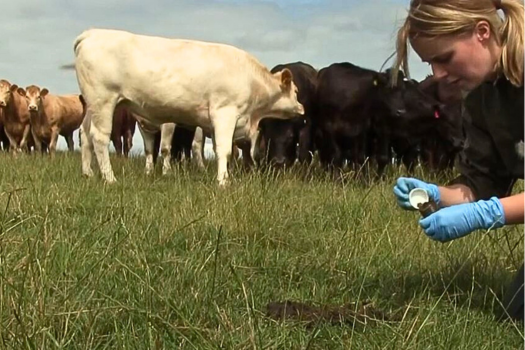
With the climate changing, the epidemiology of internal parasites affecting sheep is also changing, with outbreaks seen at unusual times of the year and novel pathogens expanding their geographical reach. Our resources below can help you monitor parasites by carrying out a Faecal Egg Count (FEC).
Read our article on Faecal Egg Counts (FEC) to Monitor Parasite Load
Faecal Egg Counts for Sheep
Faecal egg counts can be used as part of an integrated flock management programme. Samples of dung are collected to allow the type and number of worms present within them to be counted. This information can indicate the type and scale of any parasitic infestation with an individual animal or whole flock, thereby helping with management decisions to improve animal health and flock productivity.
Further Resources

Haemonchosis Risk
With recent hot weather, followed by heavy rains the risk of Haemochus contortus in livestock has increased with a several outbreaks diagnosed recently. The warm weather favours the larval development of this parasite and with female worms producing thousands of eggs per day, pasture contamination levels can rise quickly in the right conditions. Read More >>

Technical Note: Sustainable Control of Parasitic Gastroenteritis In Sheep In Scotland
In Scotland, parasitic gastroenteritis is most commonly associated with the abomasal worm and gutworms. In recent year global warming, bringing warmer wetter weather and longer grazing season, appears to be changing the epidermiologigy of helminth diseases. Read more >>
Sign up to the FAS newsletter
Receive updates on news, events and publications from Scotland’s Farm Advisory Service