
Natural Capital, Payments and Green Finance – Why This Matters Now
2 April 2026
Natural capital is not about selling your farm’s nature.
It’s a way of understanding value, risk and opportunity.
Why is natural capital being talked about more now?
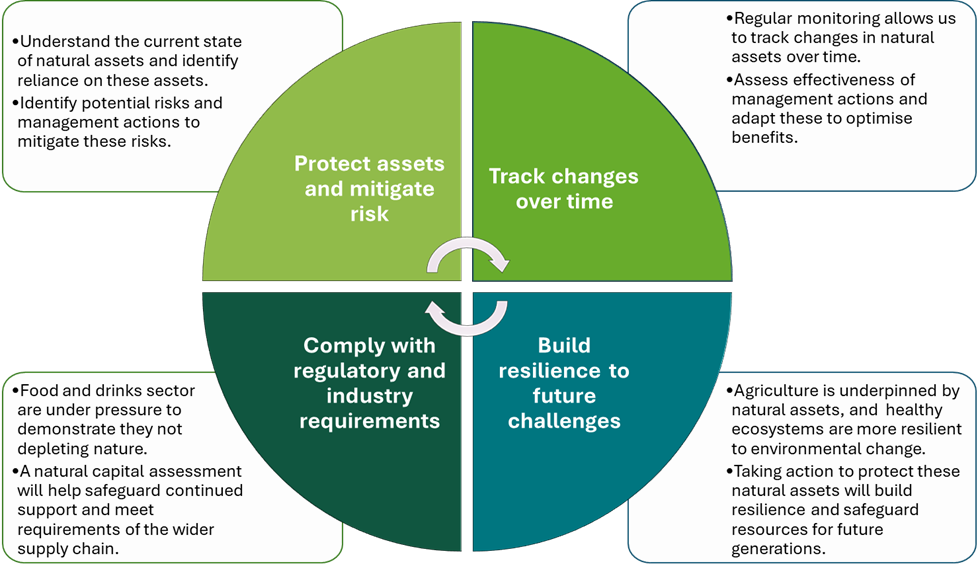
Governments, markets and supply chains are increasingly interested in how land is managed, not just what it produces. Actions to protect, enhance and restore natural capital:
- Build resilience to future climate and environmental change
- Quantify change and the impact of change on ecosystem services
- Target support to optimise the benefits provided
- Reward actions that deliver public benefits
How does natural capital connect to carbon and nature markets or green finance, and what does it mean for farmers?
Green finance means money that supports environmental outcomes, such as improved habitats, lower emissions, or cleaner water. On farms, this financing can take different forms.
- Peatland Code and Woodland Carbon Code
- Voluntary carbon and nature markets
- Biodiversity net gain (England only)
- Supply-chain incentives and insetting
- Other new and emerging schemes
How does this link back to natural capital thinking?
Most schemes – public or private – are based on the same logic:
- Identify the asset
- Identify those who benefit from the ecosystem services that asset provides
- Identify actions to protect, restore or enhance its condition
- Deliver a measurable benefit
Natural capital thinking helps farmers:
- See what assets they already have
- Understand the value of these assets to the farm and beyond
- Understand which actions deliver multiple benefits
- Ask the right questions before engaging with markets
For more information, visit our page on What is Natural Capital, (and Why Should Farmers Care)?, and consider reading this article on Natural Capital on Scottish Farms - Real Assets, Real Benefits

Sign up to the FAS newsletter
Receive updates on news, events and publications from Scotland’s Farm Advisory Service