
What is Natural Capital, (And Why Should Farmers Care)?
What do we mean by 'Natural Capital'?
Natural capital refers to the parts of the natural environment that support benefits to people and other species. Natural capital “stocks” or “assets” include soils, water, grasslands, trees, hedges, peatlands, and wildlife: All the physical, non--made stuff you can see, touch and feel on a given area of land. For example, hedges can create shade and shelter for livestock, capture and store carbon, provide habitat for wildlife and prevent the erosion of soils and runoff of sediment-bound pollutants. Maintaining these natural resources in good condition supports food production, life on earth, and everything else we do.
Using the words “capital” and referring to these living and non-living elements of nature as natural “assets” is economic language. We use these words to encourage people to recognise the value of the natural world and to account for this when making decisions. That includes decision-making at all levels, from national policy, international corporations, as well as day-to-day choices on farms and other landholdings. Other types of capital include manufactured, financial, social, and human capital (the Five Capitals Model).
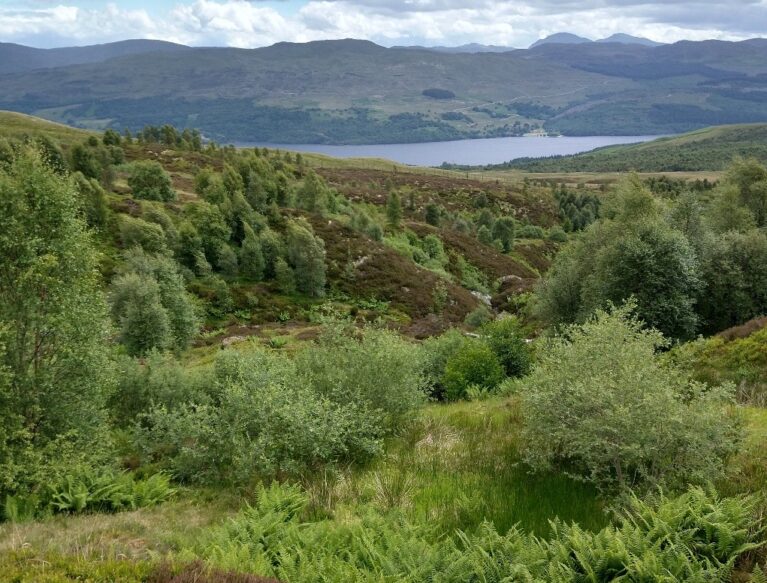
These assets are like infrastructure or equipment: when they’re in good condition, they quietly support the farm every day; when they’re degraded, costs increase and risks grow. Recognising the immense value which nature provides drives decisions to “invest” in nature by looking after or building up these assets.
This framing of nature as having an economic value has was popularised around 2000, when the UN Millenium Ecosystem Assessment and the UK National Ecosystem Assessment sought ways to communicate the severe impacts of nature degradation within the UK and internationally. Putting pounds and pence figures on the natural world has been a constant in environmental policy since then, however there is also a lively debate around this: those who are against “commodifying” nature argue that assigning an economic value to the natural world continues to under-value it, because many aspects of nature are irreplaceable and therefore priceless.
The bottom line is that natural capital is a helpful concept for understanding the value of nature and motivating decisions which benefit the environment. Today, governments and businesses use natural capital to:
- Understand long-term risks
- Make better land-use decisions
- Design payments and incentives that reward good stewardship
- Build resilience to climate and other environmental change
You will see natural capital referred to in many Scottish Government communications. The Farm Advisory Service also has a variety of resources dedicated to understanding natural capital and its relevance to Scottish agriculture:
- The FAS Natural Capital Podcast is a great place to start, where host Harry Fisher dives into history, case studies of best practice and innovation with guests from across the industry.
- This article on natural capital assessments gives an overview of how land managers can identify, measure and manage their natural capital assets. This is also available as a service.
- This page provides six case studies of organisations which have undertaken natural capital assessments to identify risks and opportunities to protect, enhance and restore their natural assets.
For some perspectives on natural capital from government and agencies, see:
- NatureScot: What is Natural Capital?
- AHDB: Natural capital checklist for farmers
- Defra: Enabling a Natural Capital Approach guidance
For further reading on the debate around the commodification of nature, see:
- What Money Can’t Buy: The Moral Limits of Markets by Michael Sandel
- The Conservation Revolution by Bram Büscher and Robert Fletcher
Protecting, enhancing and restoring natural capital provides a wide range of benefits both to the farm and beyond the farm gate. The benefits that nature provides are known as ecosystem services.
How are “ecosystem services” related to natural capital?
We can view natural capital as stocks and flows:
- Stocks = the assets themselves (e.g. soil, water, habitats, species)
- Flows = the benefits we get from them, called “ecosystem services” (Figure 1)
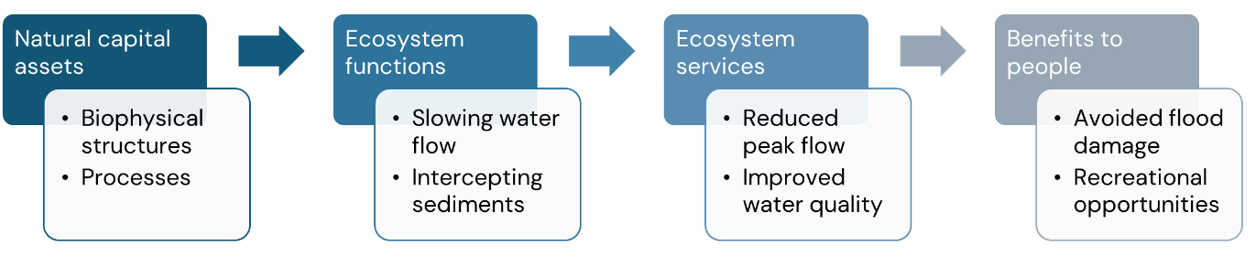
Figure 1: A visual overview of the difference between natural capital assets, ecosystem functions, ecosystem services, and final benefits to people, and how each supports the next.
Ecosystem services are the benefits people get from nature. On farms, these benefits include:
- Productive soils (see FAS: Regenerative Agriculture)
- Clean and reliable water (see FAS: Sustainable Water Management)
- Pollination and natural pest control (see FAS: Habitats For Beneficial Insects)
- Shelter for livestock (see FAS: Woodland & Hedgerows)
- Reduced flooding and erosion (see FAS: Organic Matter & Soil Erosion)
- Carbon storage (see FAS: An Introduction to Woodland Carbon)
The relationship between natural capital and ecosystem services can be understood like an asset which accrues interest over time (see Figure 2). Imagine you had £10,000 in a bank account, making 10% interest per year. If you didn’t move any money in or out, you would make £1,000 in interest. You could then spend that £1,000 and, as long as you didn’t touch your £10,000 “principal” amount, you could do that sustainably every year.
Natural capital is sort of like that bank account: So long as you don’t damage or shrink the size of your natural capital assets (“principal”), you can live off the ecosystem services (“interest”) that they provide, sustainably / indefinitely.
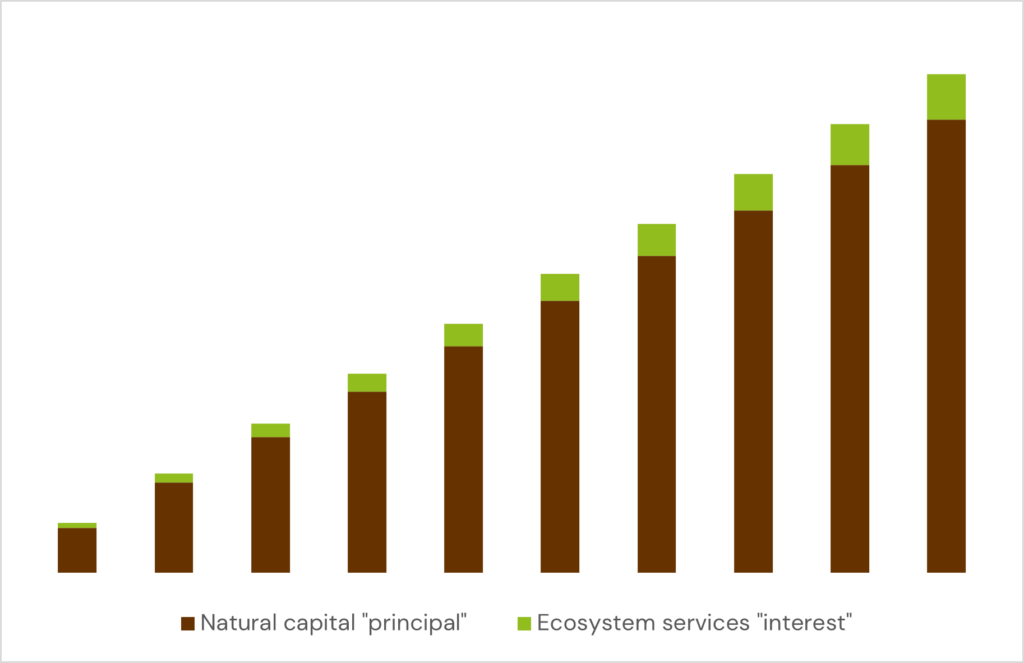
Figure 2: A stacked bar chart visualising one way to think about natural capital and ecosystem services, as an asset which accrues interest. The bigger (quantity) and better (condition) the natural capital asset, the better for the ecosystem services which it can sustainably deliver every year.
However, when you cut into your natural capital “principal,” your ecosystem services are affected. For example, if you fell part of a woodland or remove hedgerows, your farm no longer benefits from the ecosystem services that those habitats provide.
- Building up your natural capital assets will increase the ecosystem services which they can sustainably provide to your farm and wider society.
- Natural capital assets which are in better condition will yield more ecosystem services, like getting a better interest rate.
- Like a bank account opened many years ago, older natural capital assets are often more valuable, as on-farm habitats which have been maintained in good condition for decades often support more complex and resilient ecosystems of local species.
If you'd like to learn more, read more in our articles on Natural Capital on Scottish Farms - Real Assets, Real Benefits and Natural Capital, Payments and Green Finance - Why This Matters Now
Sign up to the FAS newsletter
Receive updates on news, events and publications from Scotland’s Farm Advisory Service