
Clostridial Vaccinations in Breeding Sheep Flocks
7 April 2026
Clostridia bacteria are almost everywhere in the environment and so are a constant threat. Furthermore, most cases of clostridial disease are fatal resulting in a large economic and environmental cost to farms and crofts.
This information note explains the background, risks and solutions to clostridial diseases in breeding sheep flocks.
Although certain steps can reduce the risk of specific clostridial diseases—for example, controlling liver fluke can lower the risk of black disease—it is almost impossible to remove the risk entirely. Vaccination remains the most effective way to minimise this risk.
However, not all vaccines provide protection against every clostridial disease, and the duration of immunity can vary. For this reason, it is important to understand which vaccines cover which diseases, as well as which animals are most at risk at different stages of life.
What Are Clostridial Diseases?
Clostridial bacteria typically live in the soil and can survive for long periods, meaning clostridial disease is an annual risk on some farms and crofts. They cause disease when sheep swallow them or when the bacteria enter the body through wounds. The illness is caused by the toxins the bacteria produce, not by the bacteria themselves. Several different diseases are caused by Clostridia species, and these are generally grouped together as “clostridial diseases”.
Examples of clostridial diseases include pulpy kidney disease, lamb dysentery, braxy, and tetanus. Clostridial disease is a common cause of sudden death in sheep in the UK and in most cases seen prior to death, treatment is ineffective. Good husbandry and vaccination are therefore key to prevent disease.
What Are Vaccines?
Vaccines activate an animal’s immune system without causing the disease itself. They play a key role in preventing illness and are most effective when entire groups or populations are vaccinated.
Unlike antibiotics and anthelmintics, vaccines prepare the immune system in advance. When a vaccinated animal encounters a pathogen, its body can quickly recognise and respond to it, allowing it to fight off the infection more effectively.
Whilst no vaccine provides total protection, clostridial vaccines are a relatively cheap and effective means of preventing losses from these diseases.
Vaccination Myth Buster
Clostridial vaccine use is often misunderstood. When vaccinating an animal for the first time, a single dose does not provide adequate protection—animals need two initial doses, 4–6 weeks apart. The first primes the immune system, and the second boosts immunity to a protective level. Ongoing booster vaccinations are then required to maintain protection.
Ewes are commonly vaccinated before lambing, so antibodies pass to lambs via colostrum, giving short-term protection. This protection depends on good colostrum intake, and its duration varies by vaccine and disease. Lamb vaccination timing should be discussed with a vet, as immunity after vaccination takes a few weeks to develop.
Pasteurellosis
When vaccinating against clostridial disease there is also the option to incorporate a vaccine for pasteurellosis. Caused by Bibersteinia trehalosi, systemic pasteurellosis is a common cause of death in weaned lambs between September and December. Bibersteinia trehalosi is found in the throat and tonsils of sheep, however in periods of stress it can lead to septicaemia and death. Those lambs affected are usually found dead with no period of ill health beforehand.
Some of the stresses that bring about systemic pasteurellosis include:
- Weaning
- Handling
- Transport
- Mixing
- Movement to good grazing
- A shift to cold, wet weather
However, it is not uncommon to find that a lamb which has died of systemic pasteurellosis also suffered from other conditions such as worm burdens, liver fluke, tick-borne fever, and selenium or cobalt deficiency.
Which Vaccine Covers What?
Not all vaccines protect against every clostridial disease, and only some include cover for pasteurellosis, so it’s helpful to understand what each product offers. Vaccine choice and use are best considered as part of your flock health plan with your vet.
Clostridial vaccines can occasionally be in short supply, so planning ahead and knowing which vaccine to use and when to use it can be useful. If your usual product isn’t available, your vet can help you decide on a suitable alternative for your flock. If an annual booster is missed, then animals will have to start again with a primary course of vaccinations i.e. two injections 4-6 weeks apart. If a new product is used, animals may need another primary course of two injections.
Table 1 - Some of the Clostridial Vaccines available on the UK market
| Vaccine | Diseases Covered | Pros/Cons |
|---|---|---|
| Heptavac®P Plus | Pulpy kidney, struck, braxy, tetanus, blackleg, black disease, some types of clostridial metritis and lamb dysentery. Also pasteurellosis | Includes pasteurellosis coverage |
| Ovivac®P Plus | Pulpy kidney, braxy, tetanus and blackleg. Also pasteurellosis | No cover against lamb dysentery |
| Ovipast® Plus | Pasteurellosis only | No clostridial components |
| Lambivac® | Pulpy kidney, struck, tetanus, lamb dysentery | No cover against pasteurellosis |
| Covexin 10 | Pulpy kidney, lamb dysentery, struck, blackleg, braxy, tetanus, all types of clostridial metritis, yellow lamb disease | No cover against pasteurellosis |
| Bravoxin® | Pulpy kidney, lamb dysentery, struck, blackleg, braxy, tetanus, all types of clostridial metritis, yellow lamb disease | No cover against pasteurellosis |
Disease Risk Factors
Clostridial disease risk is influenced by a combination of environmental, nutritional, and management factors, often acting together. These include stress (e.g. transport), tissue damage or wounds (such as shearing cuts, castration, tail docking, or fighting), and nutritional issues like inadequate colostrum intake.
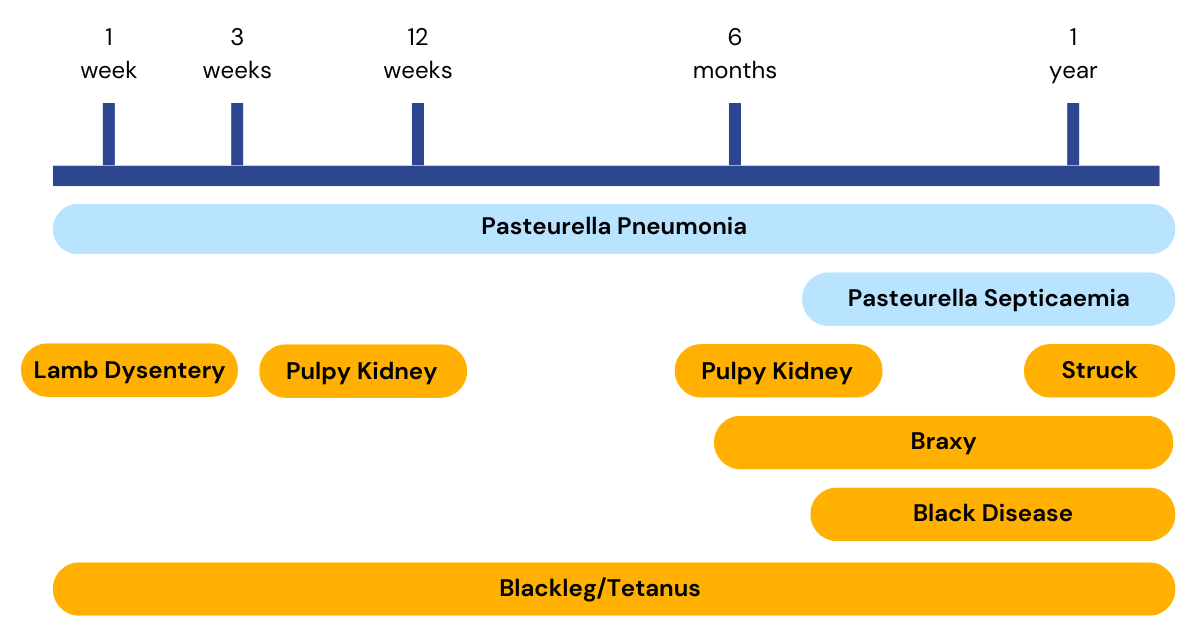
This diagram demonstrates how some of the clostridial diseases and Pasteurella infections can affect different ages of sheep. Different diseases dominate at different life stages, which is why vaccination timing is critical to protect animals before they enter high-risk periods.
Pasteurella and Clostridial age distribution
The immune response to vaccines is reduced by stress, such as poor nutrition, bad weather, weaning, or transport. Therefore, if ewe hoggs or ewes are being away wintered, ensure that they have had a complete vaccination programme in good time before transport.
Schedule Of Vaccination
Below is a typical programme for the female flock.
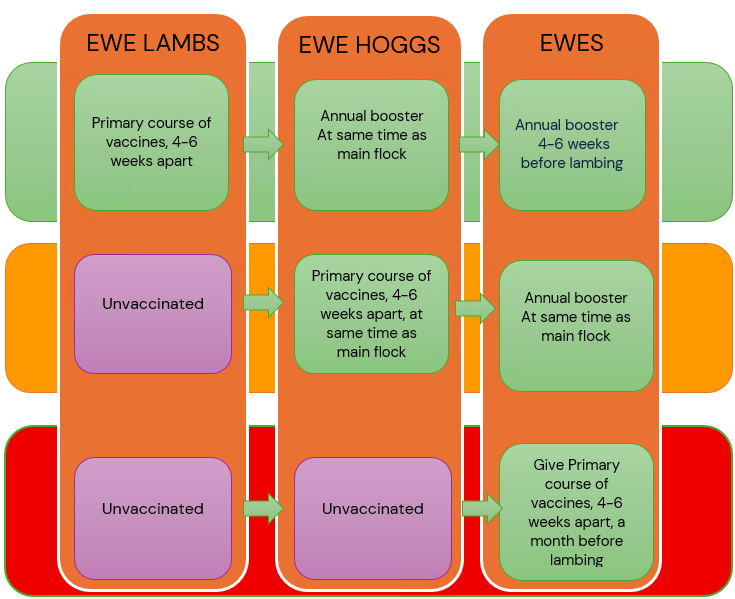
Don’t forget the tups or wether lambs! Best to vaccinate them along with the ewe hoggs and ewes. If bought in, assume unvaccinated.
Other Things To Note When You Use Clostridial Vaccines
- It is crucial to store the vaccine between 2°C and 8°C, from purchase through to administration. The middle of a fridge is best, and check that the fridge temperature is correct.
- Ensure injectors are clean and calibrated.
- Check the product datasheet for dosage rates for initial and booster injections, as products differ.
- Once broached, most bottles must be used within 8-10 hours. Using the contents after this time risks the vaccine being ineffective. It is a good idea to buy bottle sizes appropriate to the flock or group size you are vaccinating to minimise waste.
- Correct timing of administration is essential for these vaccines. Refer to the datasheet but in general:
- Vaccinate ewes 4-6 weeks before lambing, so the colostrum protects lambs.
- Vaccinate lambs twice 4-6 weeks apart
- Vaccinate any unvaccinated or missed booster animal twice
- Give annual boosters to the breeding flock to maintain good immunity.
Sign up to the FAS newsletter
Receive updates on news, events and publications from Scotland’s Farm Advisory Service