
Emerging carbon markets available to farmers in Scotland
16 August 2023Updated 9th March 2026
The world is dangerously close to warming above 1.5°C compared to average temperatures 150 years ago. This could lead to catastrophic climate events and irreversible impacts on human health and biodiversity loss. To avoid this, global greenhouse gas (GHG) emissions must halve by 2030 and reach Net Zero by 2050. To accelerate this, carbon credits are being used to incentivise emitters to reduce their emissions.
Carbon credits have allowed private infarms through land-based projects that focus on sequestering carbon (e.g. woodland creation) or preventing further greenhouse gas emissions (e.g. peatland restoration). There are two broad carbon markets: compliance and voluntary. Compliance carbon markets are created when policy or legislation is implemented to regulate and reduce greenhouse gas emissions whereas voluntary markets exist on a voluntary opt in basis. Since agriculture is excluded from the UK compliance market, the voluntary markets are the primary driver for carbon sequestration and removal activities [1].
What are carbon markets?
Carbon markets are trading systems that buy and sell carbon in the form of carbon credits. A carbon credit refers to one tonne of carbon dioxide or equivalent greenhouse gas sequestered or avoided. The transfer of carbon credits has arisen due to the demand from private companies to meet Net Zero targets. Where companies find there is no further way they can reduce their own greenhouse gas emissions (called insetting), they can purchase carbon credits to offset remaining emissions.
The carbon markets have faced multiple shocks and scandals due to unverified or misleading claims, damaging reputations of investors and companies for “greenwashing”. This has led to greater scrutiny and governance of carbon crediting schemes to develop robust measurement, reporting and verification procedures. High-integrity markets governed by reputable bodies such as the Woodland Trust and IUNC give further confidence to buyers and fetch a premium price. Within Scotland, the two most established and verified markets include the Woodland Carbon Code and the Peatland Code.
The future of carbon markets
Best practice recommends companies to only offset emissions that they cannot inset (avoid or reduce within their supply chain). Not all sectors are able to reduce their total emissions to zero, and offsetting is likely to continue. The push for food producers to inset via their supply chains will likely impact landowners. Adopting low carbon farming would be advantageous to meet these environmental commitments and having validated carbon units at your disposal can generate additional income from the offset markets.
Evolving corporate commitments beyond Value Chain Mitigation (BVCM)
A leading corporate disclosure standard, the Science Based Targets Initiative (SBTi) recommends companies to deliver ‘Beyond Value Chain Mitigation’ to accelerate progress towards net zero. It is defined as ‘mitigation action or investments that fall outside a company’s value chain, including activities that avoid or reduce GHG emissions, or remove and store GHGs from the atmosphere’. Efforts under this programme do not count towards a company’s net zero progress, but act as a mechanism by which companies go above and beyond their own supply chain abatement. For example, a food company might fund restoration of landscapes that provide ecosystem services they rely on as part of a BVCM initiative. Companies are not limited to purchasing carbon credits but can also directly fund environmental programmes that generate co-benefits for people and nature. However, the adoption rate of BVCM is low, citing barriers such as fear of greenwashing and a lack of credible claims [2]. Nevertheless, the UK Government is exploring a proposed policy and governance framework to ensure the integrity of Voluntary Carbon and Nature Market credits and the use of credits. Policy support in this area will support the wider adoption of BVCM which will translate to more confidence and buyers for credits in the near future [3].
When selling carbon units, a carbon sales contract will be required. Therefore, a robust legal agreement is needed to protect the seller and the buyer. Legal advice should be sought out to ensure this is achieved. Furthermore, the rights to carbon remain with the buyer, so if the property is sold, the carbon contract passes to the new owner.
The next section dives deeper into two established schemes in the UK which are The Woodland Carbon Code and Peatland Code, as well as emerging carbon codes that are being developed.
Next steps
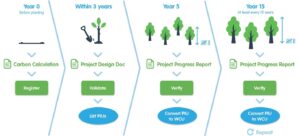
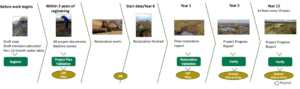
The links below will take you to the official sites for the Woodland Carbon Code and Peatland Code. You would need to appoint a project developer to guide you through the registration, validation and verification process. You can also reach out to your farm advisor to understand your eligibility and cost.
Woodland Carbon Code website- https://www.woodlandcarboncode.org.uk/
Woodland Carbon Code project developers database- https://www.woodlandcarboncode.org.uk/find-project-developer
Peatland Code - https://www.iucn-uk-peatlandprogramme.org/peatland-code
Approved validation and verification bodies for Peatland Code - https://www.iucn-uk-peatlandprogramme.org/validation-and-verification-bodies
Related FAS Materials
https://www.fas.scot/article/fwn38-autumn-2022-an-update-on-carbon-markets-june-2022/
Related External Materials
References

Sign up to the FAS newsletter
Receive updates on news, events and publications from Scotland’s Farm Advisory Service