
Climate Change
Rural Roundup – 6. Unsung Heroes – Agriculture’s Position in the Climate Change Conversation
Welcome to this special episode of the Rural Roundup, one of a six-part series called “Unsung Heroes”. In this episode Calum Johnston sits down one on one with James Orr an Agricultural Advisor with a special interest in the carbon footprint of livestock systems. In the previous five episodes we heard from Farmers from five different beef and dairy farms…
Funding for Water Resilience and Climate Adaptation on Farms
As experienced by many Scottish farmers and crofters this year, climate change is driving warmer and drier summers. Ensuring reliable water access will require farmers and crofters to adopt forward-looking strategies to sustain their businesses in the years ahead. The Farm Advisory Service (FAS) provides tailored one-to-one support to help land managers plan and implement…
Journey to Net Zero Emissions on Mixed Farms
Benchmarking carbon emissions against kilograms of agricultural output sold provides a standardised and practical way to measure and compare environmental impact. This approach normalises emissions data, accounting for differences in farm size, production systems, and types of agricultural activities. By linking emissions to output, such as meat, or wool sold, it becomes possible to evaluate…
Journey Towards Net Zero Emissions as an Upland Sheep Farmer
Benchmarking carbon emissions against kilograms of agricultural output sold provides a standardised and practical way to measure and compare environmental impact. This approach normalises emissions data, accounting for differences in farm size, production systems, and types of agricultural activities. By linking emissions to output, such as meat, or wool sold, it becomes possible to evaluate…
Combat Drought and Heat Stress with Funded Support from FAS
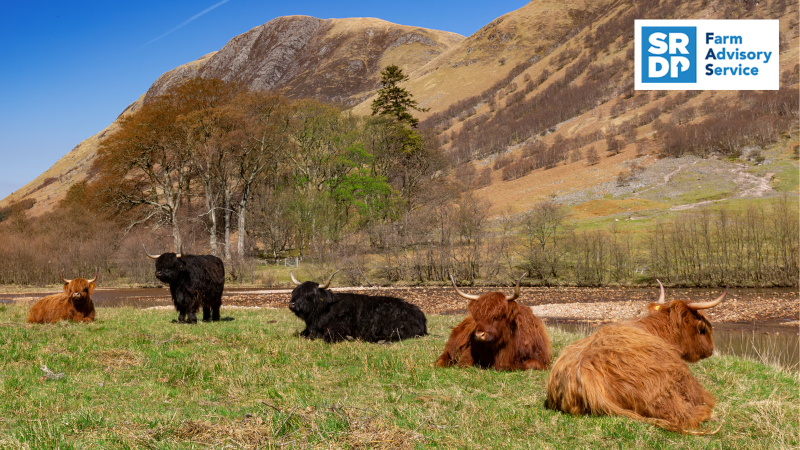
Scotland’s changing climate means that farmers and crofters will have to adapt to drier summers and higher temperatures, creating numerous challenges. The Farm Advisory Service (FAS) offers one-to-one support to help you tackle water scarcity and make long-term plans to build resilience to drought. Drought and heat can seriously impact livestock and arable farms, but…

Farm Peatland Restoration At Leadloch Farm, A Case Study and Guide
Peatland restoration projects can be complex, with many moving parts. This case study of a year-long peatland restoration project aims to give readers an overview of how farmers and landowners in Scotland are successfully managing and completing these projects. This case study was produced in partnership with The Future Forest Company (FFC): Natural capital company…

How to Get Prepared for a Carbon Audit
As the number of farming and crofting businesses looking to complete a carbon audit increases, we have created a handy checklist to make the process much easier. This checklist gives you an overview of the information required so you can collate the information required before you even sit down with the carbon calculator in front…
Thrill of the Hill – Climate Change Catch-Up with Seamus Murphy
With COP26 in Glasgow well in the rearview mirror and 2030 on the horizon, serious, measurable change has to be made in the fight against climate change. With Scottish Climate Week coming up, in this podcast we hear from Senior Carbon & Sustainability Consultant and returning guest to the podcast, Seamus Murphy on the progress made by Scottish farming to address climate change.
Rural Roundup – Climate Week
Welcome back to the Rural Round-up. This show is produced in association with the Scottish Government. On today’s episode, Farm Advisors Tiffany Stephenson from St Boswells, George Chalmers from Turriff and Robert Ramsay from Ayr, give us the latest agricultural updates from the Borders, N. East and S. West of Scotland, and are later joined…
Scotland’s Dairy Sector’s Progress Towards Net Zero 2045
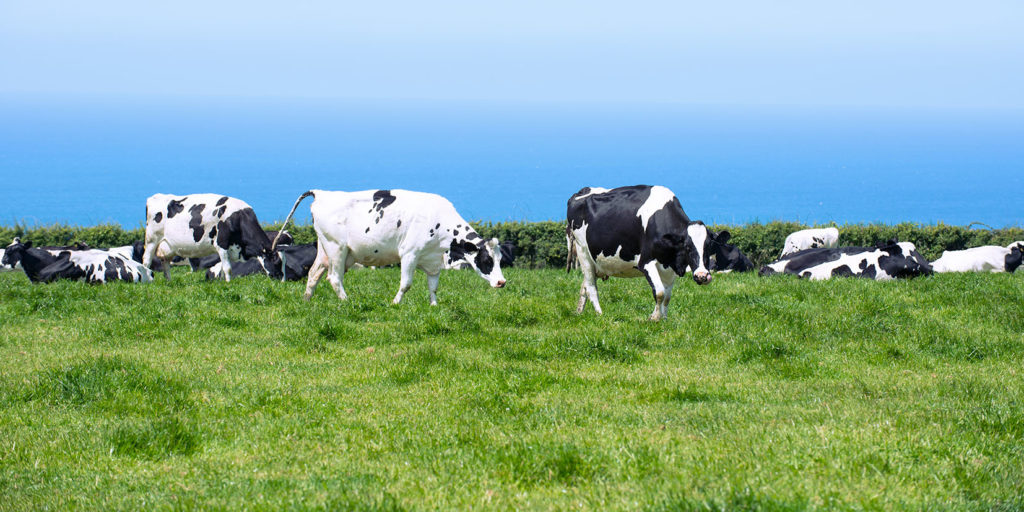
The Scottish Government has released the latest figures for Scottish agriculture’s greenhouse gas (GHG) emissions and nitrogen use for the accounting year 2022-23. The results are broadly positive with the lowest agricultural emissions since the baseline period of 1990, and a 3% drop on the previous year, down to 7.7MtCO2e (million tonnes of carbon dioxide…