
Water Management on Your Farm: Irrigation
Scotland’s National Water Scarcity Plan and its impact on irrigation
In response to changing climate and water availability, SEPA have produced a National Water Scarcity Plan to explain how they will respond to periods of reduced water availability. Ensuring that there is enough water for all that use it can be a fine balance. This can result in situations where SEPA may have to reduce the volume of water that can be abstracted. SEPA use a combination of rainfall, soil moisture and monitoring data to set water scarcity levels, which are shown in Figure 1.
Businesses that plan in advance to mitigate against water scarcity can protect themselves against the occurrence and/or impacts of shortages. SEPA encourage businesses to have contingency plans in place for the likelihood of water scarcity events. For each water scarcity level shown below, there are recommended steps to help land managers work with the current water situation in their area to reduce the impact on the business, as well as their neighbours and the environment.
Irrigators should ensure that they are fully aware of these stages so that they can incorporate these into business plans and have back up options available if abstraction water volumes are restricted.
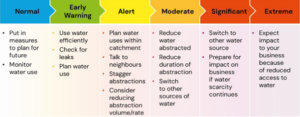
Figure 1: SEPA Water Scarcity Levels and management options. Image from CREW (2026) Planning for Water Scarcity: Practical guidance for Scottish farmers and growers
Planning for Water Scarcity: Practical guidance for Scottish farmers and growers
The Centre for Expertise for Waters has produced Planning for Water Scarcity: Practical guidance for Scottish farmers and growers. This guide is designed for farmers and growers in Scotland to assist and provide information to help improve water management on farm. Where predictions indicate that water levels are set to change, mitigation measures are required to be planned and implemented to ensure that Scottish farmers remain resilient to a changing climate. With extreme weather events set to increase in frequency, can we integrate management practices now to reduce the impact from these events? The guide discusses various irrigation systems available to farmers, focussing on the different attributes they offer. In addition, it provides a guide to forward planning, drought risk assessments and what farmers can do to safeguard their access to water for the future.
The Farm Advisory Service has great guides and information on Rainwater Harvester, Resilience, Slowing The Flow and Farm Water Resilience Audit to show varied management solutions to storing and retaining water within your land, to ease irrigation and water requirements on your land.
What irrigation options are available
Drip Irrigation
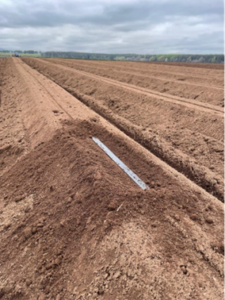
Figure 2: Drip tape installed in potato field
Drip tape irrigation systems are thin pipes, which are installed at the beginning of the growing season, fitted with specially designed emitters along the crop base, where water is drip fed to the crops. Currently most systems are designed for one season and would need to be replaced each year. The systems offer targeted application at low pressure, that results in reduced volumes of water required, compared to other systems, as they are more precise.
Advantages
Water is slowly applied directly to the base of the plant, allowing for accurate application, which results in reduced energy and water requirements to get results. Once installed, labour costs are minimal. If water availability is the main concern for your business these systems require the lowest water volume due to their efficient application.
Disadvantages
These systems require installation in a fixed location along the crop, which cannot be moved during the season. This can result in a high installation cost. The systems can be liable to sediment and algae build up, which may require regular maintenance to ensure the systems continue to work efficiently. Most systems would need to be re-installed annually. The systems use plastic, which often cannot be reused on farm and will need to be disposed of correctly following the Prevention of Environmental Pollution from Agriculture Activity (PEPFAA) guidance.
Booms
Booms are mobile systems where water is sprayed over the crops via fixed spray nozzles on a frame, mounted on a 4-wheel chassis, connected to a hose reel. They work similarly to a raingun, however, operate at lower pressure applying water directly over the canopy. By their nature they can be wide structures and need open, uninterrupted areas to work efficiently.
Advantages
These systems allow for a controlled, accurate distribution of water over the crop canopy. Compared to rainguns, water is distributed at a lower pressure, resulting in lower physical impact to the soil and crop and higher energy efficiency.
Disadvantages
Due to the equipment required, the systems do not suit irregular and uneven fields. Additionally, fields with transmission towers and trees/hedges may not be suitable for this method as the frame may not be able to pass these easily. Careful management is needed to ensure that soil erosion is not exacerbated through application.
Rainguns
Rainguns are mobile systems where water is projected out of a tripod system to service crops from a wheeled carriage, normally attached to a hose reel. The systems are designed to dispense a high volume of water per application.
Advantages
Rainguns are one of the least labour-intensive methods of irrigating. The systems can be placed in field, operating via a timer. Due to their design, these systems offer more flexibility on location as they can cope with difficult terrain or left in areas, which are not accessible to other irrigation systems.
Disadvantages
Due to the high volume of water these systems can project, issues can arise with erosion of bare or unstable soil. This can increase erosion and potential runoff from the field, affecting local water quality and soil loss from the farm. In addition, the system should be monitored to ensure that water is used efficiently, and areas are not over/under watered. Windy days require caution to ensure that water is not blown away from the desired application area. Rainguns operate at high pressure and use the most energy of the options within this guide.
Solid-set Sprinklers
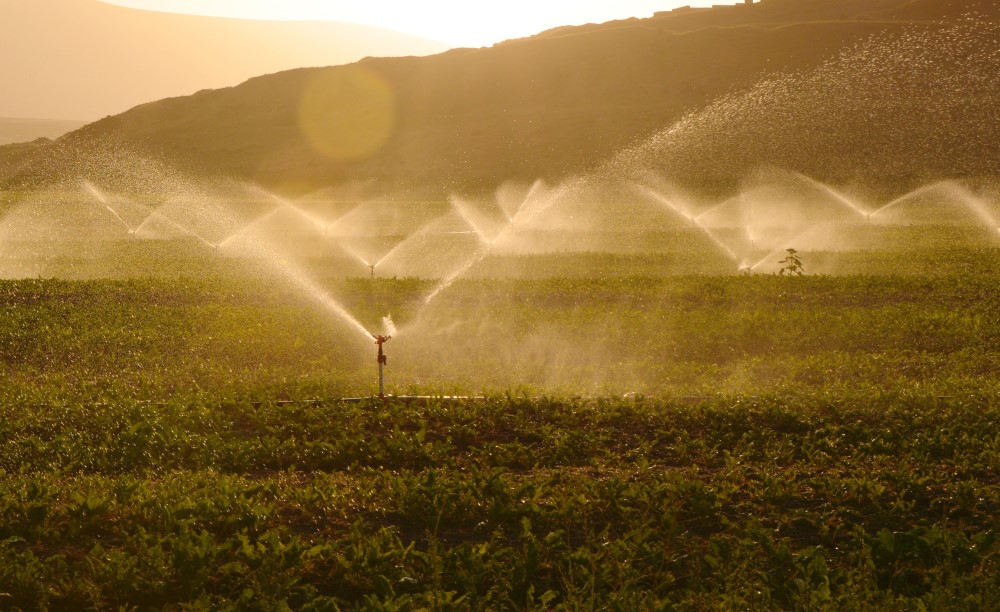
A solid-set sprinkler system is installed at the beginning of the life of the crop. The systems operate at low pressure, designed to mimic rainwater. Pipe systems attached with sprinkler heads are positioned along crop line to distribute water over the canopy. These systems do not suit all crops, primarily vegetable, but they can be very efficient and effective.
Advantages
These systems can be an energy efficient option for small areas requiring irrigation. They offer flexibility, as they can be fixed or moved (depending on system installed). As technology advances with remote control, sensors and improved irrigation scheduling, these systems are becoming a viable option for many. They require less water than boom and raingun systems.
Disadvantages
Suitable for small areas requiring irrigation and certain systems will need to be moved to cover larger field areas. These systems can be labour intensive. To gain full benefit combining this system with monitoring sensors, remote control technology would be an advantage so further investment would be required.
How to decide
When choosing your irrigation system, you need to decide the system that will suit and perform best for your business. Your local advisor can help you to examine what options are available to you to make your business more resilience to future water scarcity. Being able to store water on your land is likely to become a necessary activity, especially in areas that are already experiencing drier conditions over the summer months.
Helpful hints
- Only irrigate to crop requirement – do you schedule your irrigation based on crop need?
- Could you install soil moisture probes?
- Check for leaks
- Avoid irrigating during the hottest hours of the day (reduces evaporation)
- Plan with neighbours to reduce abstracting from local waterbodies at the same time
- Could you use stored water on farm (e.g. in an irrigation lagoon), rather than abstract from local water bodies?
- Improve soil organic matter (healthy soils can help retain water)
- Manage water application effectively
- Incorporate the weather extremes into planning (e.g. avoid peak winds)
The UK Irrigation Association produced a ‘How well do you think you are irrigating?’ quiz within their ‘Save water and money – irrigate efficiently guide’. This quiz can highlight areas where you could improve the efficiency of your irrigation system.
Further Information
Fiona Salter, Rebecca Audsley, Gavin Prentice, Kirsten Williams, Jack Zuill, Sarah Buckingham, Lorna Cole, David Haro Monteagudo, Kerr Adams and Jim Booth (2026). Planning for Water Scarcity: Practical guidance for Scottish farmers and growers. CRW2024_05. Centre of Expertise for Waters (CREW)
SEPA (2020) Scotland’s National Water Scarcity Plan
SEPA Water Scarcity: Weekly Report
Miriam Glendell, Kirsty Blackstock, Kerr Adams, Jack Brickell, Jean-Christophe Comte, Zisis Gagkas, Josie Geris, David Haro, Mohamed Jabloun, Alison Karley, Laure Kuhfuss, Kit Macleod, Shaini Naha, Eleanor Paterson, Mike Rivington, Chloe Thompson, Kirsty Upton, Mark Wilkinson, Kirsten Williams (2024). Future predictions of water scarcity in Scotland: impact on distilleries and agricultural abstractors. CRW2023_05. Centre of Expertise for Waters (CREW).
Related Resources
- Water Availability Part 1, Scottish Agriculture - Water Availability Part 1 – Scottish Agriculture (youtube.com)
- Water Availability Part 2, Farmer Feedback - Water Availability Part 2 – Farmer Feedback (youtube.com)
Sign up to the FAS newsletter
Receive updates on news, events and publications from Scotland’s Farm Advisory Service