
Water Management on Your Farm: Rainwater Harvesting
Why should you store water on farm?
Due to the impacts of climate change many areas of Scotland will experience increased uncertainty as to the availability of water. In 2025, Scotland faced the driest hydrological year since 1976[1]. This resulted in many regions of Scotland facing significant scarcity levels for long periods throughout the spring and summer months. SEPA defines water scarcity levels for Scotland: Significant water scarcity means that the average river flows have remained exceptionally low for 30 days in a row. Farms in these areas, especially those with relatively high-water demands, such as dairy, beef and fruit farms, may be at risk of not having sufficient water over the summer months. Ensuring that farms are mitigating water losses and efficiently utilising the water when it is present will be key to overcoming these risks during drier summers. This page looks at rainwater harvesters as one possible solution and how farmers can incorporate them within their farm.
[1] SEPA (2025) Autumn water situation report 2025 https://beta.sepa.scot/water-scarcity/water-scarcity-seasonal-reports/autumn-water-situation-report-2025/
Rainwater harvesting
Rainwater harvesting (RWH) is the practice of collecting rainwater which falls on farm buildings, rather than letting it evaporate, soak into the ground, or disappear into drains. RWH is best included in design of new buildings, however, retrofitting existing buildings is also possible.
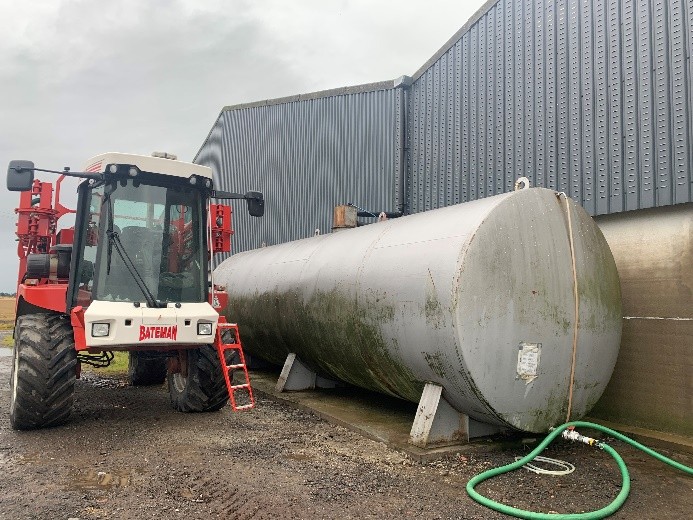
RWH can be a relatively simple system consisting of rain gutters collecting rainwater directly from roofs, such as farm sheds and barns (as shown in Figure 1 and illustrated in Figure 2.), instead of diverting water into drains or soakaways, this water is collected in storage tanks. Tanks come in various sizes (from a couple hundred litres to tens of thousands of litres). The size required is mostly determined by the water requirements on the farm and the availability of storage space. The storage tanks can sit above ground or be buried underground. For an above-ground tank, it is important to ensure the tank is made of dark-coloured material (usually polyethene), which sufficiently blocks the sunlight, therefore, prevents algal growth in the water.
Figure 1 Rainwater harvester in Perthshire
Generally, there are three types of system:
- Indirectly pumped system where rainwater is held in tank then pumped to header tank, where is it distributed to appliances via gravity.
- Directly pumped systems where rainwater is stored in a tank then pumped to where it is required on farm to be distributed.
- Gravity fed systems where rainwater is stored in header tank and distributed via gravity to appliances.
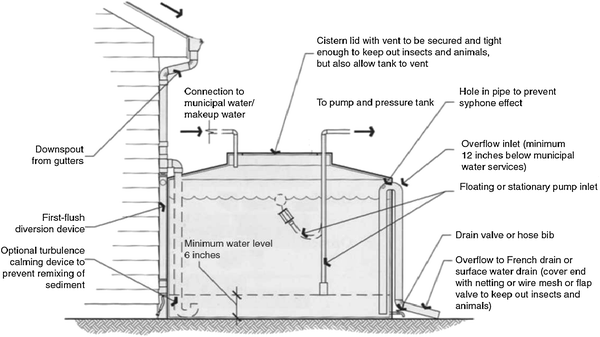
Figure 2: The plumbing diagram for a rainwater harvesting system
What can you use the water for?
RWH systems need to maintain adequate water quality, depending on the intended use of the water. It is important to have fitted filters to screen out debris (such as bird faeces and vegetation debris on the roof) and ensure the stored water is clean. The typical uses for stored rainwater on farm include irrigation, harvesting, drinking water for livestock, spraying, cleaning of vehicles and machinery, pen washing or sludge treatment. The water can be used domestically for toilet flushing, clothes washing or grounds maintenance. For irrigation or ready-to-eat crops, food processing or potable water, an additional water treatment (such as sanitation using UV light) will likely be required.
Potential benefits of rainwater harvesting
- Reduced risk of water insecurity
- Financial savings due to:
- Reduced water use from mains
- Reduced volume of water discharged into sewerage on farms where water discharge fees apply
- Reduction in required capacity of slurry storage, as rainwater is captured by RWH, therefore, lower volumes of contaminated water need to be disposed of, reducing the disposal costs
- Rainwater is sometimes considered safer for irrigation and spraying on crops than mains water, which is usually chemically treated
- Improved business continuity and sustainability
- Reduced pressure on natural environment arising from farm’s water demand
- Flood control in areas prone to local flooding
- Depending on the location of the farm and the local conditions, improved soil condition from reduced water intake and compaction can also occur
Things to consider
If your farm is located in an area that has been affected or likely to be affected by droughts in the future, RWH may be an option to mitigate the risks of water scarcity. There are a few factors, which need to be considered prior to installation of RWH system:
Farm water consumption
If the general water consumption on your farm is low, installation of RWH may not be viable for your business.
Potential yield of RWH
This can be calculated by taking the roof area (m2) of the building where RWH is planned and the average annual rainfall in your area (m3). By multiplying the two figures, you get the maximum potential volume of rainwater that can be harvested. However, you should also include a percentage of water being lost (not making it to the storage tank). There are also online calculators available, which can provide indication of the potential yield from the roof area and annual rainfall figures.
Appropriate type of RWH
The most common types are indirectly pumped system, directly pumped system and gravity-fed system. The choice of the type will mostly depend on the end use (e.g. water pressure required), budget available and whether connection to mains as a backup option is required.
Impacts on energy use and greenhouse gas footprint
Important if you’re planning to make use of an electric pump and UV filters
If the farm is located in an area that is affected by prolonged periods of droughts, RWH on its own is unlikely to be a sufficient measure to maintain water supply. Other measures such as ensuring the most appropriate irrigation scheme is in place or looking at way to slow and retain water on your land can be considered by farmers to mitigate the risks of water scarcity.
There are several UK-based companies specialising in RWH for domestic and agricultural use. Those can provide site-specific advice and guidance on RWH and the installation costs. Speak to your local farm advisor for more information, call the FAS helpline on 0300 323 0161, or watch our interview with a farmer with a RWH system in place.
Further information
Environment Agency (2009) Rainwater Harvesting: an on-farm guide
Heronbrook Farm All our Water is FREE! – how does out rainwater harvesting system work https://www.youtube.com/watch?v=kMIl1iYu9l8 (English-based)
FAS Rainwater Harvesting – Making use of Scotland’s bumper crop https://www.youtube.com/watch?v=5ozKdP1sXG4
LEAF A Guide to Rainwater Harvesting on Farm https://www.youtube.com/watch?v=I03pB4fuzJw
Farming and Water Scotland - Improving farm resilience to changing weather
CREW: Planning for Water Scarcity: Practical guidance for Scottish farmers and growers
FAS Basic Farm Water Resilience Audit https://www.fas.scot/article/basic-farm-water-resilience-audit-summer-2026/
Sign up to the FAS newsletter
Receive updates on news, events and publications from Scotland’s Farm Advisory Service