
How to Get Oilseed Rape off to a Good Start
8 August 2025Over the past decade many growers have increased their proportion of spring malting barley grown due to it having good levels of profitability and being relatively cheap to grow. However, the last couple of years has seen demand and prices for malting barley fall, leading to growers looking at their options and considering growing other crops.
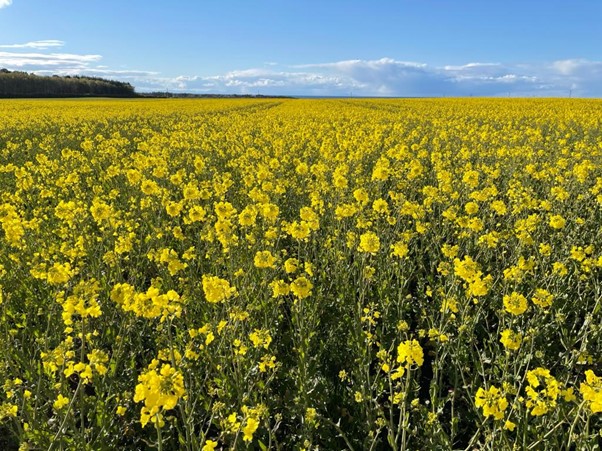
Interest in growing oilseed rape has increased as a potential autumn crop, from both first-time growers and those looking to re-introduce the crop to their farm. This interest comes from both its own profitability as an enterprise and also as a break crop and potential entry for winter wheat. Oilseed rape, however, is a costly crop to grow, with high levels of inputs in the form of fertiliser and pesticides required. The rewards can be high though, with 5t/ha crops being increasingly commonplace. Getting the crop off to a good start is key to success.
Variety
There are a number of oilseed rape varieties available, yield is of course important but agronomic considerations should not be ignored. In terms of disease, scores for key diseases such as Light Leaf Spot (LLS) should be at least 7. Other factors such as resistance to lodging, earliness and, with the potential of unpredictable weather at harvest, pod shatter resistance should also score highly.
One other consideration for variety choice is field history – how frequently have oilseed rapes or other brassicas (including as part of green manures and cover crops) been grown in the field. If the field has a history of brassicas, then a club-root resistant variety should be considered.
Establishment
Over the past couple of decades there has been greater move towards direct drilling and min-till with oilseed rape. Much depends on the site, with min-till or direct drilling suiting lighter soils and many of these drills also offering the opportunity to take out some of the compaction. Seed to soil contact is key regardless of establishment method, and ensuring seed beds are consolidated to achieve this and retain moisture is vital.
Ploughing and using a one pass still has its loyal fans, and indeed it has its place, being able to remove compaction and bury weeds and trash. This also allows a good tilth to be made, although again seed beds need to be consolidated after sowing. Ploughing does however add time and cost to establishment.
Seeds should be sown at between 40 – 60 seeds per m2, this allows for losses during germination and winter to be accounted for, with rates at the higher end considered when seed beds and conditions are less than ideal. Crops should go into warm soils with some moisture available with sowing occurring around mid to late August. Early September sowing is possible, however as soils and air temperatures tend to be starting to cool, along with day length noticeably shortening, establishment can be much slower, putting the crop at greater risk of pests.
Consistent germination is important to help get the crop away and sowing depth should be between 2 – 3 cm. Seed sown deeper than this will be much more uneven in terms of establishment and more likely to have lower germination rates.
Nutrition
Oilseed rape crops will respond to nitrogen in the autumn with applications usually made at sowing or into the seedbed, typically up to 30kg/ha N. This can also be beneficial where soil nitrogen has been locked up due to straw incorporation. Nitrogen is usually applied as a compound along with P & K with Boron added. P & K levels should be based on crop requirement with soil indices and any applications of organic manures considered.
Placing fertiliser near the seed allows the crop to take up these nutrients quickly, leading to faster development of the important rooting system below ground and leaves above ground, helping its growth through the threat of pest damage, helping it compete with weeds and achieve good ground coverage going into the winter.
Weed control
Oilseed rape is not the most competitive of crops, and where crops have been established using cultivator drills or by ploughing, weed populations will be higher with pre-emergence or early post-emergence sprays necessary. In crops sown by minimal disturbance methods, particularly following crops that have received glyphosate, the potential for competition from weeds may be lower, although this should be assessed on a field-by-field basis in terms of history and weed spectrum. Weed control options in the spring are limited so effective early weed control is vital. Many weed programs will have metazachlor as a cornerstone, being relatively cheap and offering early control of a number of broadleaved weeds, although other actives can help offer a wider spectrum of control. When applied as a pre-emergence spray, seed should be covered by at least 1.5 cm of soil.
Volunteer cereals and grass weeds can also be a problem and effective control by using graminicides can usually be easily achieved. Many of these work best when soils start to cool however, and it is important that volunteer cereals are not allowed to out-compete the young oilseed rape crop.
Pests
Oilseed rape crops can face a number of challenges from pests as they become established. As crops come through the ground and reach the cotyledon stage, oilseed rape crops face the threat of both slugs and Cabbage Stem Flea Beetle (CSFB), with the latter leaving its tell-tale shotgun holes in leaves. Slug activity should be assessed by using slug bait traps, although risk will be higher on heavier land with poorer seedbeds and on sites with more trash near the surface. Pellets should be applied as required and treatments monitored for effectiveness. CSFB activity should also be monitored and in slower growing or later sown crops where damage is high, an insecticide application may be necessary. It should also be noted that crops sown in favourable conditions can very quickly grow through the critical periods for damage from slugs and CSFB, negating the need for treatment.
Including oilseed rape in the rotation offers a number of advantages for arable farmers in challenging times. It is however a crop that requires close management and monitoring with the first couple of months critical to ensuring the crop becomes well established and offers the best opportunity for optimum yield and profitability.
George Chalmers, SAC Consulting
Related Resources
Sign up to the FAS newsletter
Receive updates on news, events and publications from Scotland’s Farm Advisory Service