
Balmaud Farm & Distillery – A Journey to Net Zero
7 April 2026This case study shows how Balmaud Farm and Balmaud Distillery treat soils, energy and by‑products as a single, practical system to cut emissions and control costs while maintaining quality. The aim is to provide practical steps other farms and producers can trial, and to show how grain‑to‑glass traceability supports product quality and a more resilient business. It lays out the on‑farm practices and distillery measures that delivered results, regular soil monitoring, variable‑rate pH correction and targeted trace elements that reduced fertiliser inputs without harming yields; on‑site wind power, heat‑recovery and closed‑loop cooling that lowered energy and water demand; and the reuse of draff and pot ale to generate energy and return nutrients to the land.
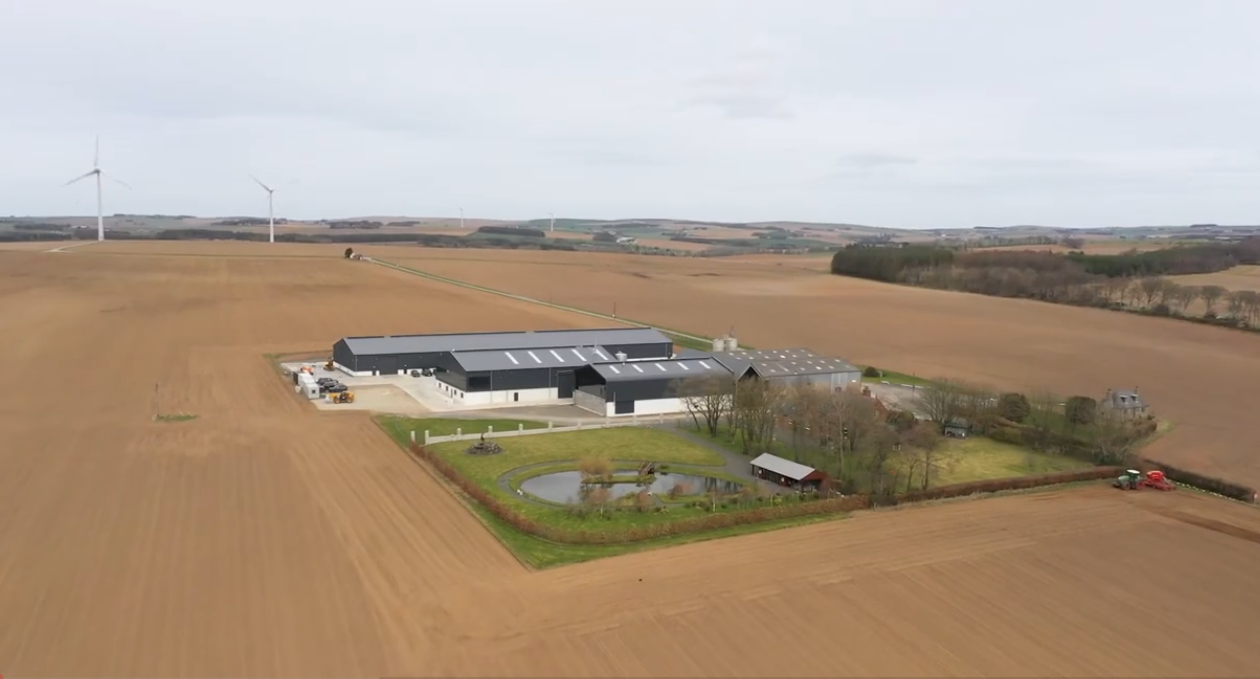
Balmaud is a fourth‑generation Scottish family farm cultivating 1,750 acres of barley, wheat, and oats across Turriff and Memsie, with sustainability embedded at the heart of its operations. Over the past decade, the farm has steadily transformed its practices, beginning with renewable energy installations in 2014 and expanding into distilling in January 2025. This journey has combined soil monitoring, precision fertiliser application, renewable integration, energy‑efficient distilling technologies, and circular waste management, supported by a skilled team recruited to ensure technical excellence. The results are clear:
- Reduced fertiliser use
- Healthier soils
- Lower emissions
- Stronger traceability
- A distillation process powered by wind energy.
Looking ahead, Balmaud plans onsite maltings and an anaerobic digester to further close the loop, reinforcing its commitment to resilience and long‑term sustainability.
Soil-first
Balmaud’s journey begins in the soil. Every field is monitored continuously, with a full analysis at least every four years. Those results guide everything: they show soil carbon levels well above targets, robust infiltration, and generally fertile conditions with high phosphate and medium potash indices. Rather than apply blanket doses, the team now trims inputs to match what’s genuinely needed. On spring barley, phosphate has been cut back to a modest amount, combine‑drilled at sowing, so the crops draw down the existing pool in the soil. Potash rates have also been reduced in line with analysis. Where trace elements are low, particularly copper and zinc, the farm uses tissue testing to time small, targeted applications of manganese, copper, and zinc. That keeps plants healthy and has helped reduce fungicide use by supporting natural resilience.
pH Correction
pH is corrected using Calcifert applied at a variable rate. By mapping pH variation and only treating where it’s out of range, the farm uses less product and stabilises nutrient availability across each field. Drainage is kept in working order so water moves through the profile, protecting structure and ensuring timely spring work. Together these changes save fuel and fertiliser manufacture emissions, and they make better barley.
Quality Control
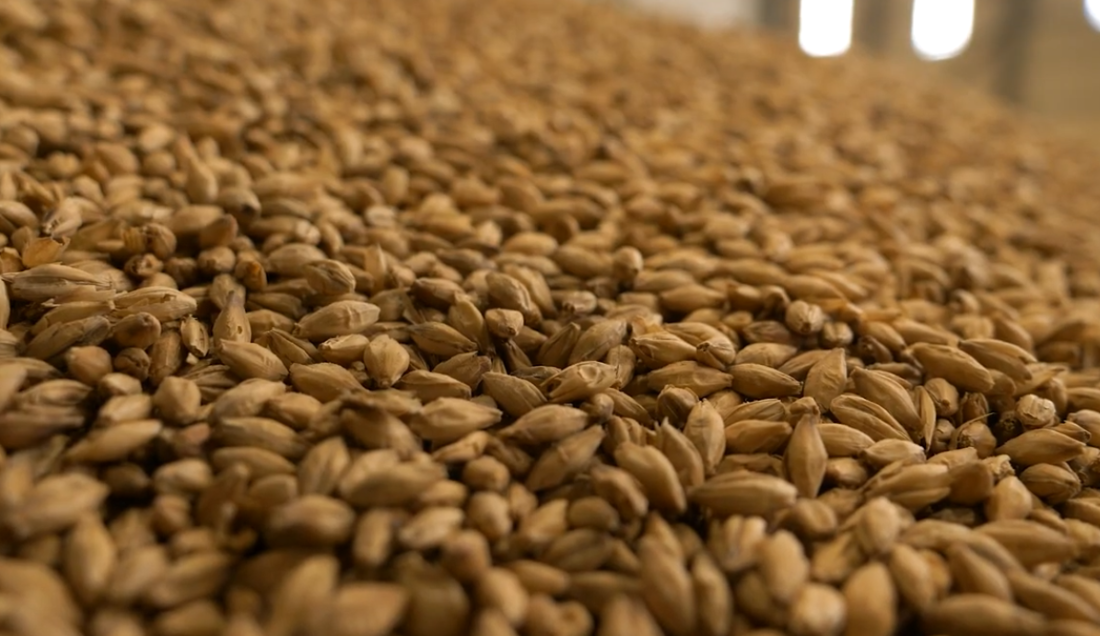
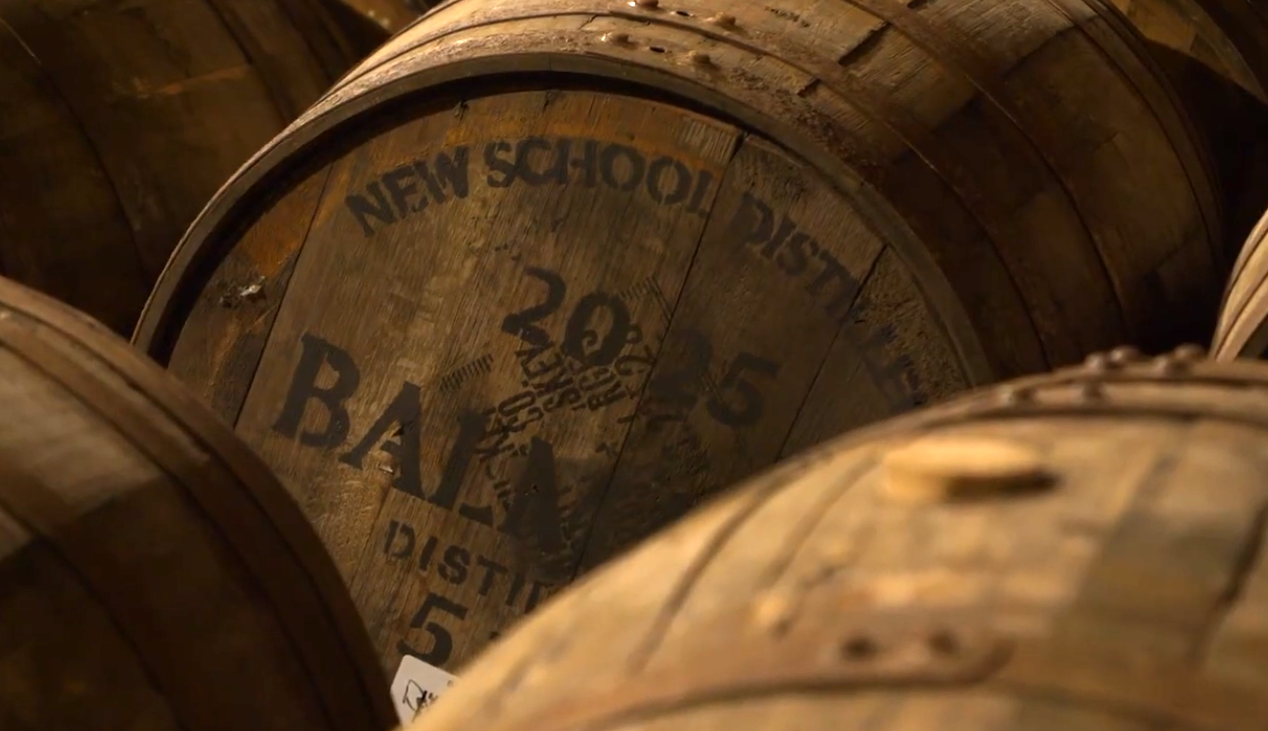
Control of barley production is the engine of Balmaud’s “grain‑to‑glass” model. By choosing varieties, managing nutrition, and harvesting to distilling standards, the farm locks in full traceability and consistent quality. In the still house, the kit is sized and specified for efficiency: a three‑ton mash tun feeds eight 15,000‑litre washbacks, a 15,000‑litre wash still, and a 10,500‑litre spirit still. Current output is around 300,000 litres of alcohol per year, with installed capacity to scale to 1.2 million litres when the time is right.
Energy Efficiency
Energy sits at the heart of emissions for any distillery. Balmaud installed two 2.3‑megawatt wind turbines in 2014. Originally, all power went to the grid; now the distillery is integrated so the electricity can be used on site. Heat efficiency is boosted by thermal vapour recompression (TVR). In simple terms, TVR captures hot vapour from the process, compresses it to raise its temperature, and reuses that heat in the system. By recycling heat that would otherwise be lost, the distillery cuts the amount of fresh steam it needs. Cooling water is handled in a closed‑loop with an air blast cooler: warm water from the condensers is cooled and returned for reuse, dramatically reducing the volume of freshwater required.
Waste Not...
Nothing is wasted. Draff and pot ale, the main by‑products of mashing and distillation, are currently sent five miles to an anaerobic digester, turning them into renewable energy and a nutrient‑rich digestate used as natural fertiliser. The next steps are already planned: an on‑site maltings, fired by the farm’s biomass, to shorten the supply chain and trim transport emissions; and an on‑site anaerobic digester so distillery residues can generate biogas to fuel the boiler, with the digestate looped back to the land. A new visitor centre will tell this story and build direct relationships with drinkers.
Outcomes
On the land:
- Reduced phosphate and potash applications, guided by soil indices, mean lower embedded emissions and cost without compromising crop performance.
- Variable‑rate pH correction evens up fields and improves nutrient use efficiency.
- Tissue‑led trace elements support plant health, which in turn helps the business lower fungicide reliance.
The result is barley that meets distilling specs while safeguarding long‑term fertility.
In the distillery:
- Using turbine power and reusing heat with TVR lowers the energy intensity per litre of alcohol produced.
- Closed‑loop cooling avoids the old model of running large volumes of water to drain, replacing it with a recirculating system that only needs occasional top‑
- Sending by‑products to anaerobic digestion substitutes fossil energy elsewhere and returns nutrients to local soils, another quiet emissions win.
Commercially, full traceability from field to bottle creates a compelling story for customers and trade partners, adding brand value while de‑risking supply.
Challenges
None of this happened overnight. Soil improvements and the benefits of regenerative practice take seasons to show. Integrating wind power, heat‑recovery, and closed‑loop cooling required capital and careful commissioning. Most of all, running a distillery is a specialist challenge for any farm business.
Balmaud’s advice to peers is clear: surround yourself with skilled operators and managers, start small, test ideas on your own ground, and scale what works. With patience and the right people, the journey to lower‑carbon farming and distilling is not only possible, but it’s profitable and resilient.
Luisa Riascos, SAC Consulting








Sign up to the FAS newsletter
Receive updates on news, events and publications from Scotland’s Farm Advisory Service