
Managing Light Leaf Spot Risk in Oilseed Rape
4 November 2025Light leaf spot (LLS), caused by the fungal pathogen Pyrenopeziza brassicae, remains one of the most damaging diseases of oilseed rape. Once considered mainly a problem in Scotland and northern England, it is now widespread across the UK. Recent wet October conditions have created a high-risk environment for infection, with temperatures around 16°C providing ideal conditions for the disease to develop.
If crops are inadequately protected, light leaf spot can spread to leaves, stems, flowers, and pods, leading to severe yield losses — in some cases exceeding 50%.
Disease Development and Risk
LLS is a polycyclic disease, meaning it can complete several infection cycles in one season. Epidemics begin with airborne ascospores released from crop debris, while secondary infections occur via conidia and newly produced ascospores on infected tissue. The disease can be present as early as October, spreading rapidly if left unchecked. Spores continuously release and reinfect plants throughout the autumn and winter, making early intervention critical.
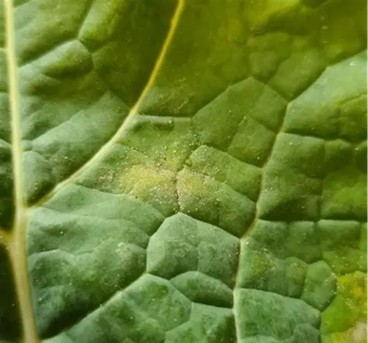
Early symptoms are notoriously difficult to spot, often appearing as fine, white, sugar-like sporulation on either side of the leaf. This can be almost microscopic, so a hand lens is helpful for inspection. Incubating suspect leaves can also act as an early warning system, revealing infection several weeks before visible field symptoms appear.
Fungicide and Variety Management
Because LLS is difficult to manage curatively, protection must focus on preventive fungicide programmes guided by varietal resistance and crop growth stage. Varieties with a resistance rating below 7 on the AHDB Recommended List should be prioritised for early fungicide treatment. Even those with higher ratings are not immune and may benefit from early protection in high-risk conditions.
The choice of fungicide should reflect both disease pressure and growth regulation requirements. Products based on prothioconazole and tebuconazole, or formulations containing bixafen plus prothioconazole, provide the strongest control of both LLS.
Where crops are large or advanced, with significant autumn biomass (GAI above 0.8), a dedicated PGR such as mepiquat + metconazole may be the better choice. This approach offers greater growth regulation and timing flexibility, as it allows disease control and growth management to be separated. Large, forward crops will benefit most from a sequenced PGR programme applied in both autumn and spring.
Timing and Application
Fungicides are most effective when used protectively, ideally applied at the first sign of disease in autumn. For high-risk sites or susceptible varieties, an autumn spray in November is recommended. Crops should then be monitored regularly from January onwards for new symptoms. As there is no formal treatment threshold, applications should be made as soon as light leaf spot is detected.
Mark Bowsher-Gibbs


Sign up to the FAS newsletter
Receive updates on news, events and publications from Scotland’s Farm Advisory Service