
Nutritional Opportunities from EFA Greening
11 March 2026With EFA greening changes coming into place in 2026, many farms will grow new crops that can be utilised as home grown feed for dairy cattle. These crops include nitrogen fixing plants like clover, lucerne and beans, whilst others include forage crops such as kale, forage rape and stubble turnips. All provide valuable sources of energy and protein; however correct feeding management is essential.
Nitrogen Fixing Plants Improve Milk Production
Nitrogen-fixing plants can be used in the following options:
- EFA catch crop
- EFA green cover
- EFA nitrogen-fixing crops
- EFA herb and legume rich pastures.
They improve soil health and nutrient efficiency through tap roots and root nodules where nitrogen is fixed. These crops are high-quality protein sources, typically ranging from 17 – 22% crude protein, supporting improved cattle performance.
A benefit of incorporating clover into the EFA options mentioned above includes the potential for increased milk production. Studies have shown that incorporating white clover in the sward at 21% increased dry matter intake by 1.0 kg/day per cow, compared to grass only swards. This improved milk yield by 1 litre/day, whilst maintaining similar milk constituents as seen in Table 1.
Table 1. Dry matter intake and milk performance at Moorepark and Clonakilty research units.
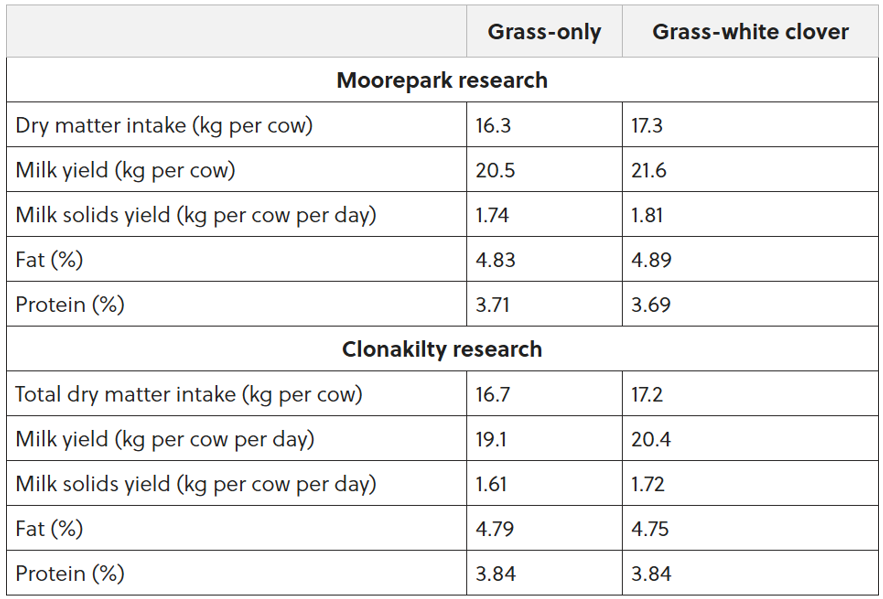
Source Teagasc, Hennessy, D, et al., 2023.
If the legume content of the sward is going to exceed 40% then there needs to be consideration of bloat which occurs when something interferes with the release of gas from the rumen. This typically happens when cattle are grazing young, lush grass or there is a high legume content in the sward, such as EFA nitrogen-fixing crops options, where the sward will be predominantly legume based.
The risk of bloat can be reduced through careful management. For example:
- Turning cows out to paddocks as a whole herd, rather than individuals as they return from the parlour.
- Adding bloat oil to water troughs used during the grazing season, and at the parlour will aid in the prevention of bloat.
- Increasing fibre content of the diet by offering buffer feed with approximately 2 – 3 kg/DM per day can assist in reducing bloat.
It is important to manage grazing to avoid the cows gorging.
Forage Crops
Forage crops under the EFA green cover option offer the opportunity to fill the gap between autumn and winter when grass growth declines. They reduce feed, labour and bedding costs.
Kale and forage rape are high protein feeds, ranging from 16 – 20% CP whilst energy content ranges from 10 – 11 MJ/kg DM. In stubble turnips, protein is concentrated in the leaves whilst energy is sourced from the bulb. Nutritional details are shown in Table 2.
Table 2. Nutritional content of forage crops.
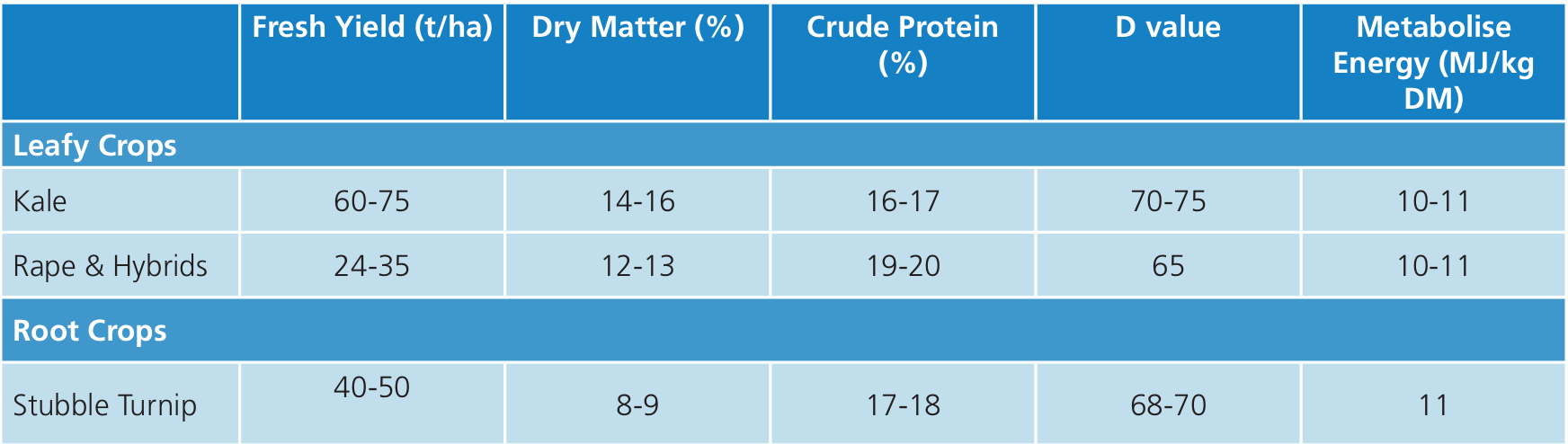
Source FAS TN733
These crops are typically grazed in situ behind an electric wire. Kale and stubble turnips are more commonly used for cattle than forage rape. Grazing should be built up over 7 – 10 days; initially, cattle should have access to the crop for 1 -2 hours, increasing to full time access by day 10. Strips should be long and shallow to avoid wastage from trampling and to allow the quieter animals opportunity to eat. Daily moves of the fence are recommended to ensure fresh and palatable feed is available each day. Cattle should be introduced to these crops gradually to avoid digestive upsets.
Including Fibre
In addition to forage crops, fibrous forage such as hay, silage or straw should be offered daily to further reduce the risk of digestive upsets. Despite the good source of protein and energy from these crops, minerals and in particular, trace elements are low. Therefore, supplementation is vital, particularly iodine, copper, cobalt and selenium, the method and quantity of supplementation should be discussed with your nutritionist and/or vet prior to cattle being grazed on these crops.
The inclusion of either of these types of plants in your farm rotation as a greening option can provide new sources of protein and energy available to be grazed by cattle. But it is key to understand how to graze them properly to reduce potential risks to health and performance.
Dr Cara Campbell, SAC Consulting
Related Resources
Sign up to the FAS newsletter
Receive updates on news, events and publications from Scotland’s Farm Advisory Service