
Preventing Disease in the Calf Shed
7 November 2025Dairy calves are susceptible to multiple health problems, including scours and pneumonia, which can be fatal or have a significant impact on their growth rates and performance. Additionally, there is the cost factor of treating poorly calves which can reduce the profitability of the herd. Therefore, the health of these replacement heifers is a key component of herd profitability and performance. Preventing disease in calves begins in the calf shed with several options to reduce the risk of disease.
Biosecurity protocols
Disease prevention starts at the entrance of the calf shed; infection can spread via wellies of the people entering the shed. A good starting point and initial line of defence is having a footbath where wellies are dipped each time someone enters the shed. A footbath can be in different forms including a bucket or a disinfectant mat. Ideally, if a bucket is being used, it should have a lid to prevent rainwater entering it and in summer months, reduce the risk of evaporation. Similarly, the lid will prevent contamination of the disinfectant. The key features of a footbath include easily visible at the entrance of the shed and identifiable to what its purpose is on the farm. It is important that disinfectant is made up to the correct dilution as instructed on the packet and to ensure the effectiveness, the disinfectant should be regularly changed as necessary.
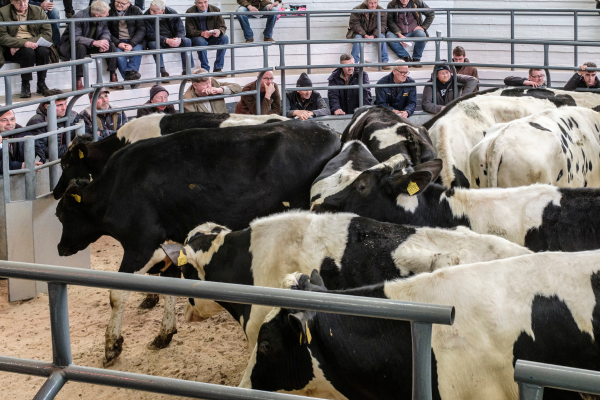
Another biosecurity measure is considering who is entering the calf shed and their risk factor for spreading infection to your calves from potentially other farms or livestock markets. If calves are being sold off farm, depending on practicalities, locating these calves nearest the entrance to shed or in a different shed can reduce the need for the buyer to walk through the other calves and particularly, the younger calves that are highest risk of picking up an infection. For visitors like buyers or vets entering the shed, is there an opportunity to have boots that are stored in the shed for them to use? Reducing the risk of infection entering the shed from external sources is vitally important and these small measures, that are not costly, can help prevent disease.
Isolation pens
If a disease does enter the calf shed, early intervention is key to reducing the spread amongst the calves. Isolation pens for poorly or sick calves is a way of reducing the spread of infection. These pens should always be available to allow calves to be moved as soon as there are any signs of infection. The pens should be easy to clean, and it is important that these pens are disinfected between calves. To minimise the negative impact of an isolation pen when calves have been used to group housing, these pens could be erected at the front corner of the pen. A footbath should be located outside of the pen to ensure boots are dipped going between the healthy and poorly calves.

Bedding
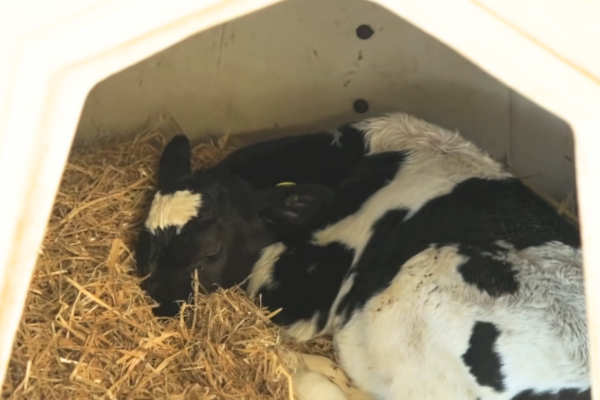
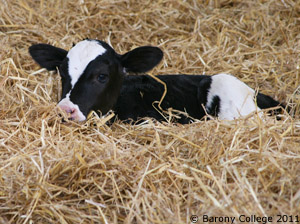
Calves spend between 17 - 18 hours per day lying down, with sick and poorly calves having increased lying times. The quality of bedding can impact the health and spread of infection between calves. Bedding type can impact the thermal comfort for the calf and during the summer months, sand, sawdust or shavings are suitable options. However, these are not suitable options for winter months due to the lack of thermal protection from them. The best option for winter months is straw as this provides the opportunity for the calf to get thermal protection and comfort by nesting in it. Sick calves have a lower critical temperature than healthy calves due to reduced feed intakes so it is important that they can get thermal comfort from the bedding. Calves prefer to lie on dry bedding, and it has been shown that lying times reduce as the bedding dry matter decreases.
Preventing the spread of infection in the calf shed is vital to reduce the risk of a disease outbreak. Biosecurity, isolation pens and bedding are all good starting points to reducing the risk of disease in the calf shed and there are always opportunities to reevaluate your current set up to determine if prevention could be better.
Cara Campbell, SAC Consulting

Sign up to the FAS newsletter
Receive updates on news, events and publications from Scotland’s Farm Advisory Service