
Cereals

Spring Malting Barley Outlook 2026
Key Points Weak and uncertain export demand for whisky is feeding back down the supply chain Spring malting barley contract tonnage expected to be lower in 2026 Feed markets likely to remain important for spring barley again in 2026 Higher autumn sowings have cut the UK barley area to a 15 year low that may support feed…

Alternative Protein Crops Overview
There has been a significant amount of research conducted in recent years to explore the potential of home-grown protein crops which may be viable in the UK. This article gives an overview to the soya issue, where the UK feed system is most exposed, and highlights emerging evidence on a range of alternative protein crops that could be grown in a UK climate. Soyabean…
Business and Policy February 2026 – Arable
Heavy volumes weigh on markets Markets had incorrectly presumed that the latest USDA report would report on tighter maize and soya bean stocks and broadly stable wheat inventories. Instead, the report, which was issued on the 12th of January delivered a clear bearish shock. The USDA significantly raised U.S. yields and harvested area, and published very large production figures for Argentina, Brazil, Russia, and China, while leaving consumption largely unchanged. As a result, global ending…
Business and Policy January 2026 – Arable
Grain markets in 2025: a year in review Grain markets in 2025 were defined overwhelmingly by supply. Large harvests across the Northern Hemisphere, favourable weather in South America, and intense export competition combined to keep prices under sustained pressure. For UK farmers, this translated into another difficult year, with weak returns at the farmgate set against…
Business and Policy December 2025 – Arable
Global grain markets continue to be shaped primarily by developments in the United States, where political signals, export activity, and the USDA’s supply assessments are setting the tone for world prices. China’s purchasing behaviour remains the primary demand-side influence: substantial recent buying of US soyabeans has provided support for the oilseed complex, though no confirmed…

Check Your Wheat’s Revised Yellow Rust Resistance Rating
Several winter wheat varieties have seen significant drops in yellow rust resistance ratings in the latest AHDB Recommended List (RL) 2026/27 release, some by as many as five points. The revised ratings were published earlier than usual to help growers adapt management strategies for harvest 2026, following the rapid emergence of a new yellow rust…
Harvest Overview 2025 – Mixed Fortunes Across The UK
The Scottish Government has released its initial estimates of area, yield, and production for the 2025 harvest, covering the main cereal and oilseed crops – winter and spring barley, wheat, oats, and oilseed rape. Final figures are due in December, based on a wider sample of farms, but early indications suggest a notable improvement in Scottish yields…
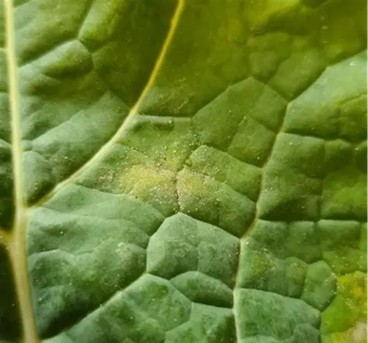
Managing Light Leaf Spot Risk in Oilseed Rape
Light leaf spot (LLS), caused by the fungal pathogen Pyrenopeziza brassicae, remains one of the most damaging diseases of oilseed rape. Once considered mainly a problem in Scotland and northern England, it is now widespread across the UK. Recent wet October conditions have created a high-risk environment for infection, with temperatures around 16°C providing ideal conditions for the disease to develop. …
Business and Policy November 2025 – Arable
Improving yields but mixed quality across Scotland On 16th October, the Scottish Government released its initial estimates of area, yield and production for the 2025 harvest, covering winter and spring barley, wheat, oats and oilseed rape. Final figures will be published in December based on a larger sample of farms, but early indications suggest an…
Business and Policy October 2025 – Arable
Market Overview Grain and oilseed markets enter the final quarter of the year under the weight of ample global supply, volatile macroeconomics, and uneven demand recovery. Early autumn weather across the UK has generally been favourable, with rains aiding crop establishment and winter wheat drilling underway. However, despite good agronomic conditions, markets remain under pressure…