
Regenerative Dairying – Planning Now for Resilient Milk Production
Regenerative farming and its principles are increasingly appearing in milk contracts, buyer discussions, and supply chain sustainability strategies. For many dairy businesses, the question is no longer if it will feature in future requirements, but how to approach it in a way that strengthens your farm system.
At its core, regenerative agriculture is a spectrum, not a prescription. It is an approach grounded in agro-ecological principles: working with biological processes to build soil health, improve nutrient cycling, enhance biodiversity and increase system resilience, while maintaining productive output and profitability. If you’re considering how to integrate regenerative principles onto your farm, spring is the ideal time to think ahead.
Start with the Soil
The soil is literally foundational to regenerative farming. Soil organic matter, biological activity and structure underpin grass growth, forage quality and nutrient efficiency.
If you haven’t already taken samples, spring sampling can provide a baseline for:
- Soil organic matter
- pH and nutrient balance
- Compaction risk
- Earthworm counts and visible soil structure
Importantly, integrating regenerative systems does not mean abandoning fertiliser. Instead, the focus is on optimising nutrient cycling, integrating slurry, clover and soil biology to reduce reliance on purchased inputs over time.
Rethink Grass as an Ecosystem
Perennial ryegrass monocultures can deliver high yields, but increasingly we’re seeing interest in multi-species swards, partly driven by changing weather patterns and more challenging growing conditions for crops and pastures. Recent changes to greening rules may encourage a shift in mindset and promote approaches that you wouldn’t necessarily immediately think of as regenerative. An example of this would be incorporating white and red clover, herbs such as chicory and plantain, and diverse grasses to:
- Improve nitrogen fixation
- Increase drought resilience
- Support pollinators
- Enhance forage mineral profile
Grazing Management
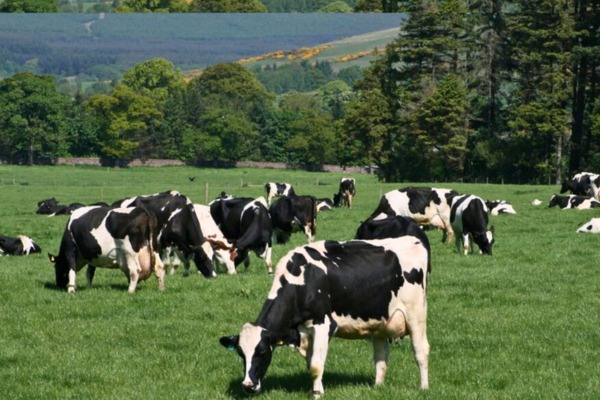
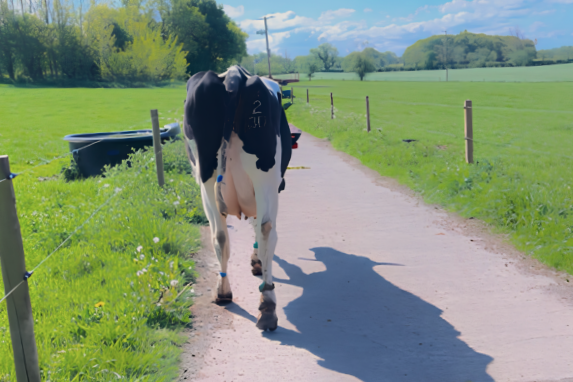
Regenerative grazing focuses on allowing adequate plant recovery. This does not require extreme mob-stocking, but it does require intentional rotation planning. If milk buyers are asking about regenerative grazing, they are often looking for evidence of rotational planning and soil protection rather than rigid adherence to a specific stocking method.
Key spring considerations:
- Avoid grazing too tightly in early rotations
- Monitor residuals to protect regrowth
- Lengthen rotation as growth accelerates to prevent grass from heading
Healthy root systems are built when plants are allowed recovery time. Strong roots mean better water infiltration, nutrient uptake and drought tolerance later in the season.
Integrate Livestock and Nutrients
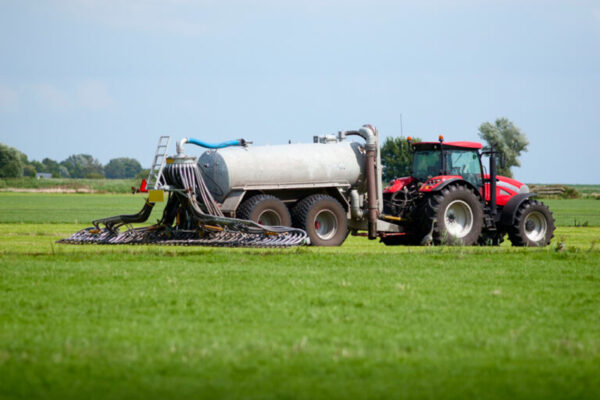
Dairy farms are already integrated systems, but regenerative thinking encourages tighter loops. Therefore, spring slurry applications should prioritise:
- Low-emission spreading methods
- Matching timing to crop demand
- Avoiding trafficking damage and compaction
It’s good to consider how youngstock grazing, silage aftermath management and buffer strips can contribute to whole-farm nutrient efficiency and biodiversity goals.
Right Habitat, Right Place
Regenerative farming does not mean taking land out of production indiscriminately. Instead, it means placing the right habitat in the right place. This spring, consider:
- Managing existing hedgerows for structure and flowering
- Leave field margins uncut in silage pastures
- Protecting watercourses with buffer strips
- Placement of bird and bat boxes
Many milk buyers now track biodiversity indicators. Planning small, practical actions now avoids rushed decisions later in the year.
Economics First, Always
Perhaps the most important principle is that regenerative dairy must stack up financially.
Reduced reseeding frequency, lower fertiliser dependency, improved forage quality and better cow health all contribute to margin resilience. However, transition should be phased, monitored and – crucially - funded when there are opportunities for investment.
A good starting point is to choose one or two changes this season. For example:
- Trial a multi-species sward.
- Extend grazing rotation length.
- Improve slurry nutrient testing and targeting.
Regenerative agriculture is not about ideology. It is about designing dairy systems that are biologically functional, input-efficient and resilient to weather and market volatility.
As conversations with milk buyers evolve this spring, those who understand their soils, their grass and their nutrient flows will be best placed to shape the agenda, rather than simply respond to it.
For more information on regenerative farming check out the Regenerative Agriculture section on the FAS website.
Alexander Pirie, SAC Consulting





Sign up to the FAS newsletter
Receive updates on news, events and publications from Scotland’s Farm Advisory Service