
Business and Policy September 2026 – Arable
Overview
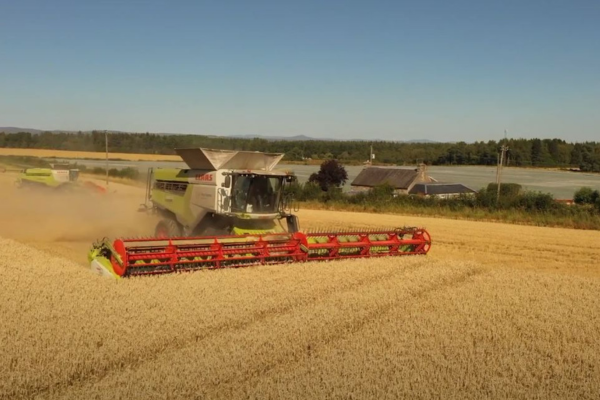
As the 2026 harvest nears completion it may well be remembered as one of the driest on record. Across southern and central England, prolonged heat and exceptionally dry conditions have severely affected yields, although Scotland and northern areas are generally reporting better results.
The national picture is mixed, and perhaps AHDB’s yield reports for the UK as a whole are over-generalistic. However, AHDB currently puts winter barley at an average yield of 6.8t/ha, close to the 10-year average of 6.9t/ha. Winter oilseed rape at 3.9t/ha, well above its 3.3t/ha average and currently the only crop reporting yields above the five-year average. Winter wheat at 6.7t/ha, is 13% below its five-year average of 7.9t/ha, while spring barley at 4.1t/ha is 28% below its 10-year average of 5.7t/ha. Oats are particularly poor at 4.2t/ha, 21% below average and described as a 46-year low.
The later Scottish harvest should improve the UK averages, particularly for wheat and spring barley, where yields of over 11t/ha for wheat are being reported locally. Nevertheless, the final UK harvest could be as low as 19.5Mt, potentially the lowest since records began in 1984, with an estimated resulting farm revenue loss of up to £390m.
The international market is being dominated by an increasingly serious disruption to Black Sea exports. Attacks on Russian and Ukrainian ports and shipping are restricting the movement of grain just as the new harvest comes forward. At the same time, US maize and wheat prospects are coming under scrutiny, while low water levels on European rivers are creating additional logistical problems.
The key question for prices is therefore whether the market continues to regard the Black Sea disruption as temporary, or whether prolonged restrictions force major importers to switch to Western origins.
Wheat
Wheat remains the crop most exposed to geopolitical risk. Russian and Ukrainian export infrastructure is increasingly under attack, with Russia’s Novorossiysk port suffering significant disruption. Russian exports were estimated to have fallen by around 20% year-on-year in July, while Ukrainian exports have also fallen sharply.
The latest estimates suggest Russian exports could be only 2.2Mt in August, the lowest level since 2010, while more than 90% of Russia’s Azov-Black Sea export capacity has reportedly been taken offline. Ukraine’s grain exports reportedly fell by 75% in the first two weeks of August, with attacks having affected 67 port facilities and 35 civilian vessels during July.
The disruption is significant because Russia and Ukraine together account for around 30% of global wheat exports. The International Grain Council has consequently cut its 2026/27 world wheat production forecast by 4.3Mt to 816.7Mt, now around 27.5Mt below last season. Russia and Ukraine are expected to hold a much larger share of stocks by the end of the season; around 28% of the stocks in major exporting countries compared with 18% previously, reflecting the difficulty of getting grain out rather than its disappearance from the global balance.
Prices have responded, although surprisingly moderately. November 2026 UK feed wheat (fig 1) is currently trading at £211.50/t, having reached the previous high of £207/t on 22 July, while May 2027 futures are around £217/t.
Figure 1: Nov 26 feed wheat futures
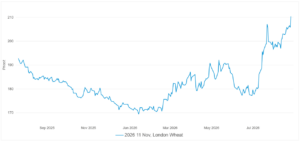
Source: ECB, ICE, CME, Euronext, MGEX, DCE, Barchart Solutions
There are still some important bearish factors; Western European export demand remains weak, French ports are carrying substantial stocks, and several tenders have been cancelled. UK flour milling wheat usage was 8% lower in 2025/26, while animal feed production in June was down 7% year-on-year. UK wheat imports of 2.615Mt for the 2025/26 season were also 15% lower than the previous year.
For UK growers, however, the combination of a smaller domestic harvest and potential disruption to Black Sea supply provides an important underlying support to prices.
Barley
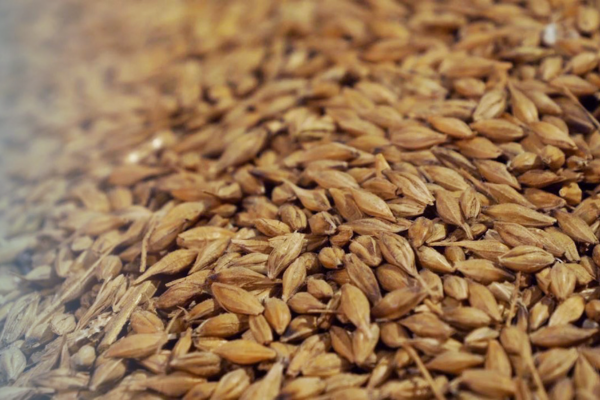
Barley faces a more complicated market. UK barley production is expected to be the lowest since 2012, but maltsters remain reluctant buyers. Poor quality in parts of England has resulted in significant quantities of intended malting barley being downgraded to feed.
UK malting barley yields are expected to be down by around 20% overall, with high screenings and nitrogen levels creating quality problems. Scotland is generally producing better yields and quality, however, and the movement of Scottish malting barley into England is likely to prevent a significant price rally.
Demand is also weak. Brewers, maltsters and distillers used 18% less barley in June 2026, while total usage for 2025/26 was 1.44Mt, down 19% on the previous season. UK barley exports of 479,000t were down 32% year-on-year and were the lowest since 2012/13.
Feed barley is in a stronger position. Tight availability, poor forage prospects and attractive feed values are providing support and barley remains at a £10 +/t discount to wheat.
Oats
Oats are one of the weakest crops from a production perspective. The current UK yield of 4.2t/ha is 21% below average and represents a multi-decade low.
Drought has also affected quality, with only around 65% of samples currently meeting the desired specification of over 48kg bushel weight and less than 8% screenings. Poor pass rates are pushing more oats into feed markets. Paradoxically, this provides some support to prices. Poor forage availability and higher feed grain prices are encouraging greater use of oats in livestock rations, while the small harvest means growers have plenty of storage capacity and are reluctant to sell. UK milling demand remains relatively strong: millers processed 521,000t in 2025/26, up 6% year-on-year, while exports reached 93,000t, an increase of 46%.
Oilseed Rape
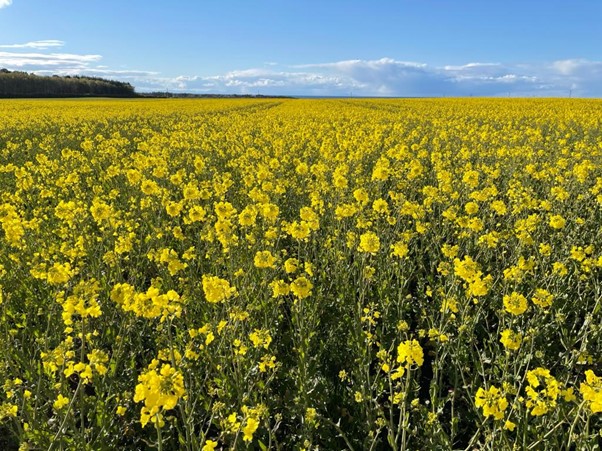
Oilseed rape is once again currently the standout UK crop with speculation that the national yield may actually exceed 4t/ha.
The market is being supported by concerns over vegetable oil supplies, crude oil prices, the Black Sea conflict and uncertainty over European oilseed production. November UK rapeseed delivered to Montrose has recently been around £429/t.
Soyabeans are also providing support. Pro Farmer forecasts US soybean production at 124.4Mt, although late-season weather remains important. Chinese buying and a weaker US dollar have provided additional support. Canada has planted a record 23.4 million acres of canola, up 8.4%, potentially providing additional supply if yields are maintained. European rapeseed markets remain vulnerable to logistics, with exceptionally low Rhine water levels restricting movement of oilseeds, vegetable oils and biodiesel feedstocks.
Pulses
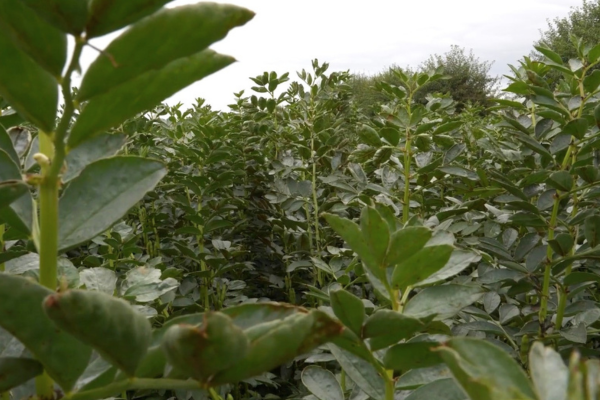
The UK bean harvest is largely complete in southern regions, with northern crops now determining the final picture. Quality remains an issue, particularly because of bruchid damage and high levels of broken and split beans.
Human-consumption demand is muted and UK beans remain broadly uncompetitive against Baltic and Australian supplies into Egypt. Increasing availability as the northern crop is harvested is therefore likely to put pressure on prices.
Pea harvests are complete across the UK and Europe, with yields and quality mixed. Canadian harvesting is now beginning, with early indications that yields may be slightly below expectations. Global buyers remain cautious, waiting for clearer information on quality and final production.
Old crop stocks
The low level of old-crop stocks provides an important background to the new-crop market. As of the latest dataset at the end of June, UK merchants, ports and co-operatives held 9% less home-grown wheat and 7% less home-grown barley than a year earlier, while imported wheat stocks were down 18%.
English and Welsh on-farm wheat stocks were only 351,000t, down 46% year-on-year and the lowest June level since 2000. Barley stocks were 111,000t, down 18%, while oats were estimated at 39,000t, down 24%. For UK farmers, the smaller domestic harvest and low carry-in stocks provide a more supportive backdrop than the headline global supply figures suggest.
Mark Bowsher-Gibbs, mark.bowsher-gibbs@sac.co.uk
Indicative grain prices on 28th August, 2026 (Source: SAC//United oilseeds/AHDB)
| £ per tonne | Sept’26 | Nov ‘26 | May ‘27 | Nov ‘27 | |
|---|---|---|---|---|---|
| Distilling Wheat | Ex farm Sept & Futures | 194 | 211 | 217 | 189 |
| Feed Barley | Ex farm | 180 | - | ||
| Malting barley | Ex farm | 188 | - | ||
| Milling Oats | Ex farm | 176 | |||
| Oilseed Rape | Del Montrose | 430 |








Sign up to the FAS newsletter
Receive updates on news, events and publications from Scotland’s Farm Advisory Service