
The Dairy Labour Crisis – Who will Milk the Cows Tomorrow?
15 January 2026Across the dairy sector, margins are under increasing pressure. Following the recent milk price drops and ongoing market volatility, rising input costs and heightened environmental regulations often dominate headlines. For many producers, labour is no longer just a cost, it is a limiting factor threatening long-term viability.
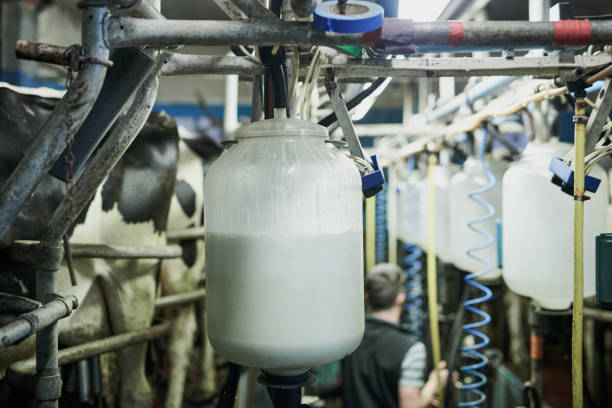
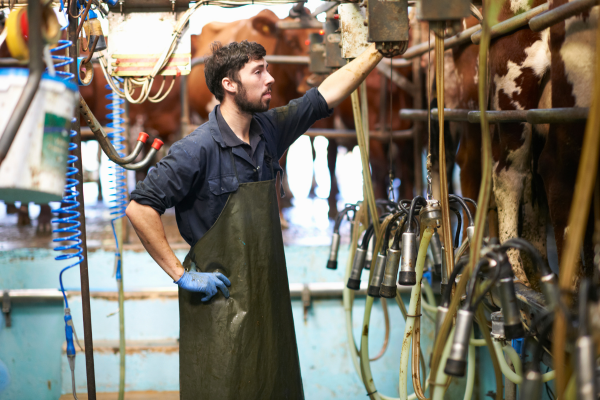
Dairy farming is particularly vulnerable to labour shortages due to the demands of animal husbandry. Cows must be milked every day, often twice or three times, regardless of weather, holidays, or market conditions. The work requires skill, consistency and commitment, yet the pool of available workers continues to decline. In a recent milk 2024/2025 report from Old Mill Accountants and Financial Advisers, labour costs for the top 10% of farms averaged around £393 per cow, compared with £833 per cow for the bottom 10%, a difference of £440. This represents a significant additional cost for many producers. (Bradley Causey, Allaster Dallas, 2025)
The industry is feeling the impact of these pressures. Between October 2023 and April 2024, the number of dairy farmers in the UK fell by 5.8%, from 7,500 to 7,130, according to the Agriculture and Horticulture Development Board (AHDB F. S., 2024). Meanwhile, the Defra June 2024 census reported that the average commercial dairy farm now holds 165 cows, an increase of four per farm since 2023 and nine since 2022. (AHDB A. T., 2025)
Automation & Robotics
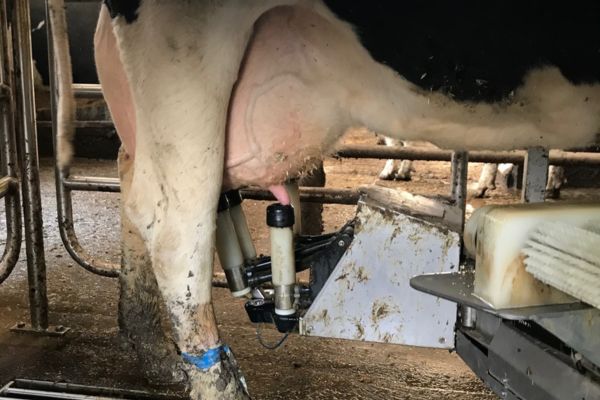
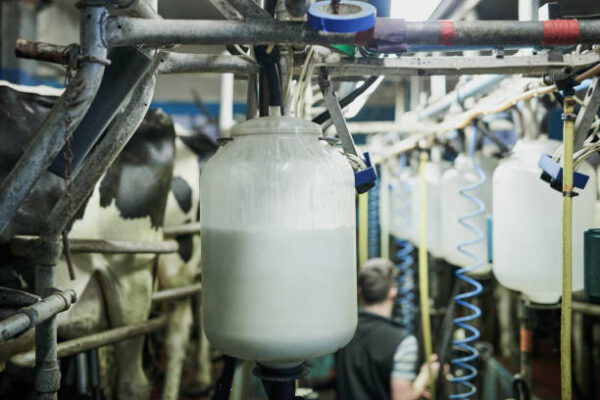
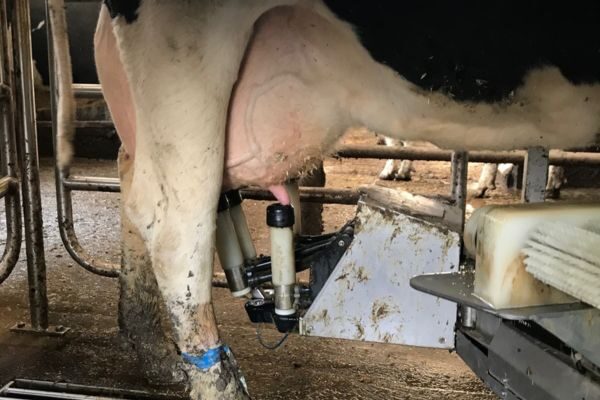
Faced with these challenges, a growing number of dairy farmers are turning to automation—not as a futuristic ambition, but as a practical response to labour scarcity. Instead of relying on multiple staff members to perform repetitive milking tasks at fixed times, automated systems allow cows to be milked voluntarily throughout the day. This approach enhances the public’s perception of animal health and welfare and increases operational flexibility, whilst allowing businesses to maintain consistent routines even when staffing levels are stretched.
Despite its benefits, automation of farming is not without challenges. Robotic systems require significant upfront investment, ongoing maintenance and access to technical support. However, as access to reliable labour becomes more uncertain, the long-term security offered by automated milking is outweighing concerns around capital investment. Robots provide consistent, dependable performance, making them a reliable asset on farm.
The adoption of automated systems can support workforce retention. An improved work–life balance, combined with increased access to data and advanced technology, is making dairy roles more attractive to younger industry entrants, and encourages existing staff to remain within the industry.
Robotic installation on farms is increasing, with 10% of UK farms already using robotic milking systems. Automated systems constitute 35% of all new milking equipment being purchased. In Holland 40% of dairy farms are automated, with some Scandinavian countries as high as 50%. The number of cows milked through robotic systems is expected to more than double in the next 5 years (Wynnstay, 2021)
Is Automation Right for You?
For farmers evaluating the adoption of robotic milking systems, the AHDB Labour Efficiency Calculator provides a practical way to quantify current labour usage, highlight inefficiencies, and support a structured discussion on whether a milking robot would enhance farm operations. Another useful tool is the AHDB Parlour wizard which investigates milking speed and the viability for investing in robotics.
Labour shortages show no signs of easing, and neither is the pressure on dairy farmers. Robotic milking systems offer a lifeline for reducing workload, increasing efficiency, and attracting skilled, motivated staff to the farm.
Helen Cowie, SAC Consulting; Helen.Cowie@sac.co.uk
References
AHDB, A. T. (2025, June 24). GB producer numbers: Falling producer numbers alongside larger milk volumes evidence further consolidation. Retrieved from AHDB: https://ahdb.org.uk/news/gb-producer-numbers-falling-producer-numbers-alongside-larger-milk-volumes-evidence-further-consolidation
AHDB, F. S. (2024, July 29). GB producer numbers: sharp decline indicates further consolidation. Retrieved from AHDB: https://ahdb.org.uk/news/gb-producer-numbers-sharp-decline-indicates-further-consolidation
Bradley Causey, Allaster Dallas. (2025). Milk Cost of Production report 2024/2025. Retrieved from Old Mill : https://om.uk/assets/uploads/2025/10/OM_Milk_Report_Brochure-2025-Published-Spreads.pdf
Wynnstay. (2021, may 5). Robotic Milking Systems. Retrieved from Wynnstay: https://www.wynnstay.co.uk/blog/robotic-milking-systems/
Sign up to the FAS newsletter
Receive updates on news, events and publications from Scotland’s Farm Advisory Service