
The Future Climate-Ready IPM Strategy for BYDV Control in Scotland’s Barley Production
As was recently highlighted, Scotland is seeing increasingly frequent BYVD outbreaks, and therefore it is important for farmers to start giving more consideration to control of the virus.
Managing BYDV under a changing climate will require a transition from reactive, field-by-field control to a more coordinated, system-based integrated pest management (IPM) programme (Figure 3). The objective is not eradication, which is unrealistic for an aphid-transmitted virus, but to reduce crop exposure, limit epidemic development, slow the evolution of insecticide resistance, and improve yield resilience under increasingly variable and uncertain seasonal conditions. This will require a better integration of monitoring, agronomy, genetics and advisory systems than has traditionally been the case.
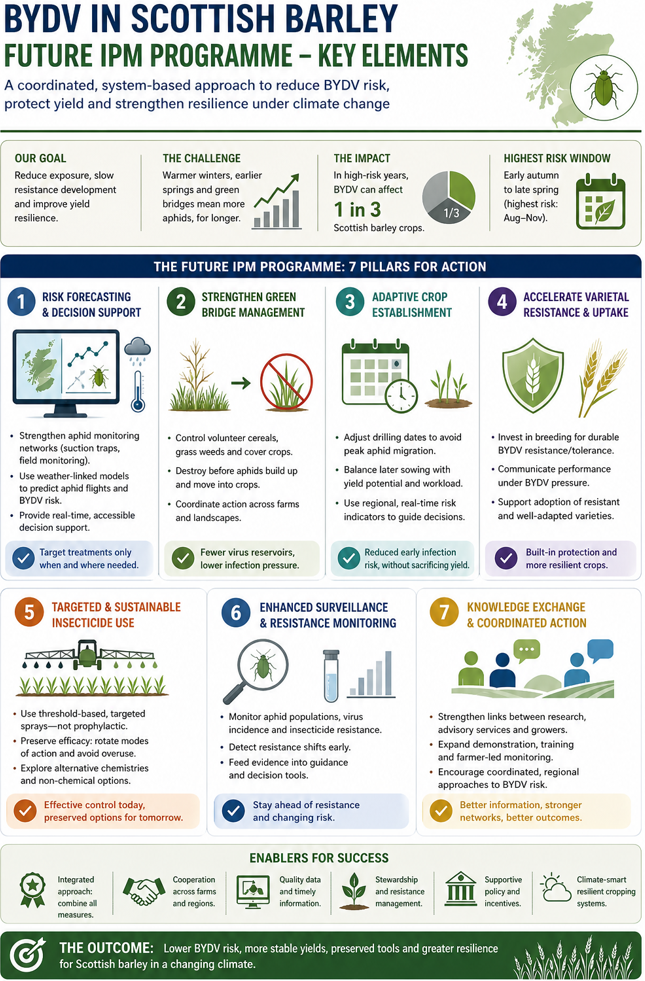
Figure 1. Proposed Integrated Pest Management (IPM) framework for BYDV control in Scottish barley systems which focuses on a coordinated, seven-component IPM strategy for managing BYDV under changing climatic conditions.
Risk forecasting and decision support
A more predictive and data-driven approach to BYDV risk is essential. This includes expanding and refining aphid monitoring networks, such as suction traps and field observations, alongside improved weather-linked forecasting models that capture regional variation in aphid flights and virus transmission risk. The next step is integration. These datasets need to be translated into accessible, real-time decision support tools that provide clear, actionable guidance to growers. Such systems would enable more precise timing of interventions, reduce unnecessary insecticide use, and support more consistent decision-making across regions.
Strengthening green bridge management
Management of the green bridge, including volunteer cereals, grass weeds and early-sown cover crops, will become increasingly important as aphid overwinter survival improves. These reservoirs sustain both vectors and virus between cropping cycles, increasing early-season infection risk. A more coordinated approach, extending beyond individual fields to farm and landscape scale, will be needed to meaningfully reduce inoculum pressure. This may require clearer, more consistent guidance on destruction timing, as well as stronger alignment with stewardship schemes and cross-compliance incentives.
Adaptive crop establishment strategies
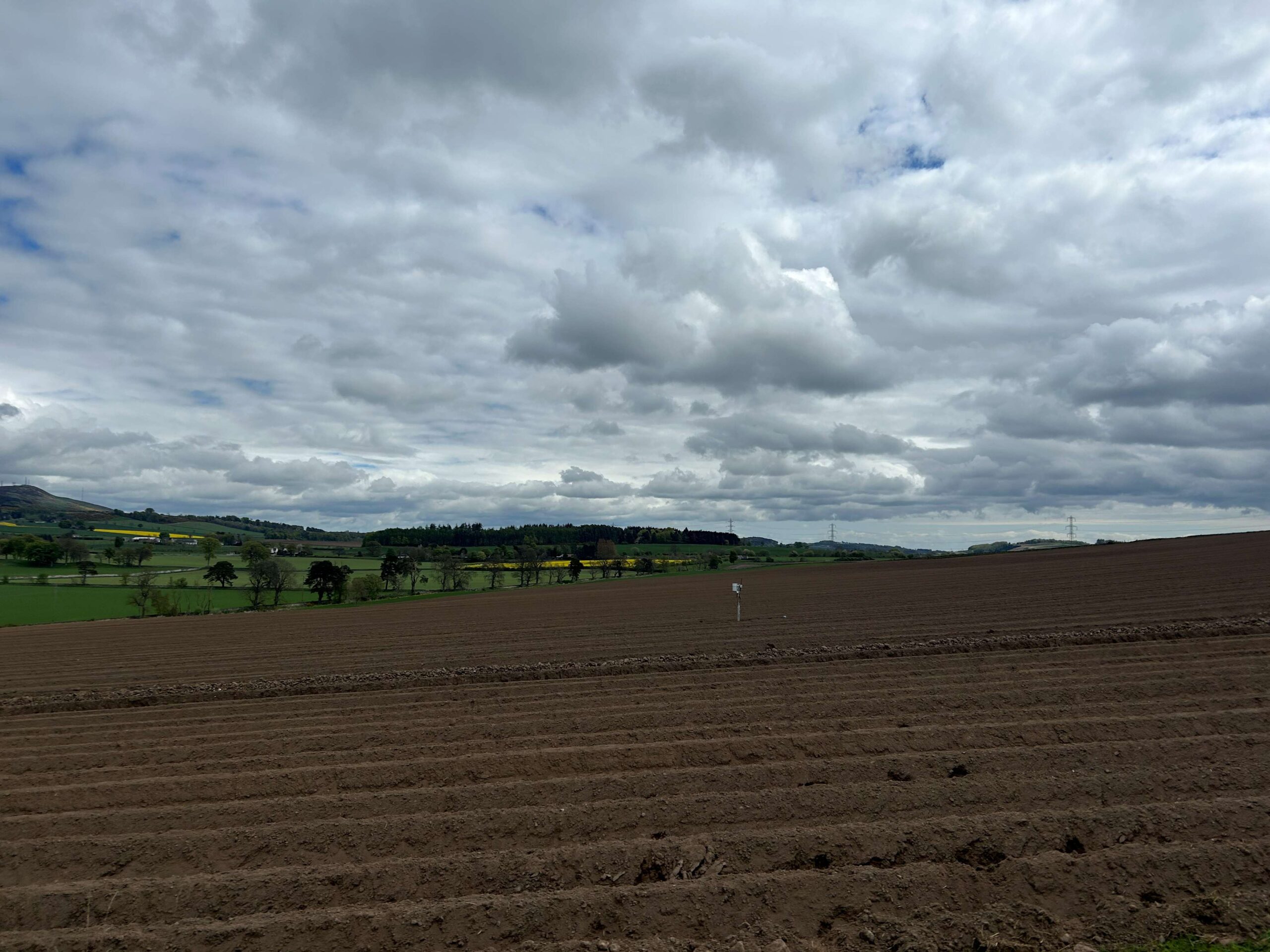
Greater flexibility in crop establishment will be a key lever for managing exposure to infection. Later autumn drilling can significantly reduce the risk of early aphid colonisation, but must be balanced against soil conditions, workload constraints and yield potential. Future approaches are likely to move away from fixed calendar-based recommendations toward more dynamic, region-specific guidance, where drilling decisions are informed by real-time aphid activity and forecast risk levels. This represents a shift toward genuinely adaptive agronomy.
Accelerating varietal resistance and uptake
The development and uptake of BYDV-tolerant or resistant barley varieties will be central to long-term risk reduction. Continued investment in breeding is required to improve both the durability of resistance and its integration with high-performing agronomic traits. However, genetic solutions will only deliver impact if adoption increases. This will depend on clearer communication of varietal performance under BYDV pressure, better inclusion of resistance traits in variety recommendations, and confidence that these varieties perform consistently across Scottish conditions.
Targeted and sustainable insecticide use
Foliar insecticides will remain part of the IPM toolkit, but their role must evolve. The emphasis should shift from routine or prophylactic use toward targeted, threshold-based applications aligned with clearly defined risk periods. This is particularly important given existing and emerging pyrethroid resistance in aphid populations. Preserving the efficacy of available chemistry will require careful stewardship, including avoiding unnecessary applications and, where possible, diversifying control strategies through alternative chemistries and non-chemical approaches.
Enhanced surveillance and resistance monitoring
Stronger and more integrated surveillance systems are needed to track aphid populations, BYDV incidence and insecticide resistance. Linking datasets across regions and organisations would improve the ability to detect emerging trends early and respond proactively. In particular, early identification of resistance shifts will be critical for maintaining effective control strategies and ensuring advisory guidance remains relevant under changing conditions.
Knowledge exchange and coordinated action
Effective IPM will depend on strengthening the connection between research, advisory services and growers. Expanding knowledge exchange platforms, demonstration farms and farmer-led monitoring initiatives will help accelerate the uptake of best practice. At the same time, there is a growing need for more coordinated, regional responses to BYDV risk, particularly where landscape-scale factors such as green bridges and aphid migration patterns drive outcomes. This points toward a more collaborative model of pest management.
Maciej Kaczmarek, SRUC
References
Van den Eynde R, Van Leeuwen T, Haesaert G. (2020) Identifying drivers of spatio-temporal dynamics in barley yellow dwarf virus epidemiology as a critical factor in disease control. Pest Manag Sci. 2020 Aug;76(8):2548-2556. doi: 10.1002/ps.5851.






Sign up to the FAS newsletter
Receive updates on news, events and publications from Scotland’s Farm Advisory Service