
Business and Policy August 2026 – Beef
Finished Prices Pick Up in July
Finished cattle prices in Scotland have slowly but surely improved over the last few weeks. Increased slaughterings, growth in imports and ongoing consumer price pressures all contributed to a muted finished price in early summer. Finishing margins have been significantly squeezed for several months now.
However, prices have moved upwards since early July (+16p/kg from week ending 4 July) and have continued upwards with R4L steers reaching £612.5/kg dwt at Scottish abattoirs for week ending 18 July. At the time of writing, prices quoted are around 616p/kg dwt with the expectation that prices will increase towards 620p/kg dwt with cattle supplies tightening as young bull throughout appears to be falling from its seasonal peak a few weeks ago and processors look to ensure they have numbers to keep cattle lines moving.
Consumer demand is likely to be a key driver in beef prices in the coming weeks. Prices are in favour of the producer currently, however, it is a fine balancing act between supplies and consumer spending. QMS reports strong demand for red meat in their most recent retail market update, although signs of consumers trading down to more affordable options, moving away from steak, buying smaller packs and choosing higher fat mince remains. Targeted promotions and campaigns towards key events such as the Commonwealth Games are expected to provide further support for red meat consumption in Scotland. However, this has the potential to lead to carcass balance issues.
The beef price moving towards a more satisfactory level will mean finishers will start to see a more encouraging return to the farmgate, which is much needed as we approach the autumn season calf sales.
Strong Store Trade
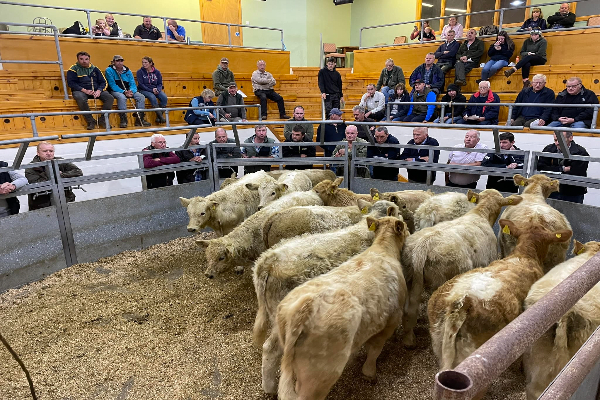
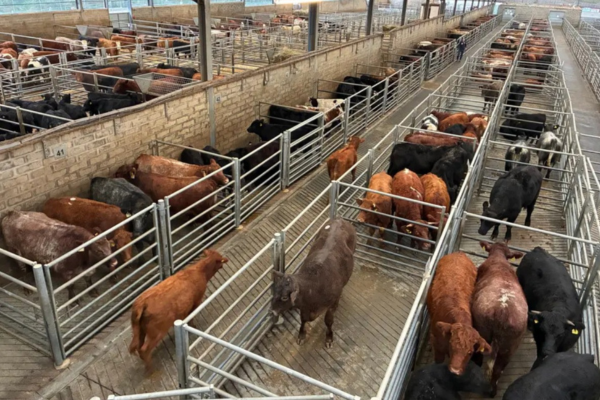
Trade for store cattle continues strongly with prices largely trending similar to 2025, with store auction volumes remaining tight. At recent store sales strong demand remains for short term types with trade softening at some markets for grazing types. This is mainly due to the heatwave conditions and lack of rainfall affecting grass growth in some parts of the country. Store prices are also likely to reflect the shifting balance of production, with suckler-bred calves remaining in tight supply, and beef-sired dairy calves often being managed in specific supply chains rather than traded at store sales. Numbers forward at sales at this time of year tend to be less with the focus being on silage making and harvesting etc, which is also contributing to prices holding firm.
Scotland’s Breeding Herd
There are encouraging signs that Scotland’s suckler herd is stabilising after several years of significant recorded declines. Data recently released by QMS has shown that in April 2026, beef-sired females aged over 30 months on Scottish holdings sat at 386,300. This represents a year-on-year decline of 1.5%; the smallest annual fall recorded since 2022 and more recent data from ScotEID suggests that the rate of decline may have dropped further to around 1%. South of the border, suckler herd decline in England and Wales continues to outstrip Scotland, with a 2.4% fall in beef sired females over 30 months recorded in April.
While suckler herd contraction is slowing and store prices are holding strong following a rally to finished prices, there is cautious optimism that the Scottish beef sector is moving towards stabilisation.
Named Breeds & Consumers
Are named breeds important to consumers? AHDB have recently looked at consumer perception of named beef breeds highlighting that consumer awareness of beef breeds varies. Perhaps unsurprisingly, Aberdeen Angus remains the most recognised breed with 85% of consumers aware of the breed.
Wagyu, although a smaller part of the named breed market, has witnessed the fastest rise in consumer awareness over the past few years up by 12% to 75%.
Sarah Balfour, sarah.balfour@sac.co.uk
Scotland prime cattle prices (p/kg dwt) (Source: Drawn from ADHV and IAAS data)
| Week Ending | R4L Steers (p/kg dwt) | -U4L Steers | Young Bulls -U3L | Cull cows | ||||||
|---|---|---|---|---|---|---|---|---|---|---|
| Change on week | Diff over North Eng. | Change on week | Diff over North Eng. | Diff over North Eng. | R4L | -O3L | ||||
| 4-Jul-26 | 600.9 | 0.8 | -10 | 596.3 | 5.3 | -13.7 | 591.7 | 1.1 | 546.3 | 510.3 |
| 11-Jul-26 | 602.6 | 1.7 | -5.5 | 596.1 | -0.2 | -14.9 | 596 | -1 | 546.3 | 515.8 |
| 18-Jul-26 | 612.5 | 9.9 | -0.6 | 609.6 | 13.5 | -6 | 600.7 | -1.3 | 556.3 | 523.5 |
| 25-Jul-26 | 616.1 | 3.6 | 1.2 | 608.9 | -0.7 | -4 | 612.2 | 9.3 | 559.7 | 521.7 |


Sign up to the FAS newsletter
Receive updates on news, events and publications from Scotland’s Farm Advisory Service