
Tree Planting in Small Spaces for Carbon Capture on Farmland
Tree planting is seen as a great way to capture carbon as well as improving biodiversity but traditional tree planting methods are often not particularly easy to undertake on farmland, due to the large amounts of land needed. However, there is a new method of tree planting that only needs a limited amount of space, typically around 200 square metres, that’s increasingly being used in urban settings and could be easily adapted for farmland.
Dense Planting Using The Miyawaki Method
The Miyawaki Method of afforestation (developed in Japan in the 1970s by Akira Miyawaki) involves planting native, typically broadleaved, tree species at between 2 to 7 trees per square metre. The dense planting induces competition for light, stimulating rapid tree growth and carbon storage, with growth rates of over 1m per year being recorded. The method could also boost biodiversity in the landscape.
Since its introduction into the UK in 2020, the Miyawaki Method has been used to establish over 300 Tiny or Wee Forests throughout the UK.
SRUC is trialling the planting of Wee Forests in more rural areas at our Craibstone Campus and in a farm setting at Tulloch Farm near Aberdeen. Planting according to the full method requires some fairly intensive ground preparation (excavating soil and introducing organic matter). But at Craibstone we’re trialling whether full ground preparation is really necessary and how the planting method can be easily transferred to an agricultural setting without the need for extensive ground preparation.
Quickly Establishing Riparian Buffers
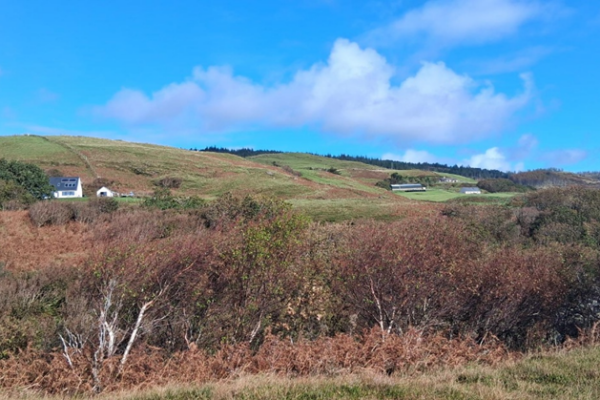
With funding from the Tree Council’s Scottish Power Energy Networks fund, 864 trees were planted within a 5m riparian buffer strip along the Black Burn which drains Tulloch Farm (Figure 1) in March of 2026. Importantly, this area of land is not used for agricultural production, allowing us to plant trees without impacting output from the farm. It also means we can trial the planting method in an agricultural setting and test the applicability of the method as a riparian buffer strip.
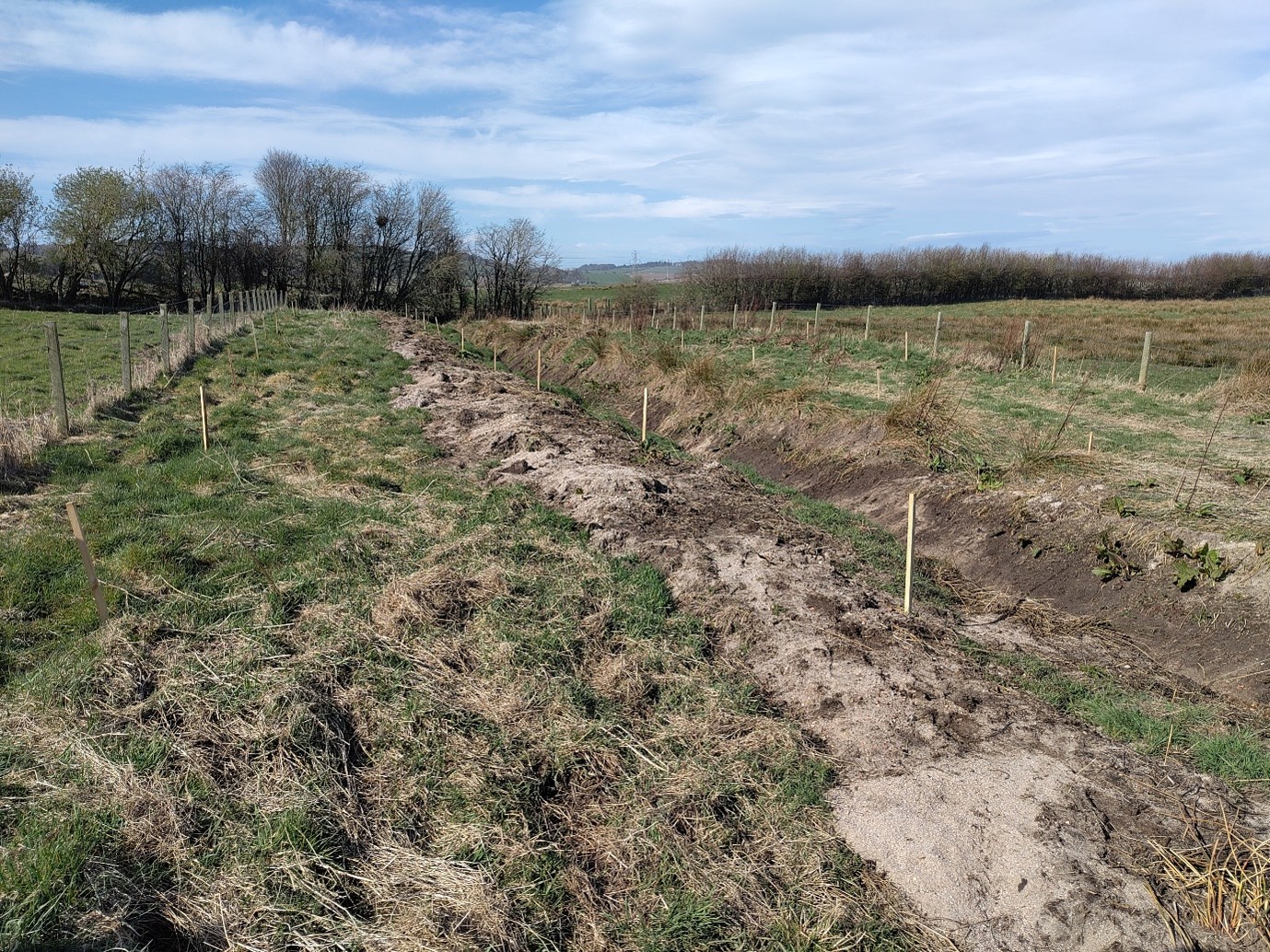
Figure 1. A westerly view of the site before planting
To give the trees as good a start as possible, they were mulched using a 50cm x 50cm biowool mulch mat and protected from herbivory with recycled tree protectors. A total of 14 tree species were used (see table 1 below) with the majority of the species mix being Alder, Downy Birch, Grey Willow and Goat Willow.
Table 1. Species and total quantity planted at Tulloch Farm
Planting was undertaken over a number of days by staff, students and visitors from Mære Landbruksskole in Norway (Figure 2).
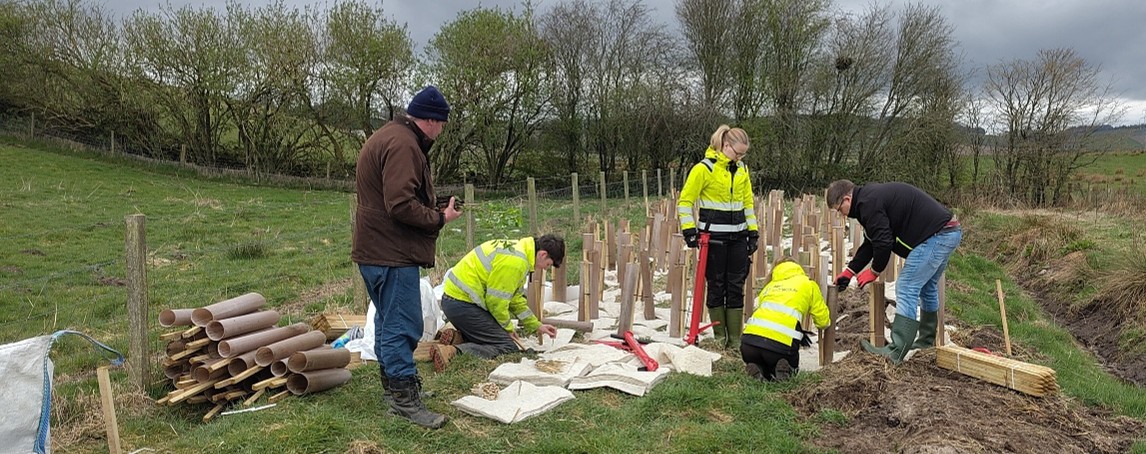
Figure 2. Planting showing the biowool mulch mats and tree protectors.
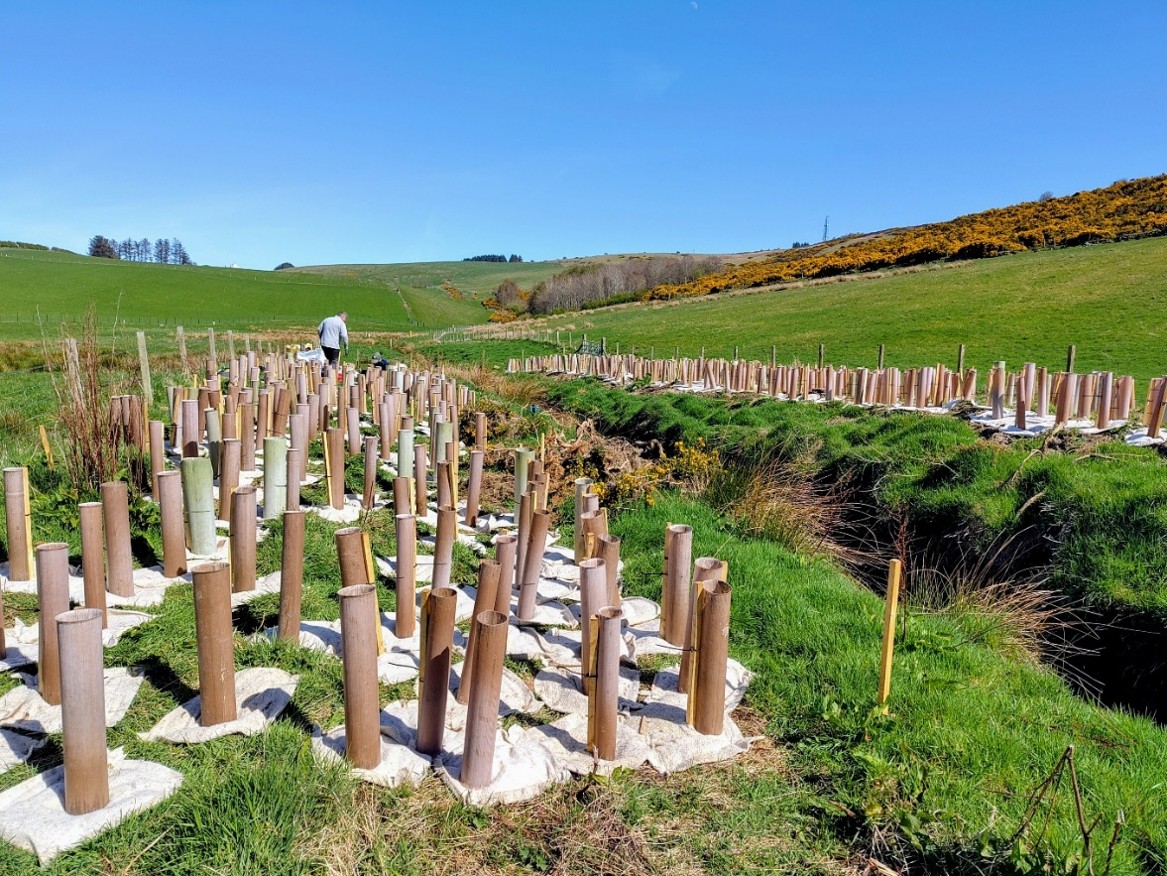
Figure 3. Looking east along the completed planting at Tulloch Farm
At the time of writing the growing season has not ended, however the change in the site is dramatic, with some willows already reaching over 3m in height and many trees having grown over 1m in height since February.
Why Plant Riparian Buffer Strips?
The benefits of planting trees on farms and in riparian buffer strips are well known and include, more effective interception of surface water run off helping to reduce diffuse pollution into water courses, reduced downstream flooding and improved structural integrity of river banks. Riparian tree planting schemes also provide shade to the water course, helping to reduce stream temperatures and to create wildlife corridors. These benefits help improve habitat connectedness and increase nature friendly farming as set out in the Scottish Government’s Vision for Agriculture (March 2022). In addition the presence of trees has been shown to improve the abundance and diversity of pollinators on farms and carbon sequestration by trees helps tackle the climate emergency. The rapid growth rates associated with the Miyawaki Method may help speed up many of these benefits when compared to more traditional planting schemes. Furthermore, the rapid growth rates associated with the method hints that it could be used to rapidly establish shelterbelts and improve the ecological value of land given over to buffer strips and field margins.
Find Out More
A range of resources and funding opportunities are available to assist with planting Wee Forests and, more generally, trees in agricultural settings. The Tree Council has published the Miyawaki Handbook in partnership with Kent County Council. This resource is focussed on applying the method in urban settings, but the principles remain applicable to an agricultural one. The Tree Council also provides a range of funding opportunities for tree planting. Other potential sources of trees and information include organisations such as the Woodland Trust, local just transition and climate resilience funds and local schemes such as the Aberdeenshire Sma Wids project. Additionally, FAS has its own resources on funding for tree planting.
Mike Raby
Dr Helen Anderson



Related articles
Carbon and Mitigation

Woodland

Sign up to the FAS newsletter
Receive updates on news, events and publications from Scotland’s Farm Advisory Service