
Soil Moisture Monitoring: Technology for Modern Irrigation Management
27 May 2026This document gives an overview of soil moisture monitoring technologies for farmers and growers. This isn’t a complete review. This field is growing fast, with new products and methods showing up all the time. Instead, it offers a practical look at the main options and key factors to think about when deciding what may suit your business to invest in.
Why Soil Moisture Monitoring Matters
In Scotland, pressure on water availability is rising due to climate change, droughts, and subsequent abstraction restrictions. Efficient water use and responsible farming now offer key benefits, especially in drier arable and horticultural areas where irrigation is crucial.
As a result, soil moisture sensors are becoming more common on farms, giving growers key information to help irrigation scheduling. Modern sensors provide near real-time data, allowing better irrigation scheduling. cutting down on wasted water and energy from poor timing or too much water, which can cause runoff and erosion.
Using these sensors well, farmers can:
- Save water, labour, and energy.
- Improve crop yield.
- Improve crop quality.
These benefits quickly cover the cost of the equipment.
Understanding The Soil Moisture Deficit
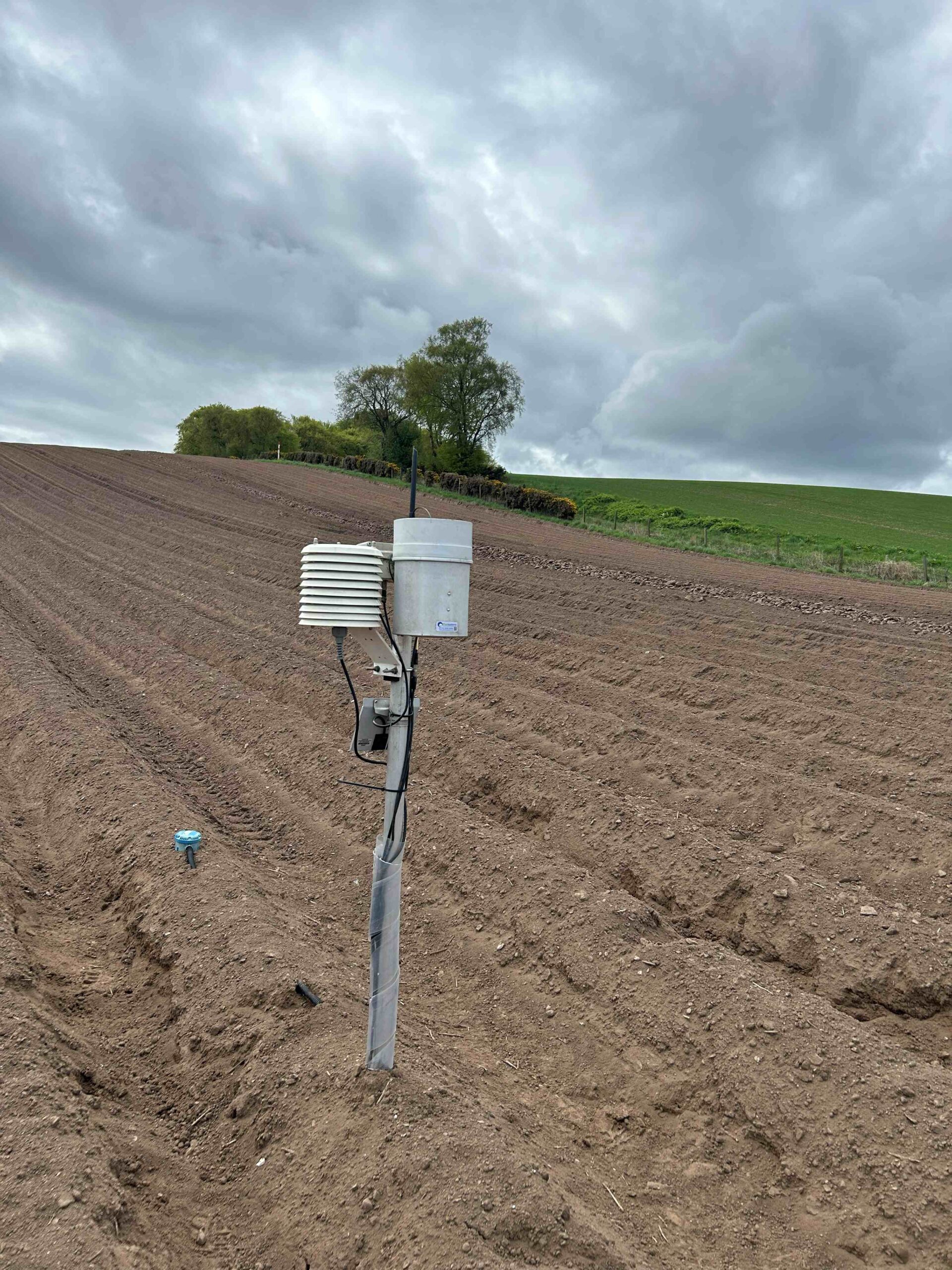
A key idea in irrigation management, this is the amount of water in millimetres needed to bring the soil back to its field capacity. By tracking this deficit, farmers can water their crops before they get stressed. This is important because soil moisture can drop quickly as water evaporates or is used by plants. If irrigation isn't timed right, yield and quality can suffer before drought signs show. The timing and amount of water should match the soil's ability to absorb it, not follow a fixed schedule. Monitoring soil moisture helps farmers apply water more precisely.
It's important to remember that tracking soil moisture doesn't replace good soil management. Keeping soil structure and organic matter is vital for water infiltration and storage. Sensor data works best alongside these practices.
Soil moisture monitoring technology is always advancing, giving farmers options that fit their needs and situations.
In Situ Probes
In situ probes are now a core technology for precision irrigation in high-value crops such as potatoes and vegetables. By placing sensors at several depths—typically 30, 60, and 90 cm—growers can monitor where the crop is actively extracting water. This setup helps highlight if any deeper reserves remain. If deeper sensors show high moisture but the surface looks dry, you can usually delay irrigation, helping to keep the soil structure intact and prevent unnecessary watering.
In situ probes often measure the soil's dielectric constant to find its water content. A soil dielectric constant is a measure of the soils ability to store electrical energy in an electric field. Wet soil tends to have a high dielectric constant, with drier soil having low and this is used to record soil moisture. They use methods like time-domain reflectometry (TDR) or frequency-domain reflectometry (FDR). These probes are equipped with sensors installed at fixed intervals, such as every 10 cm, throughout the root zone. This arrangement provides continuous, multi-depth data during the entire growing season, and supports farms with variable rate irrigation options by managing various parts of a field or farm based on their real moisture levels, not just a general schedule.
TDR and FDR technologies are well established. However, accuracy can change based on soil type and temperature. Both methods also benefit from calibration specific to the soil. Scotland's soils are diverse. They range from sandy coastal types and productive silts, to heavy clay lowlands and peat-rich uplands. Because of this variety, generic calibration curves might not work well for all soil types. Suppliers should be asked what calibrations are available for the soil types on the farm in question.
Current in situ systems share several common features:
- Multi-depth measurement of moisture, temperature, and sometimes salinity or EC
- Robust, long-life, largely maintenance-free hardware
- Wireless data transmission using GPRS, cellular, LoRaWAN or similar
- Cloud platforms with decision-support tools and integration of weather and remote sensing data
Installation Methods
How a probe is installed matters both for data quality and practical convenience. The main approaches currently available include:
- Drill and drop: a narrow pilot hole is made, and the probe is lowered in. This keeps the soil structure around the probe mostly intact. So, water movement reflects the field conditions.
- Direct insertion or hammering: probes hammered straight into the soil. This method cuts down on setup time and reduces soil disturbance.
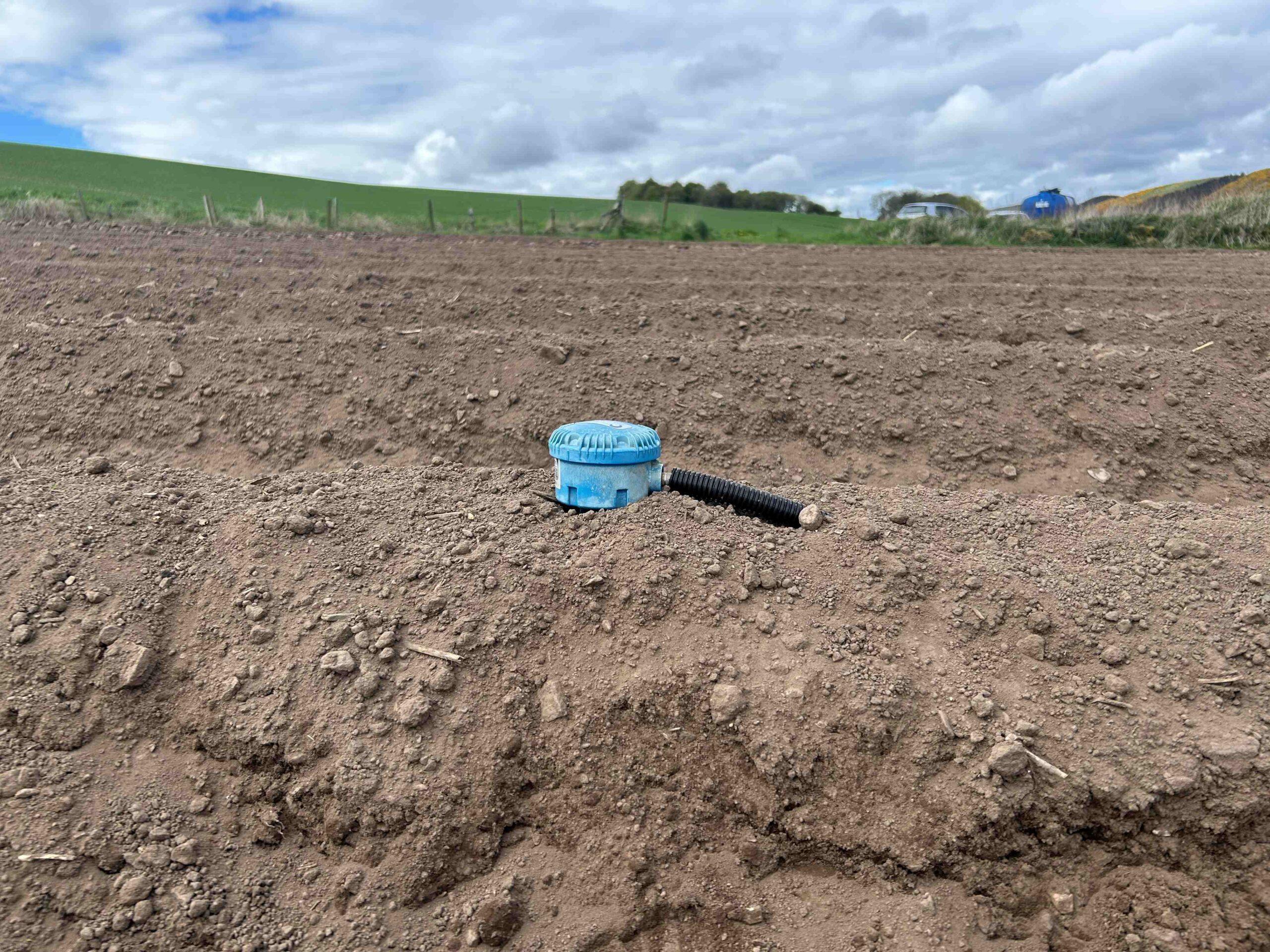
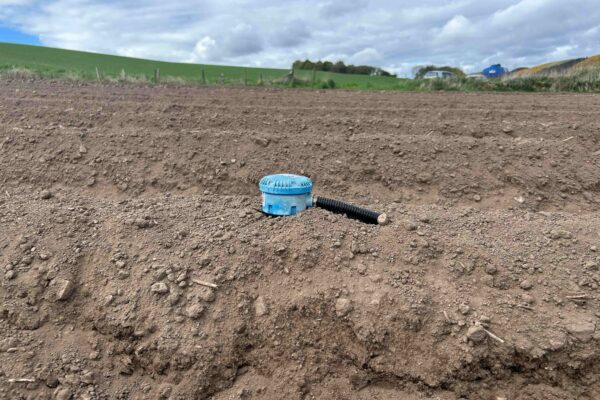
- Buried node installation: Sensors are buried at set depths and spots in a field. This keeps them hidden and safe from surface traffic and machinery. They send data wirelessly to a base station.
All these methods aim to reduce soil disturbance. They allow sensors to stay in place for the season with little maintenance.
Sensor Density and Cost
Commercial suppliers often report water savings of 20–30 percent with well-managed systems (depending on the irrigation method, crop type, and seasonal conditions). However, upfront hardware costs can be significant. Some suppliers and contractors provide seasonal rentals of sensor kits. This option lowers the entry barrier and lets growers try the technology before making a long-term investment.
A common practical limitation is the number of sensors required to give meaningful coverage of a field. Most guidance suggests monitoring various locations. A good starting point is two depths at three carefully chosen spots per field. These should be in areas with varying yield potential to capture the site's range of conditions. For a 10-hectare field, this typically means six to nine sensors. However, different sensors will have different placement and density guidance.
Connectivity and Platforms
Modern in situ probes are designed to be installed and then largely left alone. Sensors connect wirelessly through General Packer Radio Service (GPRS), cellular networks, or low-power wide-area networks (LPWANs), such as LoRaWAN or SigFox. These sensors link to a hub or base station, which then sends the data to a cloud platform. Growers and advisers can then access near real-time information from any device via a web dashboard or a mobile app.
For farms with poor mobile coverage, LoRaWAN is a great choice. Gateways can reach up to 10–15 km in open areas. This makes LoRaWAN more suitable for many rural locations than regular cellular networks. Gateway infrastructure is not yet fully set up in rural Scotland. So, check connectivity options before buying a system.
Some platforms are included with the purchase of hardware, while others operate on a subscription basis. When comparing systems, think about this ongoing cost along with the initial hardware investment. Typical data outputs from these platforms include:
- Rootzone moisture content and soil moisture deficit (mm)
- Position of moisture relative to field capacity and irrigation trigger point
- Crop water use (mm per day)
- Predicted Irrigation Date
- Soil temperature and, where available, electrical conductivity (EC)
For farms in remote areas where real-time data transmission is not possible, some sensor systems can log data on-site. These systems store readings locally, allowing for periodic manual downloads. This offers a practical balance between handheld meters and full telemetry. It provides continuous records at multiple depths without needing live connectivity.
Some advanced Internet of Things (IoT) systems link sensor data to automated irrigation controls. These can trigger valves or pumps based on soil moisture levels. This level of automation isn't common on commercial farms yet, but it shows where precision irrigation is headed.
Portable Sensors
Portable sensors are another option if you do not wish to invest in in-situ probes. You can read more about it here.
Decision Support Platforms and Free Tools
More software platforms and apps are linking soil moisture data with weather data and farming models. They use information from in-field sensors or modelled sources. This integration provides actionable advice for irrigation scheduling. These platforms turn complex data into useful advice. They connect raw sensor outputs to farm management choices. Some companies bundle them with sensor hardware. Some companies provide them as standalone managed services. Agronomists often interpret the data for the farmer. For farms lacking the time or staff to analyse raw data, these managed services can ease the technical load. However, they do increase costs.
For small businesses or those new to soil moisture monitoring, the UKCEH Soil Wetness Explorer (soilwetness.ceh.ac.uk) is a free and easy way to begin. It gives daily estimates of soil wetness across Great Britain. This shows how wet or dry the soil is in comparison to historical conditions for that date. The data has a resolution of 50 m and uses hydrological modelling based on Met Office rainfall and temperature data. This tool gives a wetness index, not an exact soil moisture deficit. So, it can’t replace in-field sensor readings for irrigation scheduling. It's a helpful, free tool for making timing decisions about tillage, drilling, and early-season irrigation planning.
Barriers to Adoption
Many benefits come from advanced soil moisture monitoring, but several barriers hold back its use on Scottish farms. These include simple cost issues and bigger challenges like skills, infrastructure, and trust in new technology.
Cost and Return on Investment
The main barrier to adoption is the upfront cost of probes, telemetry units, and related hardware. Meaningful field coverage usually needs several sensors for each field. When you add ongoing platform subscription costs, the total can be high. This is especially true for smaller or mixed farm businesses, where margins are tight.
Commercial case studies demonstrate that effective use of sensors results in water savings of 20–30 percent. However, financial returns will differ based on the farm, season, and crop. To make the most of your budget:
- Ask suppliers about seasonal rental options before committing to a full purchase, as this allows you to trial the technology at lower cost and risk
- Cost the investment on a per hectare basis and weigh it against your current irrigation and energy spend
- Focus your first sensors on the fields or crops where irrigation decisions are most critical and the consequences of getting it wrong are greatest
Technical Skills and Confidence
Using sensor systems well requires some technical confidence, which isn't always common on farms. Installing sensors, calibrating them for local soil, and interpreting data needs more than basic farming knowledge. Poorly installed or calibrated sensors can produce misleading readings and result in irrigation scheduling that is no better, or potentially worse, than working without sensors at all.
Some growers may worry that technology could fail silently or give poor advice. To build confidence:
- Ask suppliers for practical training and clear guidance on installation for your specific soil types
- Consider a managed service model, where a supplier or agronomist sets up, monitors and interprets the system on your behalf. This reduces the technical burden but does add to costs and creates some reliance on outside expertise
- Start with a simple setup in one field before expanding across the farm
Connectivity and Rural Infrastructure
Many farms in Scotland, especially in upland or remote areas face poor mobile coverage and limited broadband access. Internet gateway infrastructure is also not evenly spread, so being able to network systems could be a long time coming. To overcome this:
- Identify if there is a LoRaWAN network available in your area which you can take advantage of
- Consider on-site data logging as a middle-ground (though bear in mind this will be less efficient than a centralised system)
The Digital Divide
Not all farmers have the same access to digital skills or support networks. This limits their ability to effectively use sensor platforms and apps. Those unexperienced with technology or smaller operations might find it hard to install hardware, navigate apps, interpret data, and manage platforms. This is true even if the interface is user-friendly. This risks giving the benefits of precision irrigation mainly to larger, better-funded businesses. Smaller operators might be left behind. To help bridge the gap:
- Ask suppliers for practical training and clear guidance on installation for your specific soil types
- Consider a managed service model, where a supplier or agronomist sets up, monitors and interprets the system on your behalf. This reduces the technical burden but does add to costs and creates some reliance on outside expertise
- Start with a simple setup in one field before expanding across the farm
Data Ownership and Security
As sensor networks and cloud platforms gather more detailed data, issues of ownership, privacy, and security are becoming crucial. Farmers might worry about who owns the data from their sensors. They may also question how platform providers will use it and what protections are in place against data loss or misuse. The lack of clear legal rules for agricultural data leaves many questions unanswered. This uncertainty can reduce confidence in using digital platforms for the long term. To protect yourself:
- Read the data ownership terms in any supplier or platform contract before signing up
- Ask specifically whether your data will be shared with or sold to third parties
- Choose platforms that offer clear data export options, so you are not locked in if you switch providers
Jack Zuill, SAC Consulting








Sign up to the FAS newsletter
Receive updates on news, events and publications from Scotland’s Farm Advisory Service