
Designing Sheep Handling Around Behaviour
A well-designed sheep handling facility is an essential component of any successful sheep farming business.
Whether opting for a heavy-duty fixed handling system or a temporary mobile handling system, layout planning is a cost-effective use of time. A handling facility that encourages sheep to flow through the system by taking advantage of their natural sheep behaviour can significantly reduce the stress of handling for both sheep and handler. This together with an associated labour saving make investing time in planning a sheep handling facility time well spent.
Understanding sheep behaviour is essential in planning any facility to ensure sheep handling tasks can be completed in an efficient and low stress manner.
Sheep Behaviour
When planning your layout for moving or handling sheep, keep the following aspects of their behaviour in mind:
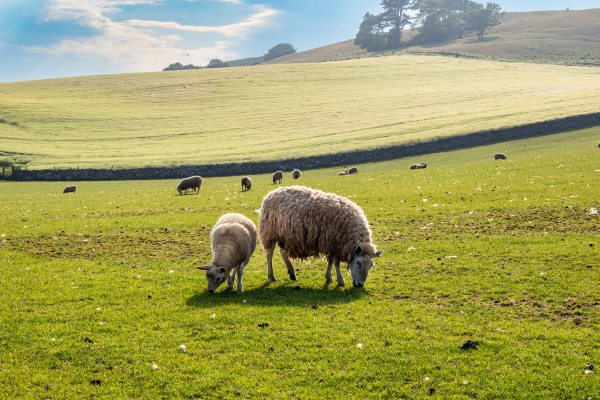
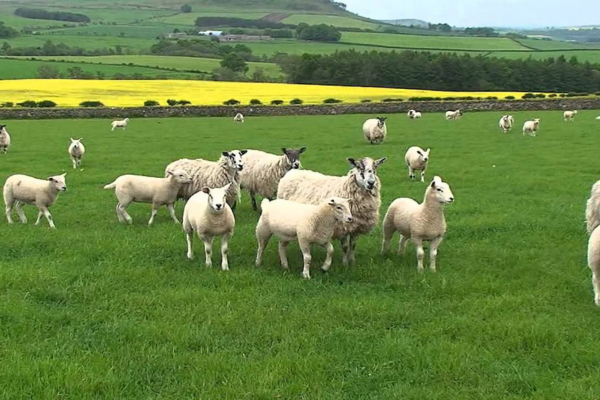
- Follow the leader: Sheep are ‘prey’ animals and will naturally want to follow one another and group together. Sheep will move towards other sheep willingly. Consider the use of a decoy sheep to improve the flow of the remainder of the flock.
- Moving on up: Sheep are readily moved over flat ground but prefer to move uphill rather than downhill.
- Keep it lit: Sheep prefer areas of bright light to dark shadow and will move from the darkness into the light, though if the contrast is too extreme this can negate any benefit.
- Avoid distractions: Sheep are very easily distracted and react negatively to shadows, people, noises and smells. Solid or sheeted sides on the race can prevent distractions and keep the flow of animals moving.
- Avoid dead ends: Sheep will apply the brakes if they cannot see an obvious exit. Avoid sharp 90-degree corners.
Consider Your Site
- Use a dry, free-draining site, or non-slip flooring for sheep handling. This keeps animals clean, avoids slipping and the potential for injury, and improves the working environment.
- Provide shelter from direct sun and wind. If outdoors this can be by using shelter belts and hedgerows as wind breaks.
- Ensure adequate lighting for safe working conditions
- Plan your daily tasks before your build. Will there be a requirement for access to a power/water supply?
- Consider how a mobile dipper or shearing trailer may integrate with your handling facilities if you use external contractors for these tasks.
- Ensure the site is readily accessible by road for loading for onward transport.
- Ensure there is sufficient space for the maximum number of animals that will be handled in a gather. The approximate area of land required for the handling facility is calculated by multiplying the total number of ewes to be handled in a gather by 1.3m2
- For indoor systems consider the cleaning protocols post handling and the disposal of dirty water. For outdoor systems avoid gathering and holding livestock within proximity to the water environment.
Renewal vs Revamping
It may not require a whole new system to fix issues with how sheep flow through the existing system. Sheep handlers should take time to critically appraise the failings in their system. Identifying where sheep bunch and gather instead of flow or where sheeted hurdles may help to reduce distractions that prevent clean movement through the system.
If minor alterations cannot fix the problem, then perhaps a new system should be considered.
Facilities Design
Every handling system will differ to ensure best use is made of the space available. However, there are several features that most designs all have in common, such as holding and forcing areas, shedding/drafting races and treatment areas.
Holding Area/Gathering Pen
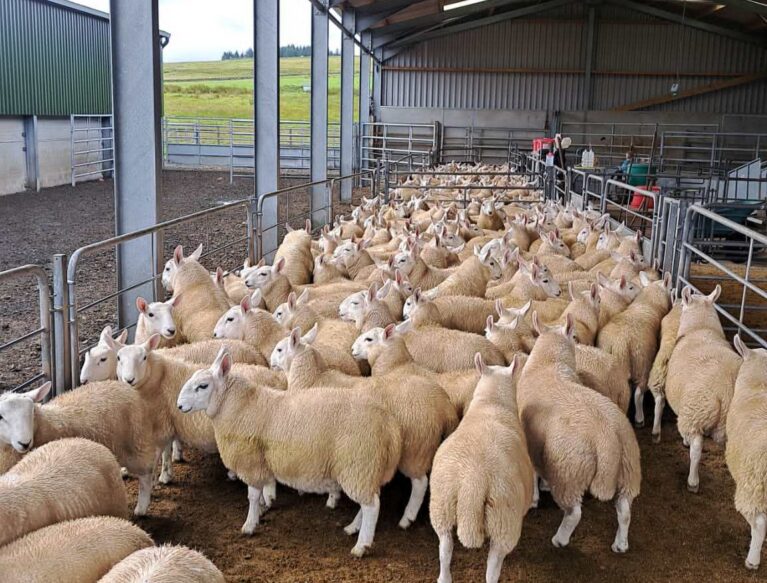
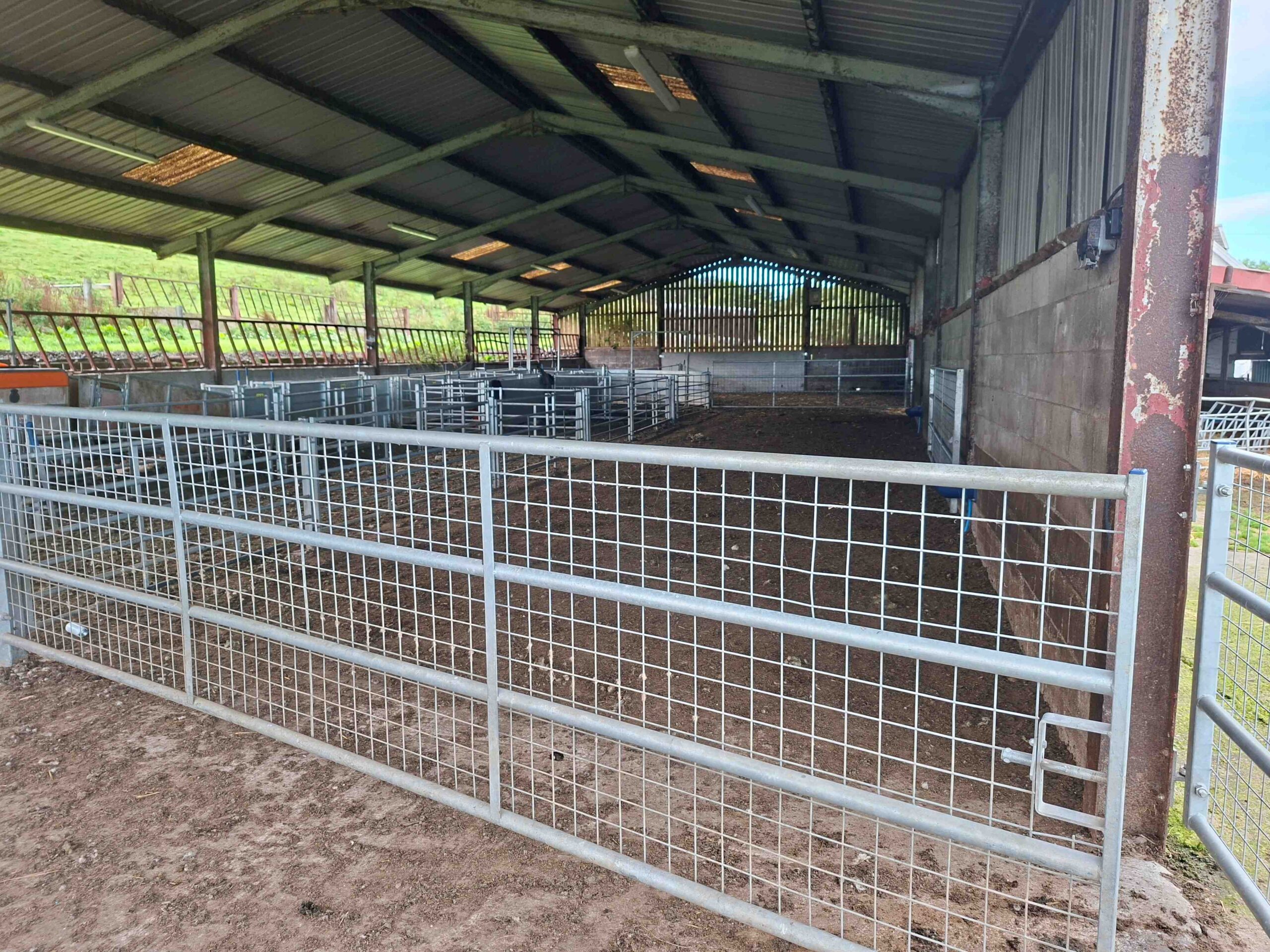
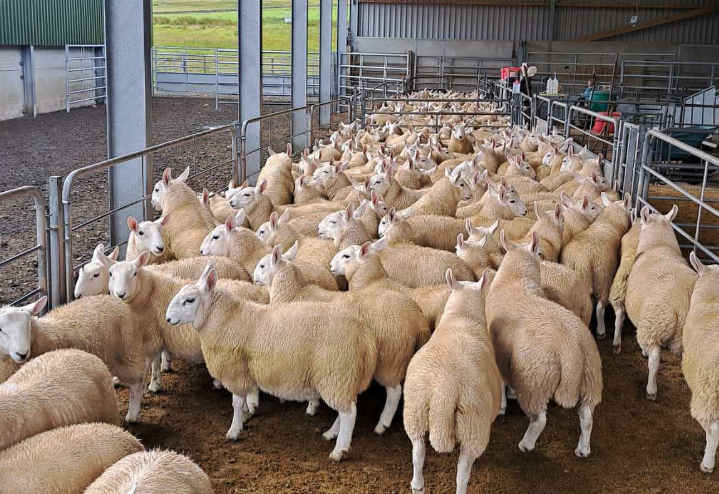
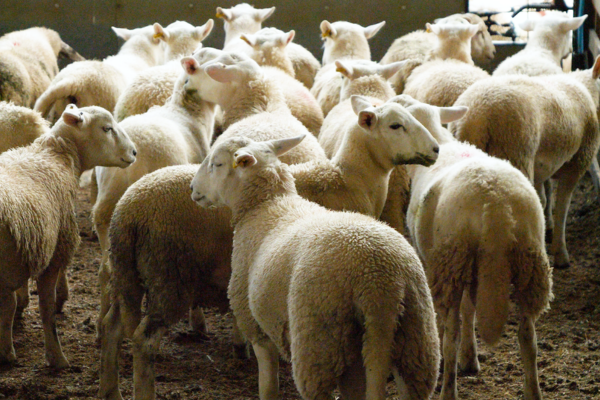
Sheep are held in this area/pen for movement on through the rest of the handling facility. This pen should be large enough to hold all the sheep to be handled in a gather. As this is a high-density holding area this area needs to be constructed from strong materials. Gates into and through the gathering pen should be see-through to encourage sheep through the facility. Boundary fences/gates should be solid to avoid distractions. A space allowance of 0.65m2 per ewe/lamb is recommended. A long narrow gathering pen is preferred to prevent sheep retreating past the handler. This makes it easier to control groups while driving them onwards to the forcing area.
Forcing Area/Pen
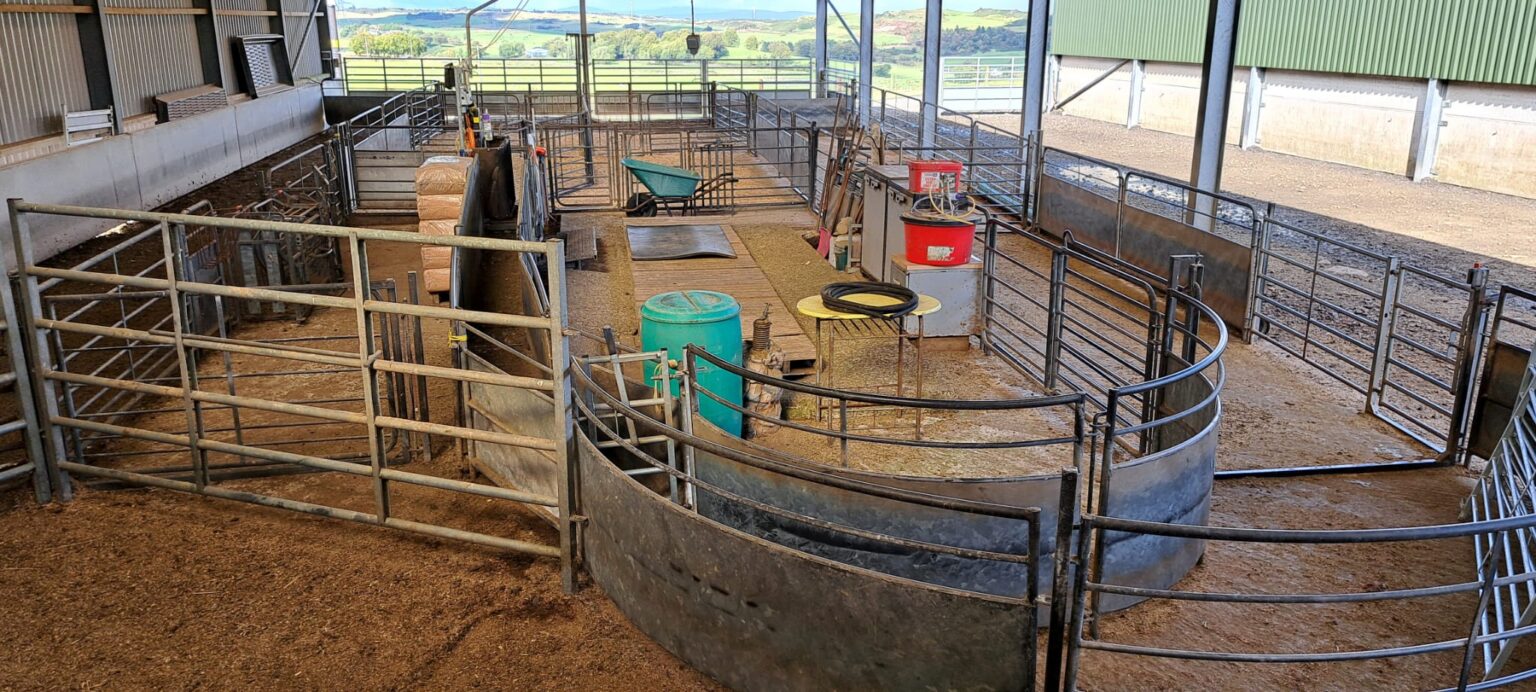
The purpose of this area is to give a steady flow of sheep into the race where large groups of sheep can be broken down into smaller groups for ease of handling or treatment. The forcing pen should be kept small enough that sheep face the race entrance rather than circle away from it. A 3m width is recommended in the forcing area.
There are many options for the shape of the forcing pen.
- Funnell Shaped: The cheapest option comprising an extension of the race fence on one side, while the other side flares out at a 30° angle of approach.
- Semi - Circular: This system has a good flow as it has no corners where animals tend to stop and bunch up allowing sheep to be naturally guided into the race. Backing gates hung from a centre post keep sheep moving through the system
- Full circle forcing pen: A circle forcing pen should be 3.6m in diameter for a 150-ewe flock capable of holding 20% of the collected flock. Two backing gates on a centre post keep sheep pushed up.
Sheep Race
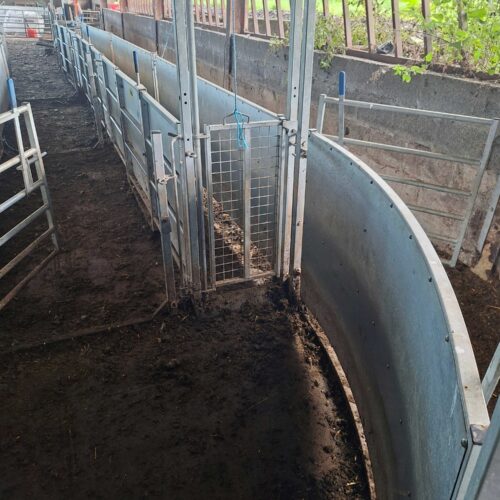
The sheep race can serve many purposes whether it be:
- the smooth and efficient drafting of a flow of sheep into allotted groups.
- or for carrying out routine sheep handling tasks (dosing, vaccination, tag checking, mouthing, checking udders.)
The race should be in the centre of any handling facility to allow drafting to both the right and left. Locating the race next to a wall limits drafting options to one side only. Race walls need to be solid to prevent sheep from being distracted and disrupting the continuous flow of sheep. The gate at the end of the race should be made from see through panels to encourage sheep towards it.
| Sheep Race Specifications | ||
|---|---|---|
| Length | Minimum 3m Ideally 4.5-6m | The longer the race the greater the time to assess sheep before drafting. For treatment a greater number of animals can be processed. |
| Height | 85cm – 90 cm | This height is high enough to prevent sheep from jumping out and low enough to reach over to examine sheep when their heads are down. |
| Width | 45-50 cm wide, for sorting/drafting, outside the race 70-80cm, for handling, where the worker is inside the race. V- shaped race, top 61 cm, bottom 31cm. | Races with adjustable sides are available to vary width. A tapered V- Shaped race makes it more difficult for sheep to turn around in the race. |
Sorting gates on the side of the race should be 1 – 1.2m in length and sheeted. A sheeted sorting gate prevents horns from becoming caught. Handles for these gates should be at elbow height for ease of handling.
Anti backing mechanisms, gravity operated flaps or gates inside the race are a useful addition to prevent sheep from retreating in the race. Non – return gates at the entrance to the race are a must when the race is being used for treatment purposes.
There is an argument for a separate race for each purpose - drafting and handling or for the addition of a modular handling clamp to the drafting race to carry out any treatment required. Available space and finances will best dictate what is achievable.
Side Pens/Exit Pens
These are the pens lying off the sheep race to hold the separated groups of sheep. The combined area of these side pens should equal the area of the gathering pen. A minimum of three exit pens is recommended for multi way drafting but ensure there are gates between access pens if drafting groups are larger than anticipated.
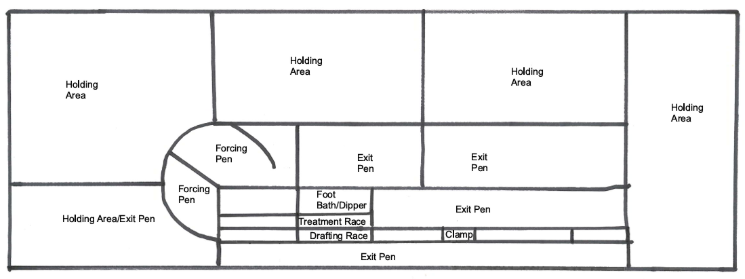
Example: Sheep Handling System Schematic
Optional Extras
A modular handling clamp may be incorporated within the race to simplify livestock handling activities. These tend to be positioned in straight section of the handling race just after the forcing pen and before the sheep drafting gates. An anti-backing mechanism should sit immediately behind the clamp to stop sheep from reversing.
A footbath is a welcome addition to any handling facility though should not be located in the race as it will quickly become soiled and dirty. The best positioning is just off a side/exit pen. It should be between 1.5-3m in width to prevent one stalling sheep from blocking the exit. A clean dry concrete standing area should follow the footbath to allow the treatment to dry onto their hooves.
Mobile dippers are the more common than fixed dippers. If a fixed dipper is to be incorporated within the system it should be located to prevent pollution. A dipper that allows side entry from the race with a slide is popular as this is less labour intensive. This should be located near the end of the race as the slide makes the race awkward to use outwith dipping season.
Should a mobile dipper be preferred, consideration should be given to how sheep would access any mobile dipping facility from the handling pens.
Carol-Anne Warnock, SAC Consulting

Sign up to the FAS newsletter
Receive updates on news, events and publications from Scotland’s Farm Advisory Service