
Sustainable Sheep Systems Case Study: Reducing Lamb Losses at Carstairs Mains
Following significant lamb losses in 2018 an investigation suggested excessive iodine intake in pre-lambing diet could be to blame.
Farm Background
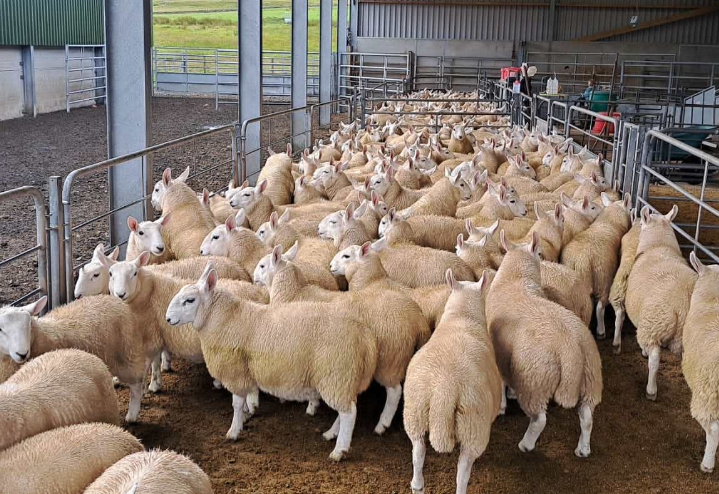
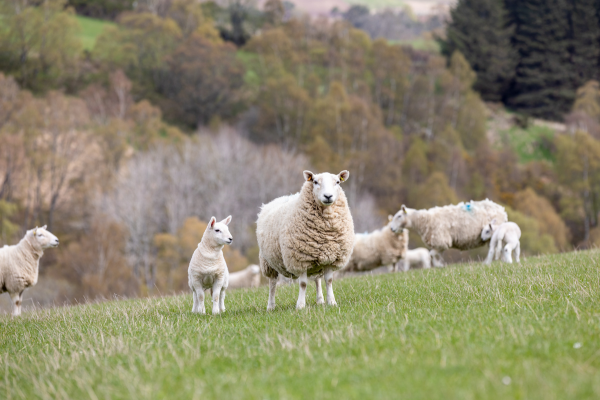
Andrew Baillie farms at Carstairs Mains Farm in South Lanarkshire alongside his brother Ian, wife Jennifer and their three children, Cameron, Rachel and Lauren. The family farm extends to 650 acres and supports a herd of 270 Jersey cows, 200 pedigree Beltex and Texel ewes and 250 commercial Aberdale ewes.
Each year, the family sells around 85 shearing tups and approximately 20 pedigree gimmers through sales across the country. The remaining lambs are finished and marketed through Lawrie & Symington as prime stock.
Lamb Losses in 2018
During the 2018 pedigree lambing season, the flock experienced significant losses among newborn lambs. It started with 12 embryo lambs which died between two and seven days of age. Affected lambs often appeared healthy after birth, only to be found dead later that day or the following morning. Many showed clinical signs consistent with severe watery mouth, while a small number appeared stiff and displayed symptoms suggestive of joint ill. However, Brix refractometry testing confirmed that the ewes were producing high-quality colostrum.
Given the high level of management and hygiene already in place it became apparent that disease alone was unlikely to explain the ongoing mortality which resulted in a loss of around 40 lambs over the 2018 lamb crop.
Lambing Protocol Pre-2018
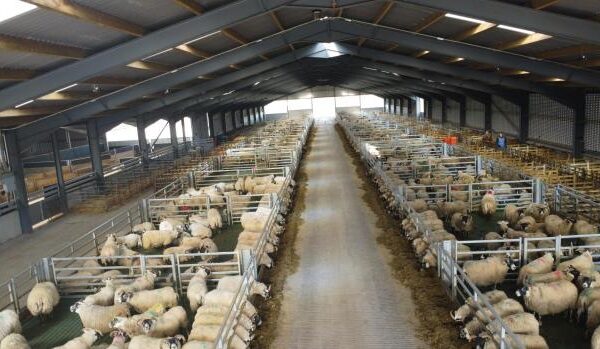
The entire flock is lambed indoors with the pedigree flock commencing on 22nd February followed by the Aberdale ewes on 23rd March.
Ewes are fed a Total Mixed Ration (TMR) consisting of approximately 5 kg of forage per head with 75 g of a mineralised Norvite animo acid bypass protein supplement per lamb carried. Ewes received a six-month release trace element bolus pre-tupping and another pre-lambing. In the lead up to and during lambing, the ewes also had free access to mineral buckets.
The farm operates to a high standard of management during the lambing period, with a particular emphasis on colostrum management and hygiene. Established practices are in place to ensure that newborn lambs receive adequate amounts of high-quality colostrum promptly after birth. Andrew monitors colostrum quality closely using a Brix refractometer as part of ongoing efforts to make the flock mastitis-free.
Individual lambing pens were mucked out and disinfected between occupants to maintain a clean and hygienic environment to minimise the risk of disease transmission.
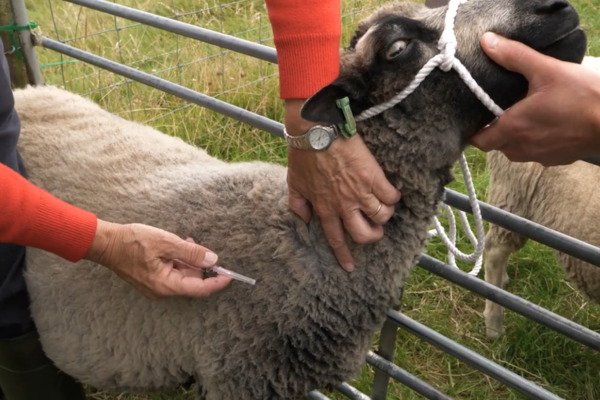
Due to a history of joint ill, newborn lambs routinely received a dose of oral and injectable antibiotics.
Investigating the Losses
The lambs lost were high value embryo bred pedigree lambs, prompting Andrew to quickly seek advice from his local veterinarian Neil Laing of Clyde Vet Group. Two lambs were submitted for postmortem examination, however the results were inconclusive and did not identify an underlying cause. Any lambs showing signs of poor vigour received antibiotic treatment. Although this appeared to improve survival in some cases, it did not address the underlying problem.
Questions were raised over whether lambs were acquiring adequate passive immunity from the colostrum, so blood samples were taken from newborn lambs for zinc sulphate turbidity (ZST). ZST testing is a laboratory-based methodology for assessing whether lambs have absorbed adequate levels of antibody-rich colostrum from their mothers to allow them to build immunity and fight disease. The results were unexpectedly poor. Many lambs recorded ZST values between 0 and 4g/l (target >20g/l). These results indicated a near-complete failure of passive transfer, leaving lambs highly vulnerable to disease.
During the investigation, Neil identified research suggesting a link between excessive iodine intake during late pregnancy and reduced absorption of immunoglobulins from colostrum in newborn lambs, due to an unknown mechanism. This impaired transfer of immunity leaves lambs vulnerable to infection and death due to secondary bacterial infections. This prompted a detailed review of the flock’s mineral nutrition programme.
Multiple sources of iodine were identified within the pre-lambing diet, including from the forage, trace element bolus supplementation, mineral buckets and the protein supplement. Individually these products appeared appropriate, however, when combined they contributed to a significantly elevated iodine intake.
The maximum recommended dietary iodine concentration is 10 mg/kg DM, yet the ewes were estimated to be consuming approximately 12 mg/kg DM. This calculation assumed the iodine contribution from the boluses had declined to the expected level 160 days after administration. The protein supplement was the largest single contributor, supplying approximately 6 mg/kg DM of iodine, while forage analysis indicated an iodine concentration of around 2 mg/kg DM, which was higher than anticipated and made a significant contribution to the overall dietary iodine intake.
The Solution
Working closely with his vet and feed representative, Andrew immediately reviewed and simplified the mineral inclusion within the ration. The primary steps included:
- Removing free-access mineral buckets containing iodine from the shed.
- Removing the iodine from the pre-lambing protein supplement.
- Maintaining all existing hygiene and colostrum management practices.
Importantly, no major changes were made to the lambing management procedures to allow the business to assess if dietary iodine had been a key contributory factor.
Results
Improvements in lamb health were evident almost immediately. The lambs born after the iodine was reduced appeared brighter, more vigorous, and were more active, spending more time playing and moving around. Andrew said he hadn’t realised how lethargic the affected lambs were until he observed how active the next batch were.
ZST results improved significantly, with the best results recorded in the teens during the latter part of the season. While not yet ideal, this represented a substantial improvement compared with earlier values.
Encouraged by these findings, the team continued with the revised mineral programme the following year, but a further change was made by removing the pre-lambing trace element bolus as the pre-tupping bolus was expected to remain active through to lambing.
Subsequent ZST testing showed dramatic improvement, with only one lamb recording a value below 30.
The impact on flock health was clear:
- Lambs were more vigorous from birth.
- Mortality rates fell to minimal levels.
- Cases of watery mouth disappeared.
- Only occasional isolated cases of joint ill remained.
- Growth and overall performance improved throughout the lambs’ lives.
Routine preventative antibiotic treatments were no longer required following improvements in passive transfer. These benefits were seen across the pedigree and commercial flocks.
Impact on the Business
A review of historical records suggested that poor passive transfer of immunity may have been affecting flock performance for several years by contributing to the high levels of joint ill. In 2018, an estimated 40 lambs were lost at 2 – 7 days of age and further loses were noted later in the season, a significant economic impact on the business.
By identifying and correcting excessive iodine intake, the business achieved:
- Significant reductions in lamb mortality.
- Improved passive transfer of immunity.
- Reduced labour requirements during lambing.
- Lower antibiotic use.
- Reduced disease incidence throughout life.
- Improved growth and lifetime performance of lambs.
- Savings on mineral supplements and veterinary costs.
Key Learning
This case highlights the importance of considering total iodine (and indeed all other trace element) intake rather than assessing the suitability of individual supplementary sources in isolation.
Iodine is an essential trace element for normal foetal growth and development but excessive dietary iodine during late pregnancy can interfere with passive transfer of immunity, with severe consequences for the health and performance of newborn lambs. Lambing ewes require 0.5 mg/day of iodine and intakes should be <10 mg/day to avoid issues with toxicity.
For this flock, careful investigation of colostrum quality and passive transfer of immunity followed by a detailed review of pre-lambing nutrition ultimately led to the identification of the root cause. The case also highlights the value of mineral budgeting alongside ration formulation and forage budgeting, ensuring that all dietary sources of trace elements are accounted for and that supplementation reflects the animal’s actual requirements rather than risking unnecessary excesses.
By reducing excessive iodine intake, passive transfer of immunity to newborn lambs improved, producing healthier, more vigorous lambs, lower mortality rates and improved lifetime performance to become a more productive and efficient sheep enterprise.
This factsheet provides a good overview of the requirements and legal limits: https://www.fas.scot/downloads/a-guide-to-trace-elements/




Sign up to the FAS newsletter
Receive updates on news, events and publications from Scotland’s Farm Advisory Service