
Managing Extreme Weather: Lessons From Around The World
A practical guide to how farmers from around the world deal with water scarcity.
Changing weather patterns are affecting farmers in Scotland. Extreme weather events are becoming more common, with storms damaging infrastructure, high rainfall causing flooding and periods of low rainfall causing drought. However, what may be extreme weather to us is normal to farmers in other parts of the world and they have adapted their systems accordingly.
What Is Water Scarcity?
Water scarcity is when water supply is not enough to meet human and ecological needs. At the farm level water scarcity results in you having dry watercourses, increasing the need for a good supply of water to grazing and housed livestock. It has a starker impact on crops and can result in forage shortages for livestock and poor crop yield and quality for arable producers.
Water scarcity events are becoming more frequent, by 2040 it is predicted that drought conditions are set to increase in frequency to 1 in 3 years, compared with previous 1 in 20 (with eastern Scotland more likely to be impacted).
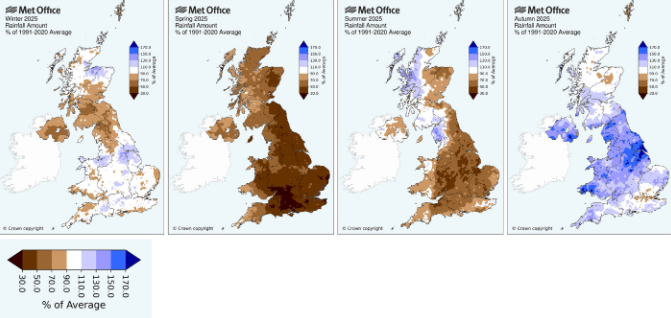
Figure 1 – 2025 seasonal rainfall variance compared with the average between 1991-2020
Figure 1 shows the difference in seasonal rainfall in 2025 compared to the average seasonal rainfall from 1991 to 2020. We can clearly see that in 2025 in the spring all of Scotland experienced lower levels of rainfall than is typical, while in the summer large areas of eastern Scotland had lower than average rainfall. In the east of Scotland it is the norm for farmers to have to irrigate their crops during the growing season. All abstractions over 10m3 per day require authorisation from SEPA.
Stories From Around the World
Reducing Water Use By 25% In Slovenia’s Vipava Valley
In the Vipava Valley extreme weather including: drought, flooding and strong winds led to over 15 million euros of damage between 2012 and 2014. Researchers working with 35 farmers in the valley through the LIFE VivaCCAdapt project worked to make the areas agriculture more climate-resilient with on-farm adaptations such as smart irrigation technology and green windbreaks. These measured aimed to reduce water use, protect farmland and improve resilience to drought and extreme weather.
The project created and tested a Decision Support System for Irrigation (DSSI) to inform the farmers irrigation systems. Instead of farmers relying mainly on experience to decide when and how much to irrigate, the system combined soil-moisture measurements, soil water-retention characteristics, crop type, crop growth stage and weather forecasts to recommend when irrigation should take place and how much water should be applied. This is estimated to have reduced water use by 25% and irrigation energy use by 24%. In addition, different types of green windbreaks (bushes/trees) were planted along field boundaries in exposed areas to reduce wind damage to crops and soil erosion.
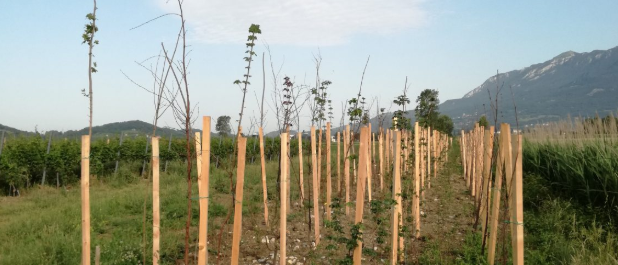
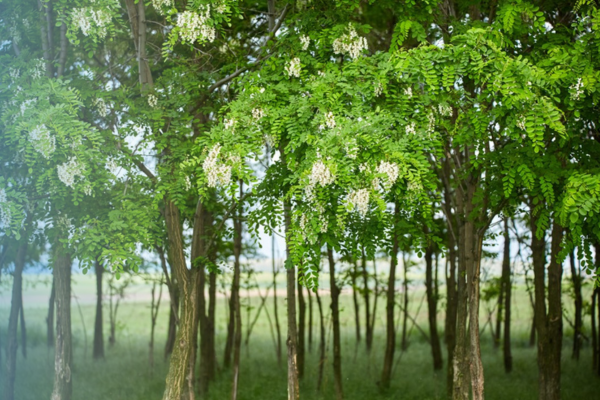
Figure 2 - Green Windbreak in the Vipava Valley
Diversifying Water Sources And Upping Production Along Peru’s Desert Coastline
Agrokasa has 1,620 hectares of avocado production in Peru’s desert coastline where water scarcity is prevalent. In 2009, its water needs were met by extraction from the Pativilca River and the Ica-Villacuri Aquifer. However, as the climate changed, these sources were becoming less reliable.
Agrokasa has built a surface-water reservoir that captures floodwater. Because it is not impermeably lined, water can infiltrate into the soil and contributes to groundwater recharge. However, aquifer recharge alone cannot solve over-extraction; reducing demand was as also essential.
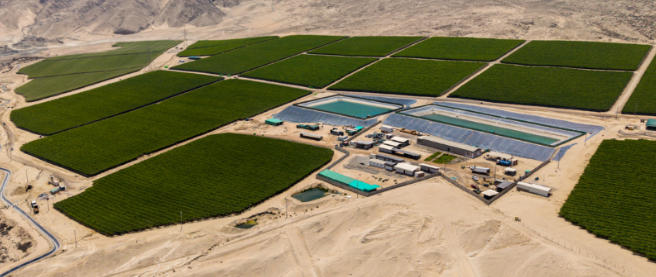
Figure 3 - Agrokasa's water lagoon at San Martin Farm
Agrokasa invested in a number of technologies to optimise water use.
- Soil moisture monitoring - using data from capacitance probes and dendrometers to inform when to irrigate and with how much water.
- Closed pipelines - reduce water loss through evaporation and infiltration.
- Drip Irrigation System - Ensures water is delivered directly to the plant roots, optimising water use.
- Pulse Irrigation System - Improves efficiency by applying water in pulses.
- Automated Irrigation System - Allows precise control over irrigation schedules.
- Multiple Irrigation Pipes - Broadens the irrigation bulb, reducing irrigation time while meeting crop needs.
- Soil-moisture monitoring using capacitance probes and dendrometers.
Agrokasa also sought to diversify its water sources. In 2018, the business successfully won a contract for a wastewater treatment and reuse project for their local area. Construction of the wastewater treatment plant was completed in late 2021, and by 2023 5,753,427m³ of treated water has been used on farm.
As a result of the measures implemented by Agrokasa, there has been a 35% decrease in groundwater extraction, despite 400ha more avocado being grown. In addition, the businesses projects have provided other benefits including diversified income from the wastewater treatment plant, high-quality jobs for locals and improved water quality and reduced environmental contamination in the local area.
Improving Soil Health At 7000 Feet In Colorado
Haycamp Farm and Fruit are a diversified family farm near Dolores, Colorado, at about 7,000 ft elevation. It produces vegetables, fruit, beef and sheep, and is vulnerable to heat, drought and changing water availability.
Haycamp, working with researchers identified practical actions they could take to reduce their vulnerability to the changing climate. Alongside smart irrigation and diversifying water sources, a key method was to increase soil organic matter (SOM). SOM is the living part of the soil and holds all the water and nutrients in the soil. Increasing improves the soils’ ability to retain water and therefore the farms resilience to drought.
The farm aims to achieve this through increased adoption of minimum tillage practices, reducing the disturbance of the soil helping to retain existing SOM. In addition, they implemented a more rotational grazing system, moving livestock to areas which were typically in crop. Livestock manure is a valuable source of organic matter, so getting their manure onto areas which are routinely in crop will help increase SOM.
The business has also sown more diverse grass swards in their pastures, looking for grasses that are adapted for their local climate and are drought tolerant. This aims to ensure that there is sufficient forage for their livestock no matter the weather.
How To Make Your Own Farm More Resilient To Extreme Weather
- Carry out a water-risk assessment - Identify where your water comes from, how much is available (if extracting how much are you able to extract), and how much the farm uses throughout the year. Consider risks such as increasing frequency of drought, groundwater levels, restrictions on water abstraction, and demand from other users.
- Measure and reduce water use - Install water meters and monitor use by activity, such as irrigation, livestock, and cleaning. Identify areas of high consumption and improve efficiency through measures such as drip irrigation, leak detection, soil-moisture sensors, and irrigation decision aid tools.
- Improve soil and landscape water retention - Increase the soil's ability to store water by adding organic matter, reducing unnecessary soil disturbance, using cover crops, mulching, planting shelter belts and maintaining vegetation around waterways. These practices can reduce evaporation and runoff while improving resilience during dry periods.
- Diversify water supplies - Where legally and environmentally appropriate, consider options such as rainwater harvesting, farm reservoirs, boreholes, farm ponds, water recycling/reuse, or additional storage. Having more than one reliable source can reduce dependence on a single supply during times of water scarcity. .
- Develop a drought and water-scarcity action plan - Establish clear thresholds for when action should be taken—for example, when reservoir levels or soil moisture fall below certain levels. Decide in advance which crops or activities receive priority, how irrigation will be reduced, and what alternative feed, crops, or livestock strategies could be used during prolonged shortages.
Further Information:
Improving Farm Resilience to Changing Weather:
https://www.farmingandwaterscotland.org/managing-water/extreme_weather/
CREW Planning for Water Scarcity:
SEPA Water Scarcity:
Water scarcity | Beta | SEPA | Scottish Environment Protection Agency
Climate Adapt - Adapting to Climate Change:
Water Stewardship Case Study on Agrokasa:
Water Stewardship Case Study Template
Haycamp Farm Case Study:
https://swclimatehub.info/wp-content/uploads/HaycampFarmCaseStudy_Final.pdf
James Orr, SAC Consulting






Sign up to the FAS newsletter
Receive updates on news, events and publications from Scotland’s Farm Advisory Service