
Business and Policy September 2026 – Milk
Milk production data
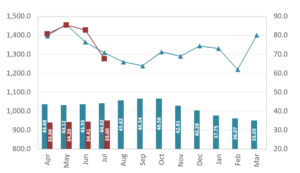
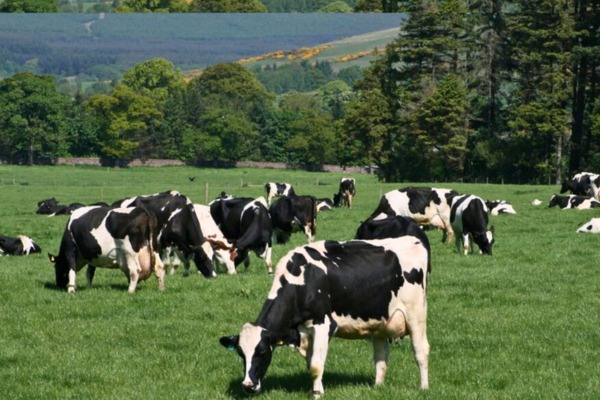
GB milk production continues to decline, with the seasonal decline now being compounded by extremely dry conditions across much of the country. The impact has been particularly severe across southern England, where prolonged drought has restricted grass growth and grazing availability. Many farms have been unable to produce sufficient winter forage, while others are already using existing stocks to maintain production, raising concerns over forage shortages and higher feed costs this winter. The latest data from AHDB estimates the GB milk volume for July at 1,031 million litres, 38 million litres less than the previous July (-3.6%). Daily production is currently 31.72 million litres for the week ending 22nd August, which is 0.9% less than the previous week and 4.4% less than the same week last year (1.46 million litres less). For the UK, July production was estimated to be 1,274 million litres.
Farm-gate prices
The Defra farm-gate milk price for July 2026 was 35.00ppl up 0.59ppl (1.7%) from the June price and 20% lower than 12 months ago. First Milk(+2ppl), Grahams(+0.5ppl), Lactalis(+2.07ppl), Arla (+0.89ppl) and Müller(+0.5ppl) have announced price increases for September.
| Milk Prices for Sept 2026 - Scotland | Standard Ltr ppl | ||
|---|---|---|---|
| First Milk2 | Sep | 34.85 | |
| Müller - Müller Direct - Scotland 1, 3 | Sep | 35.00 | |
| Grahams1 | Sep | 35.00 | |
| Arla Farmers2 | Sep | 39.04 | |
| Lactalis / Fresh Milk Co.2 | Sep | 36.94 | |
| 1 | Liquid standard litre – annual av. milk price based on supplying 1m litres at 4.0% butterfat, 3.3% protein, bactoscan = 30, SCC = 200 unless stated otherwise. | ||
| 2 | Manufacturing standard litre - annual av. milk price based on supplying 1m litres at 4.2% butterfat, 3.4% protein, bactoscan = 30, SCC = 200 unless stated otherwise. | ||
| 3 | Includes 1.00ppl Müller Direct Premium. Haulage deducted depending on band for 2023 vs 2021 litres, ranging from -0.25 to -0.85ppl. | ||
Dairy commodities & market indicators
The UK has now experienced a fifth heatwave during summer 2026, placing significant pressure on milk volumes, particularly across the south of the country. In some areas, grass growth has effectively stopped, forcing many farmers to draw on winter feed stocks earlier than usual. Milk volumes fell by as much as 4.5% below last year at one point, with the impact varying between processors depending on regional exposure. Reports of widespread Bluetongue virus across the southwest, with cases increasingly being reported in the northwest of England and Wales, are adding further concerns around milk production and supply. These supply side pressures contributed to an increase in wholesale prices over the reporting period.
Skimmed Milk Powder (SMP)
SMP saw good progress over the period, with many dryers entering their seasonal quiet period while fresh milk was also being diverted into the spot market. Demand remained relatively healthy, supporting a firmer market, with prices beginning to move higher. There were also reports of some buyers purchasing product for storage ahead of Q4, providing additional support to the market. Prices rose by £110/t to £2,470
Mild Cheddar
With more milk being diverted towards fresh dairy production, cheese stocks have tightened somewhat, although not to the extent anticipated given the decline in milk supplies and rising milk prices. Stocks remain finely balanced, and sellers are showing little appetite to release Cheddar at discounted levels. The average price for the period rose by just £10/t to £3,060
Bulk Cream
Bulk cream values continued to strengthen, supported by rapidly rising prices on the continent. At current levels, churning remains uneconomical, while reports of some processors converting older butter into AMF are limiting export opportunities. Average prices edged higher over the reporting period, rising from the low £1.50s/kg to as high as £1.70/kg at times, before settling in the mid-£1.60s/kg later in the period. European prices are also reported to be strengthening rapidly, providing further support to the market. The average price for the period was £1,607/t
Butter
High cream prices continued to make butter production uneconomical beyond contracted volumes, further tightening new supply. However, stores remain well stocked, with some product reportedly ageing, and availability is still high. The reported conversion of ageing stock into AMF could help reduce inventories over time, but excess stocks continue to weigh on the market. The market remains quiet ahead of the return to more normal trading activity in September. Average prices rose to £3,450/t up £130/t
As a result, there was a positive change in both the AMPE and MCVE. The Milk Market Value indicator increased by 0.59ppl to 35.51ppl for August. The latest GDT auction on 18th August shows a rise of 2.3% in price when compared to the previous auction, with the average price across all products reaching $3,873/t.
| UK dairy commodity prices (£/tonne) | August 2026 | July 2026 | February 2026 |
|---|---|---|---|
| Butter | 3,450 | 3,320 | 5,920 |
| Skim Milk Powder (SMP) | 2,470 | 2,360 | 2,020 |
| Bulk Cream | 1,607 | 1,530 | 2.626 |
| Mild Cheddar | 3,060 | 3,050 | 3,960 |
| UK milk price equivalents (ppl) | August 2026 | July 2026 | February 2026 |
|---|---|---|---|
| AMPE | 35.62 | 33.90 | 32.8 |
| MCVE | 35.48 | 35.17 | 32.7 |
GB dairy herd falls to record low
Great Britain’s dairy herd has fallen to its lowest level on record, with AHDB warning that declining youngstock numbers could lead to tighter availability of replacement heifers. The GB milking herd stood at around 1.57 million head on 1 July 2026, down 2.2% year-on-year, with around 34,500 fewer animals over the past 12 months. This was the largest annual decline since January 2021. Despite the smaller herd, GB milk deliveries reached 12,931 million litres in the 12 months to July 2026, up 3% year-on-year, highlighting continued improvements in productivity. However, the pipeline of future replacements is shrinking. Dairy youngstock stood at around 869,000 head, down approximately 36,000 year-on-year, while dairy females under two years fell 2.2%, or around 19,500 head. Dairy female births have also been declining consistently since early 2023. AHDB linked this partly to favourable dairy-beef economics and greater use of sexed semen, allowing farmers to be more selective when breeding replacements. The largest annual fall was among cattle aged two to four years, down 3.9%, or around 29,800 head. Meanwhile, cattle aged four to six years increased by 0.5%, or just over 2,500 head. The figures underline a continuing shift towards a smaller, more productive national herd, but AHDB warns that the declining youngstock pipeline could become increasingly important as farmers need to replace older cows.
M&S rolls out AI-powered welfare monitoring across dairy supply chain
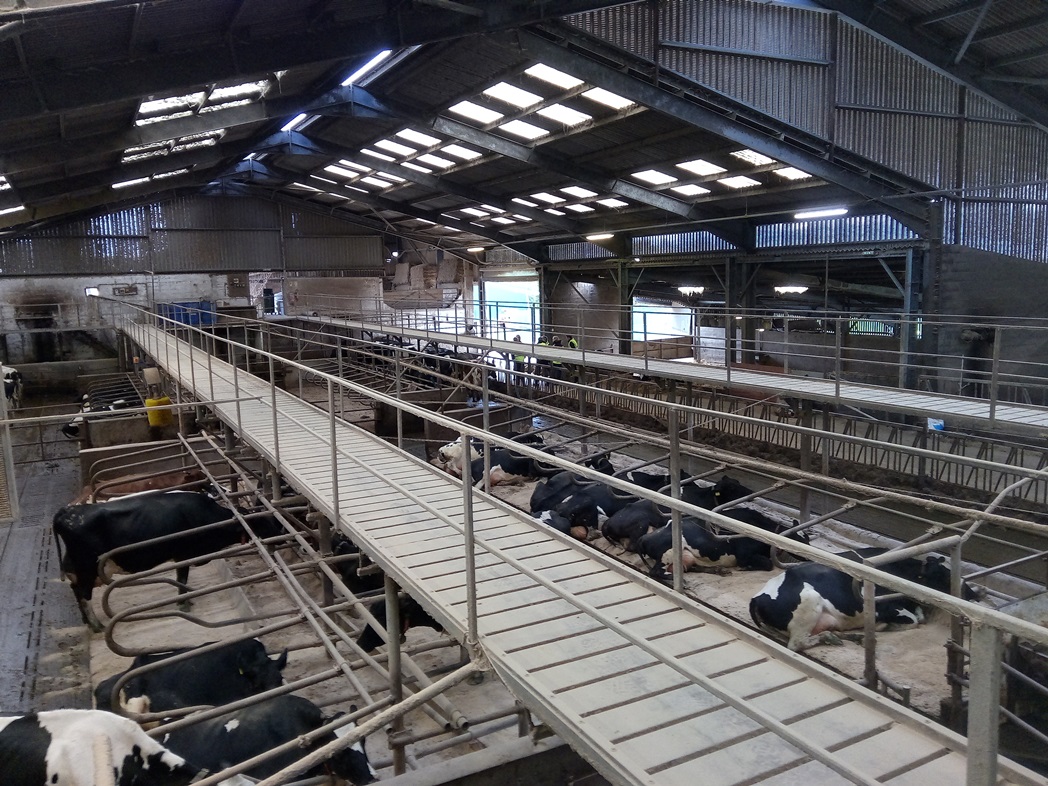
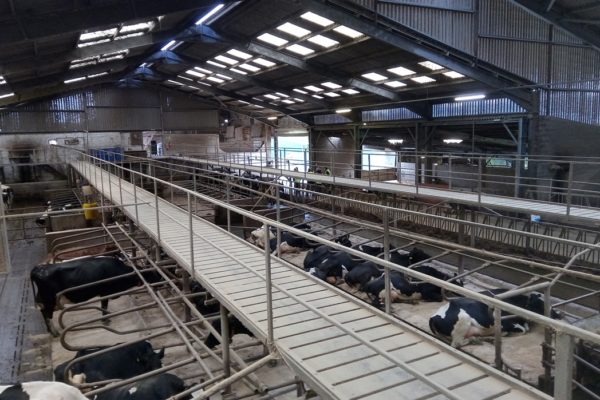
Marks & Spencer (M&S) is rolling out AI-powered cow monitoring technology across its entire milk pool, covering 46 dairy farms, to further enhance animal welfare. The system uses cameras and AI, developed alongside vets, to monitor cows indoors and build individual health profiles. It tracks mobility, body condition, lying and feeding times, social interactions and movement to generate a ‘cow comfort score’. The system provides farmers with additional data on individual cow health and comfort, alongside existing welfare checks. Trials have already prompted changes to bedding, feeding routines and cubicle design, while the wider rollout will assess how the technology can support welfare monitoring across the supply chain.
Keira Sannachan, Keira.Sannachan @sac.co.uk


Sign up to the FAS newsletter
Receive updates on news, events and publications from Scotland’s Farm Advisory Service