
Protect Forage Stocks by Reducing Waste
This winter, margins are going to be tighter due to the disruption of global commodity markets driving milk price volatility and high feed prices. As a result, milk production from forage will be more important than ever. Ensuring the forage produced on farm over the summer months is utilised effectively and with minimal waste will be a key priority this winter.
Maximising forage stocks by reducing spoilage at feed out will support better livestock performance. In well-managed clamps dry matter (DM) losses are typically between 8 – 10%, however, losses can be considerably higher where preservation and feed-out management are poor. Therefore, it is vital to minimise any additional DM losses once the clamp has been opened.
Minimise Silage Exposure
When silage is exposed to oxygen, bacteria and moulds in the silage will begin to grow, resulting in the feed becoming fermented and heated. When secondary fermentation occurs, the palatability of the silage reduces and so impacts feeding quality. Clamps that are poorly consolidated and sealed when grass is put in are at the highest risk of wastage and spoilage. When spoiled silage is included in the ration, palatability is reduced, leading to lower dry matter intakes, reduced feed efficiency and, ultimately, poorer milk production.
Reducing secondary fermentation once the clamp has been opened is vital and effective management of the face is key. Wide clamp faces are at greater risk of spoilage because they take longer to move across and expose a larger surface area to oxygen. Ideally, the silage face should not remain exposed for more than four days during warmer conditions. As a guide, the face should be moved back by one metre per week during cold weather, and by two metres in warmer periods.
Keep The Clamp Face Clean
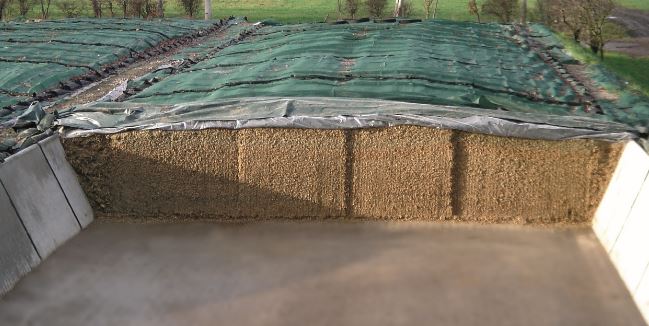
Keeping the clamp face tidy is equally important. Using a block cutter or shear grab helps provide a clean, smooth face, reducing disturbance and minimising spoilage. In contrast using a bucket or fork can tear and disturb the face, allowing air into the clamp and increasing the risk of spoilage. Losses associated with poor feed-out management can be significant. In some cases, spoilage losses can be around 5% of the total clamp volume. For example, in a 2000t silage clamp, a 5% loss equates to 100t of silage. This loss may not be visible in a pile of wasted feed, but it represents 100t of feed value that is no longer available.
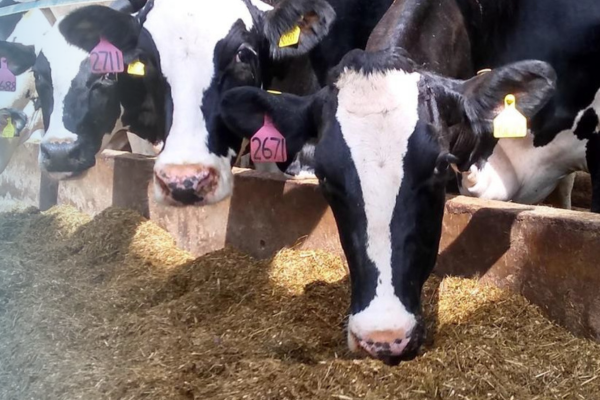
When spoiled silage is mixed into the total mixed ration (TMR), it will contaminate the ration which encourages heating at the feed face, making the ration less palatable. Refusals should be cleared regularly to prevent a build-up of spoiled feed and reduce the risk of contaminating fresh TMR.
The financial consequences of wasted TMR is not always visible and are often underestimated. Assuming a daily dry matter intake (DMI) of TMR at 22 kg per cow, contamination from spoiled silage could result in a 5% reduction in intake, equivalent to 1.1kg/day. This becomes the wasted TMR which is not utilised by the cows. To put a cost on this wasted TMR, if we take it at 30 p/kg DM, this equates to £66 per day of feed waste for a 200-cow herd. In addition, reduced feed intake is likely to result in lower energy intakes and a subsequent reduction in milk yield.
Ensuring your clamp is kept clean and tidy throughout the winter will be essential for minimising spoilage, maximising forage utilisation and maintaining milk production.
Dr Cara Campbell



Sign up to the FAS newsletter
Receive updates on news, events and publications from Scotland’s Farm Advisory Service