
Udder Cleft Dermatitis
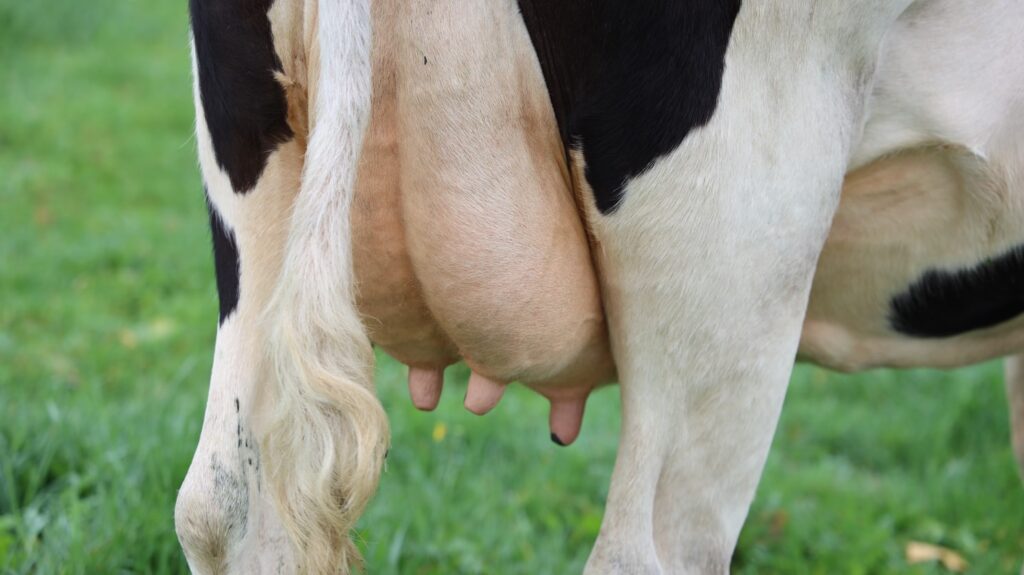
Udder Cleft Dermatitis (UCD) is a skin condition most commonly reported in dairy cows, affecting the cleft between the two halves of the udder, or the cleft at the fore udder attachment. It typically begins as mild skin irritation or lesions but can progress to painful ulcerations and deep infection if left untreated. UCD is diagnosed through visual examination and is considered a multifactorial disease, meaning several factors contribute to its development rather than a specific pathogen.
While various topical treatments (including antibiotic sprays, gels and creams) can be used to support healing, there is no consistently effective curative treatment to date. Even when lesions heal, recurrence is common. Lesions which have progressed to deep ulcers or necrosis are difficult to treat.
Although UCD has been recognised in European herds for many years, recent research has confirmed that it is also prevalent in the UK. A study involving more than 8,200 cows across 28 UK dairy herds found that almost 10% of cows had UCD lesions, with prevalence ranging from less than 1% to 27% between herds.
Effects of Udder Cleft Dermatitis
The full impact of UCD on the performance and health of an affected cow is still relatively unclear. Studies have associated the condition with an increased risk of clinical mastitis, while the effects on milk production remain less clear and require further research.
Importantly, UCD is recognised as a painful condition and therefore presents a welfare concern. In severe cases, lesions can become extensive, chronic and difficult to heal, highlighting the importance of early detection and treatment.
Risk Factors
UCD is thought to develop where friction (e.g. in a skin fold), pressure and moisture are present around the udder. Research into risk factors for UCD remains ongoing but several characteristics have been linked to an increased risk of developing UCD:
- Loose fore udder attachment (1.8 times more likely)
- Deep udders (1.4 times more likely)
- Lameness
- Soiled udders
- Increasing age
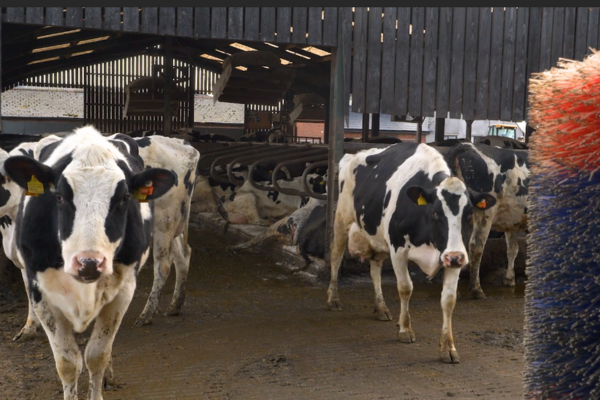
- Housing and bedding management
Many of these factors increase the likelihood of rubbing, skin folds or prolonged exposure to moisture, creating conditions that favour lesion development.
Prevention and Management
Early detection is one of the most effective ways to manage UCD. Regular udder inspections in the parlour, during routine handling or at hoof trimming can help identify lesions before they become severe. A simple mirror on a stick can make detection easier.
Genetics have an important role to play. Udder conformation is highly heritable, making breeding decisions a valuable long-term prevention strategy. When selecting bulls, preference should be given to those that produce daughters with strong fore udder attachments and well-supported udders.
Cows with poor udder conformation, particularly loose fore udder attachments or excessively deep udders, should be considered for culling. Likewise, these traits should be avoided when selecting animals to breed replacement heifers, as udder conformation often deteriorates with age and may further increase the risk of UCD.
Maintaining clean, dry bedding and minimising opportunities for skin irritation may help reduce the risk of lesion development. Housing design, bedding management and overall hygiene should be reviewed where UCD is a herd-level concern. While further research is needed to better understand UCD, improving udder conformation through breeding decisions, maintaining good hygiene and identifying cases early remain the most effective tools currently available for reducing its impact on dairy herds.
References:
Prevalence and risk factors for udder cleft dermatitis in UK dairy herds - Journal of Dairy Science




Sign up to the FAS newsletter
Receive updates on news, events and publications from Scotland’s Farm Advisory Service